



Victorian Sewing Chest
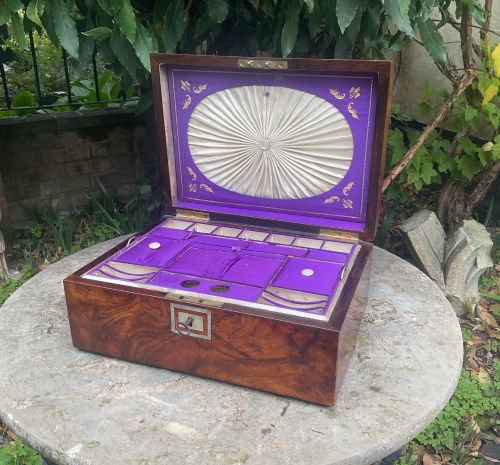
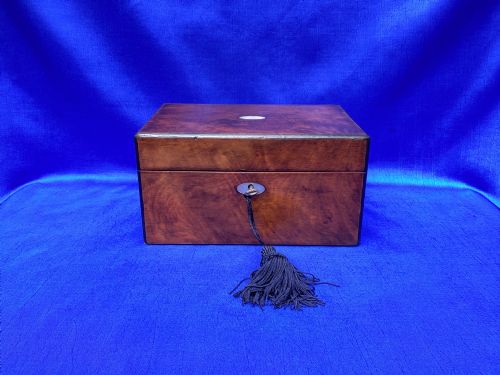
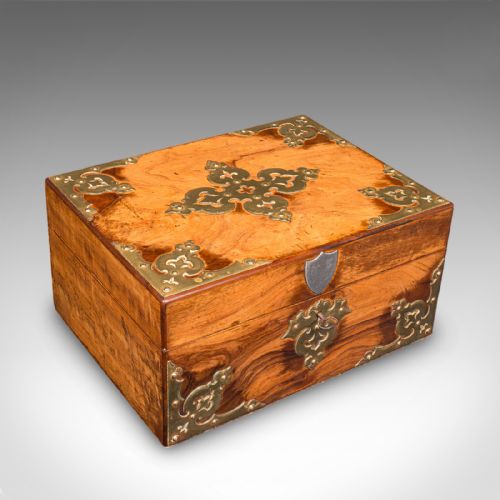
A victorian sewing chest brings fitted compartments and rich timber grain to the room, offering an organised home for needlework.
Victorian Sewing Chest
A victorian sewing chest encompasses compact workboxes, needlework tables, and haberdashery display cases designed to hold threads, needles, and textiles. These pieces date from the mid to late nineteenth century, reflecting the era's domestic focus on needlecraft and organised storage.
The versions most commonly met on this page are walnut and mahogany sewing boxes alongside specialised display cases and occasional tables. These objects combine small-scale storage with decorative wood surfaces intended for the Victorian parlor or drawing room.
Materials and Construction
Cabinet makers utilised dense hardwoods such as walnut, burr walnut, mahogany, and rosewood to construct the bodies of these boxes and tables. These timbers often display rich grain patterns enhanced by French polishing.
Inlaid decoration forms a significant part of the construction, incorporating mother-of-pearl, brass stringing, and Tunbridge Ware mosaic patterns. Fitted interiors frequently combine polished wood compartments with silk linings and glass display panels.
Victorian Sewing Chest Retail Price Guide 2026
Typical asking prices for victorian sewing chest among the pieces listed under this phrase on Sellingantiques today, from the lower quarter to the upper quarter. They describe what is for sale here now, not the wider market.
Current listings feature nineteenth-century sewing forms in walnut, mahogany, and rosewood, incorporating glass, brass, and silk.
Assessing Quality and Execution
The distinction between standard and superior pieces lies in the complexity of the internal fittings and the precision of the exterior decoration. Elaborate mother-of-pearl inlay, fine brass stringing, and intact silk-lined trays elevate a piece above simpler utilitarian boxes.
Structural integrity of the timber joints and the retention of original brass hardware indicate superior craftsmanship. Tunbridge Ware mosaic work and Gothic Revival carving demonstrate a higher level of specialist skill in the workshop.
Chadwick’s Sewing Cottons·Ermen & Roby
The Victorian Sewing Chest Glossary
- Tunbridge Ware
- Small wooden boxes and ornaments decorated with mosaic veneers made from tiny blocks of naturally coloured woods. This intricate craft centres on the Kent town of Tunbridge Wells during the nineteenth century.
- Burr Walnut
- Timber taken from a tree growth or burl, yielding swirling, highly figured grain patterns. Cabinet makers prized this wood for decorative veneers on the exterior of boxes and tables.
- Haberdashery Display Case
- Glass-fronted shop or counter cabinets used to showcase sewing cottons and threads. These pieces originate from commercial contexts rather than domestic dressing tables.
- Workbox
- A portable box fitted with compartments, trays, and pincushions for holding sewing implements. These containers sat upon tables or were carried by hand around the Victorian home.
- Mother-of-Pearl
- The iridescent inner layer of certain mollusk shells used for decorative inlay. Craftsmen cut thin pieces into geometric or floral shapes to ornament rosewood and walnut surfaces.
Victorian Sewing Chest: Frequently Asked Questions
What fits inside a victorian sewing chest?
These chests contain fitted wooden trays, compartments, and pin cushions designed to hold spools of thread, needles, bodkins, and scissors. Smaller boxes served general trinket storage alongside sewing supplies.
Interior layouts vary from simple open wells to tiered cantilever trays and specialised recesses for specific needlework tools.
How do you date a sewing box?
Dating relies on timber choices, construction methods, and decorative styles such as Gothic Revival motifs or Tunbridge Ware mosaics. Brass hardware and lock mechanisms also provide chronological clues.
Mid-century pieces often feature simpler mahogany or rosewood construction, while later decades embraced burr walnut and elaborate mother-of-pearl inlay.
Where were these pieces used?
Victorian sewing chests and workboxes sat upon occasional tables, desks, or dressing tables in the private rooms of the house. Ladies of the household kept them close at hand during sewing circles or quiet evenings.
Larger needlework tables stood independently in drawing rooms, combining a workbag or box with a stable wooden support structure.
Are haberdashery cases the same as workboxes?
Haberdashery cases served a commercial purpose in shops to display sewing cottons and small goods to customers. Workboxes were private, portable domestic items meant for personal use.
Display cases frequently feature glass panels and maker lettering, distinguishing them from hinged domestic storage boxes.