

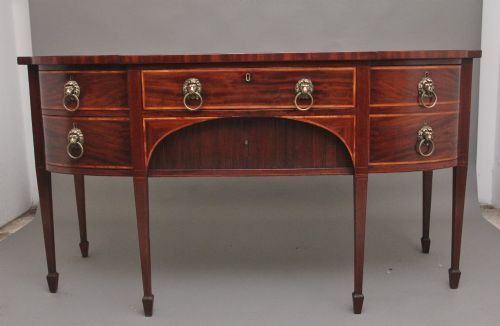


Victorian Serving Furniture
Victorian serving furniture brings heavy timber and clever tiered design to dining spaces, offering robust practical surfaces for food and silver.
Victorian Serving Furniture
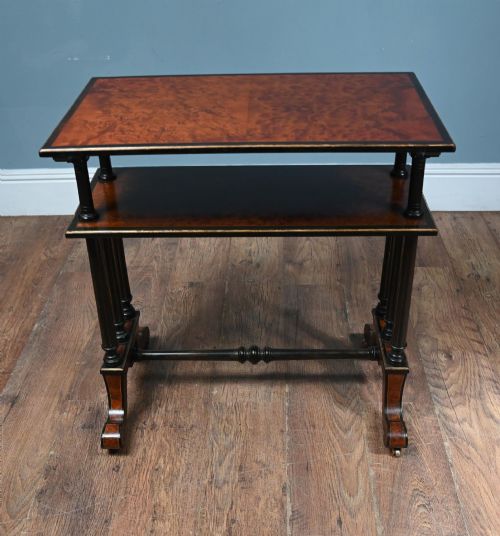
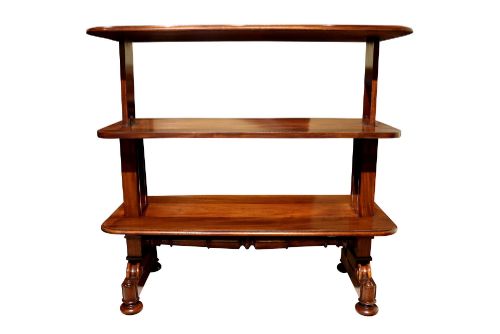
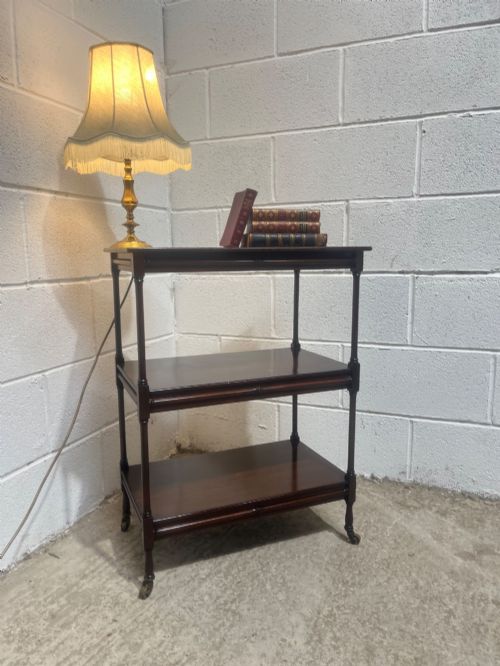
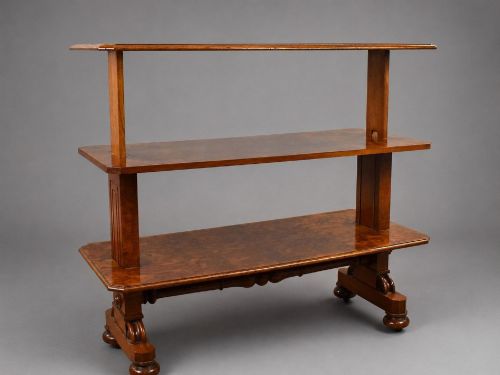
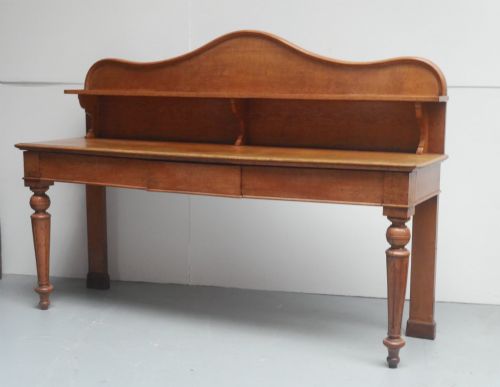
Victorian serving furniture encompasses multi-tiered dumb waiters, sideboards, buffets, and butler trays designed for formal dining and food transport. These pieces range from simple three-tier mahogany trolleys to elaborate metamorphic designs and Gothic Revival sideboards.
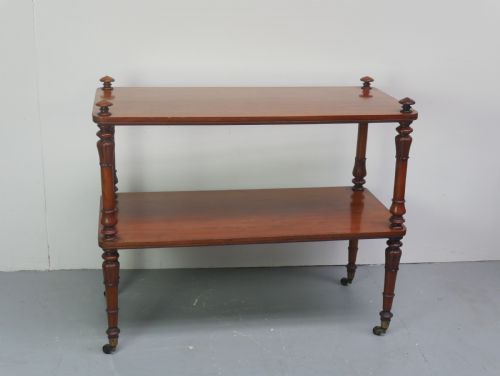
Mahogany and oak dominate the selection, often shaped into heavy serving tables or tiered food trolleys with original castors. Cabinetmakers built these items to handle the demands of nineteenth-century households during large meals and gatherings.
Amboyna, walnut, and burr walnut appear alongside teak and padauk wood in specific regional or exotic variants. Buyers frequently encounter multi-tiered dumb waiters and large console serving tables within this selection.
Materials and construction methods
Solid mahogany and oak provide the structural backbone for most items, supported by secondary timbers and brass hardware. Cabinetmakers utilised brass castors and hinges to allow heavy multi-tier buffets and folding butler trays to move smoothly.
Decorative surfaces rely on veneers of burr walnut, amboyna, and satinwood, occasionally complemented by intricate carving or inlaid details. Craftspeople shaped dense woods through traditional joinery, creating durable frameworks capable of bearing heavy porcelain and silver.
Victorian Serving Furniture Retail Price Guide 2026
Typical asking prices for victorian serving furniture among the pieces listed under this phrase on Sellingantiques today, from the lower quarter to the upper quarter. They describe what is for sale here now, not the wider market.
Markers of quality and craftsmanship
Quality rests in the precision of the timber selection, such as richly figured burr walnut or dense amboyna veneers matched across large surfaces. Superior pieces display crisp hand-carving, solid brass fittings, and mechanisms that operate without binding.
The integrity of the original castors and the tightness of multi-tiered joints distinguish master workshops from standard production items. Proportion and timber thickness dictate the longevity and visual balance of larger serving tables and sideboards.
ROBERT STRAHAN & CO·PHILLIPS BRISTOL
The Victorian Serving Furniture Glossary
- Dumb Waiter
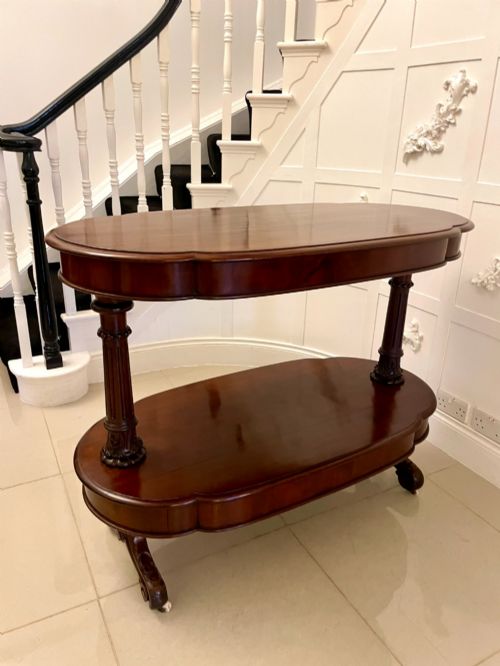
- A multi-tiered serving trolley or stand used to hold dishes and cutlery near a dining table without requiring servant attendance. These pieces often feature three tiers and movable or folding elements.
- Buffet
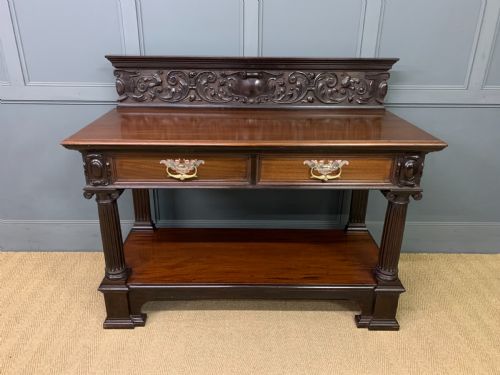
- A heavy wooden sideboard or serving console designed for displaying silver and holding food during meals. They frequently incorporate carved panels and tiered shelving.
- Metamorphic
- Describing furniture that transforms from one form to another, such as a dumb waiter that adjusts its height or shelving configuration. These mechanisms require precise engineering.
- Butler Tray
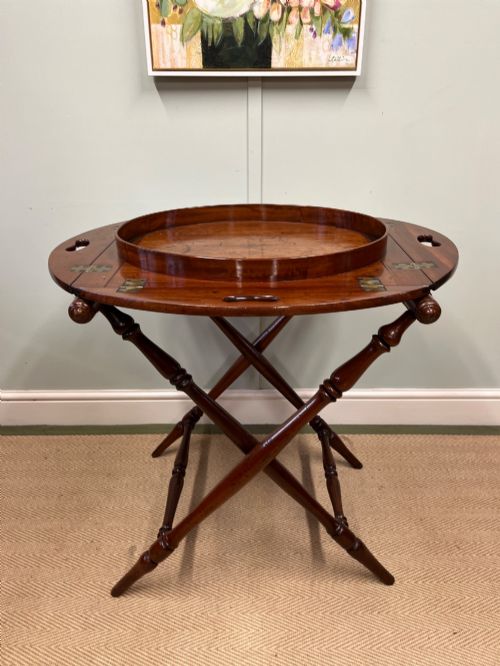
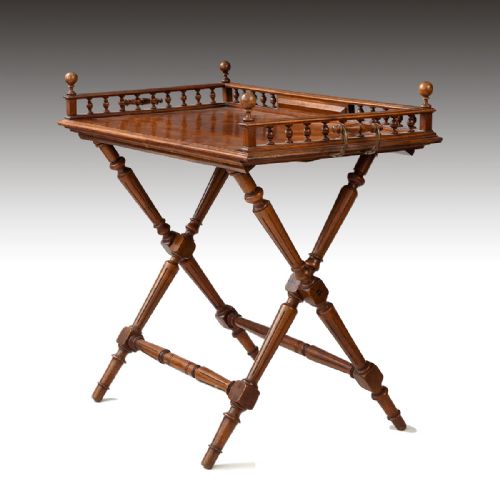
- A shallow wooden tray with hinged or cutout sides, typically set upon a folding X-frame stand for portable service. They appear in mahogany, oak, and inlaid satinwood.
- Breakfront
- A large cabinet or sideboard whose central section projects forward from the flanking outer sections. This configuration breaks the linear monotony of long dining room walls.
Victorian Serving Furniture: Frequently Asked Questions
What is a dumb waiter used for?
A dumb waiter serves as a tiered trolley or stand placed beside a dining table to hold extra dishes, wine, and cutlery. This allowed diners to help themselves without constant service from staff.
Over time, these pieces evolved from static serving tables into mobile, multi-shelf units fitted with castors and adjustable mechanisms for ease of movement during large meals.
How do I care for mahogany serving furniture?
Keep wooden serving furniture away from direct heat sources and strong sunlight to prevent the timber and veneers from drying out or splitting. Regular dusting with a soft cloth maintains the natural finish.
Apply a traditional beeswax polish occasionally to nourish the grain and protect the surface from moisture marks left by glasses and serving dishes.
Where were butler trays used?
Butler trays served as portable serving stations carried from kitchens to dining rooms, drawing rooms, or bedrooms. The removable tray sat securely on a collapsible folding stand.
Victorian households utilised these flexible items for tea service or casual dining where permanent side tables were impractical or space remained limited.
What distinguishes a buffet from a sideboard?
A buffet generally focuses on tiered shelving and flat surfaces for presenting food dishes and serving ware during large dinners. They often lack the extensive enclosed cupboard space typical of traditional sideboards.
Sideboards usually prioritise enclosed storage with drawers and cabinets for silverware and linens, while buffets emphasise open display tiers and serving capacity.