



Victorian Serpentine Bookcase
A victorian serpentine bookcase brings fluid, curved lines to period rooms, offering substantial storage behind glazed doors.
Victorian Serpentine Bookcase
A victorian serpentine bookcase combines distinctive undulating front curves with practical shelving for books and display objects. These nineteenth-century pieces emerge across the Victorian and Edwardian periods in forms ranging from freestanding glazed cabinets to open shelves and smaller whatnots.
Makers and workshops constructed these pieces primarily in mahogany, walnut, and burr walnut, frequently incorporating decorative inlays or gilt metal mounts. Stylistic influences span Sheraton Revival, Rococo Revival, and French Revival, reflecting the varied tastes of the nineteenth century.
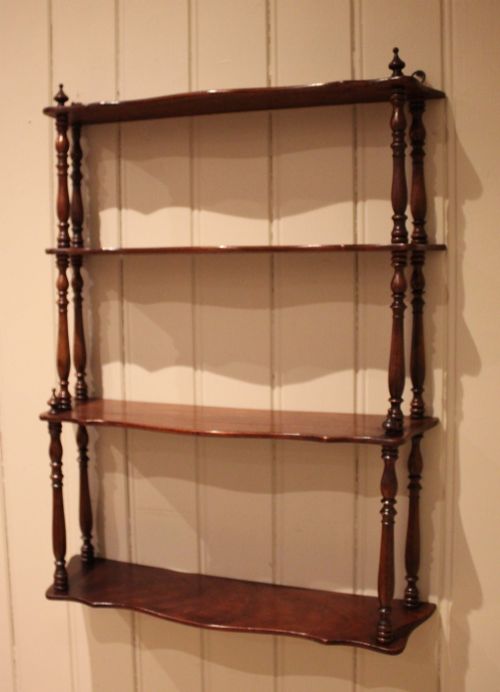
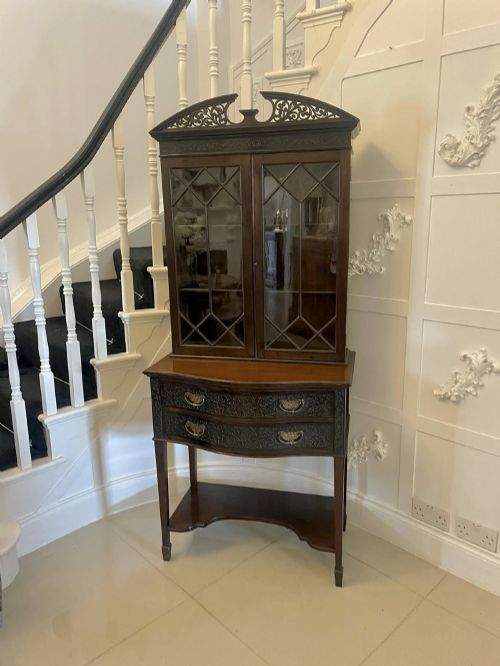
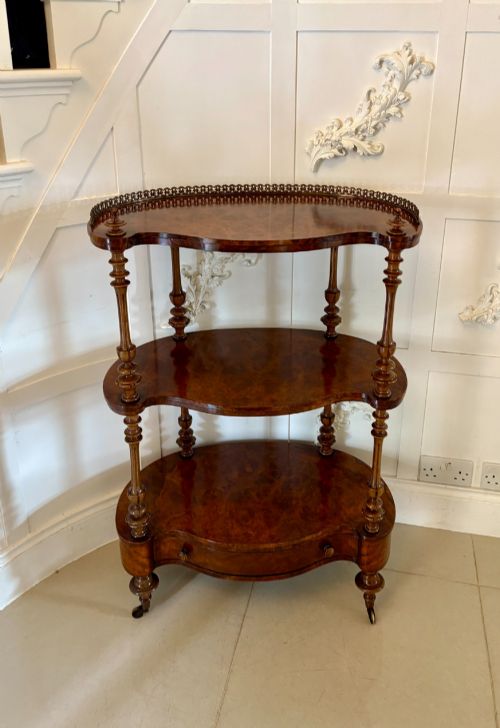
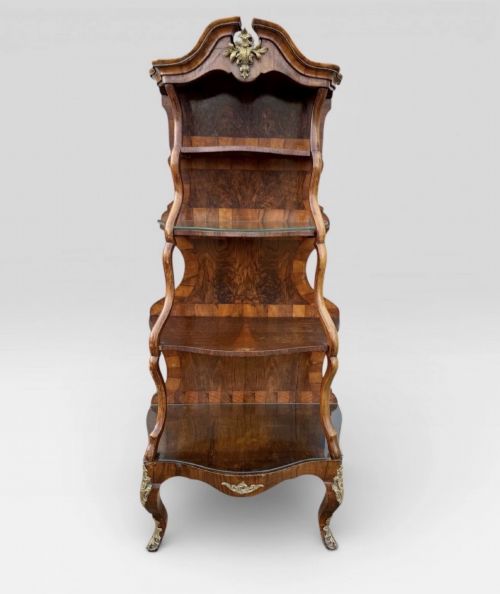
Buyers will encounter multiple configurations on this page, including display cabinets with glass doors, side cabinets with marble tops, and tiered etageres. Each piece demonstrates the characteristic serpentine contour that defines the group.
How they were made
Cabinet makers utilised dense hardwoods such as mahogany and walnut, often selecting highly figured burr walnut veneers for prominent surfaces. These timbers were shaped to create the characteristic undulating front profiles.
Workshops applied detailed wood inlay, brass accents, and ormolu or gilt metal mounts to enhance the visual depth of the furniture. Glazed doors and marble tops appear on specific cabinet forms, paired with careful carving.
Construction techniques from the period involved precise joinery to ensure stability along curved frames and serpentine edges. Skilled hands fitted glass panels and fitted shelves to accommodate both books and display items.
Victorian Serpentine Bookcase Retail Price Guide 2026
Typical asking prices for victorian serpentine bookcase among the pieces listed under this phrase on Sellingantiques today, from the lower quarter to the upper quarter. They describe what is for sale here now, not the wider market.
Gentle curves on a serpentine front were designed to trick the eye into seeing more depth in compact Victorian parlours.
What varies in quality
The choice of primary timber and veneer selection heavily influences the character of each piece, with figured burr walnut and rich mahogany commanding attention. The complexity of the serpentine shaping and the crispness of any carved details further distinguish finer examples.
Execution of wood inlay and the integration of brass, ormolu, or gilt metal mounts indicate the level of craftsmanship invested in the cabinet. Maker attribution, such as work originating from established firms like Edwards & Roberts, marks a higher tier of production.
The overall proportion, survival of original glass, and condition of fitted interior shelving contribute to the standing of individual pieces within the period range.
Edwards & Roberts
The Victorian Serpentine Bookcase Glossary
- Serpentine
- A furniture front shape featuring a convex centre flanked by concave curves, creating an undulating silhouette. This contour requires precise woodworking skills to execute smoothly across hardwoods.
- Burr Walnut
- Timber taken from a walnut tree growth, producing intricate, swirling grain patterns highly prized for decorative veneer work. Cabinet makers used it on prominent surfaces to catch the light.
- Ormolu
- Gilded bronze ornamentation applied to furniture for decorative effect during the nineteenth century. It provides a metallic contrast to dark woods like mahogany and walnut.
- Etagere
- A set of open shelves designed for displaying small objects, often incorporating serpentine tiers in revival styles. These pieces function as decorative storage in period interiors.
- Marquetry
- Decorative veneer work forming pictures or geometric patterns using various coloured woods. Craftsmen cut and fitted these pieces meticulously into the cabinet surface.
Victorian Serpentine Bookcase: Frequently Asked Questions
Where were these bookcases placed?
These pieces were designed for principal reception rooms, libraries, and parlours where hosts displayed bound volumes and decorative ornaments. Their finished sides and refined fronts suited prominent wall placements.
Smaller variants like whatnots and side cabinets often served similar display functions in tighter spaces.
How do I care for walnut veneer?
Walnut and burr walnut surfaces require stable indoor humidity away from direct sunlight to prevent veneer drying or fading. Regular dusting with a soft, dry cloth preserves the polished finish.
Avoid liquid cleaners and wax accumulations that might dull the grain patterns inherent in nineteenth-century timbers.
How do I identify revival styles?
Revival pieces borrow motifs from earlier eras, such as the classical symmetry of Sheraton design or the flowing curves of French and Rococo aesthetics. Makers blended these historic influences with Victorian manufacturing methods.
Examining the secondary woods, joinery techniques, and hardware helps confirm the nineteenth-century production date.