



Victorian Scrolled Chaise Longue
These victorian scrolled chaise longue examples offer reclining elegance, combining timber frames with sumptuous upholstery for interior repose.
Victorian Scrolled Chaise Longue
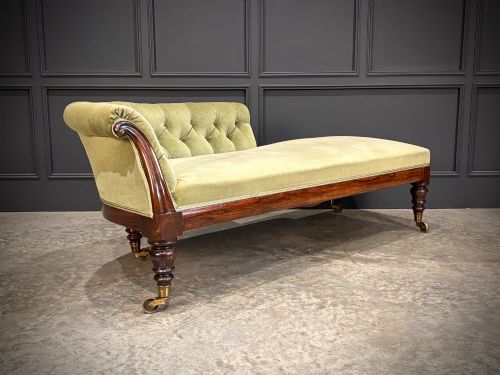
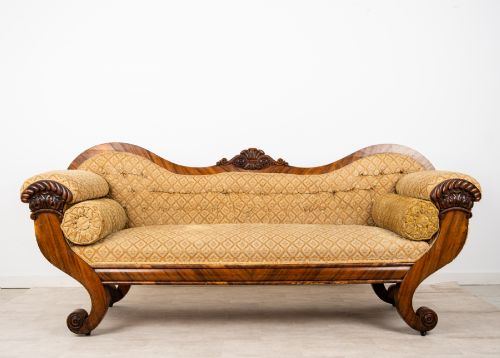
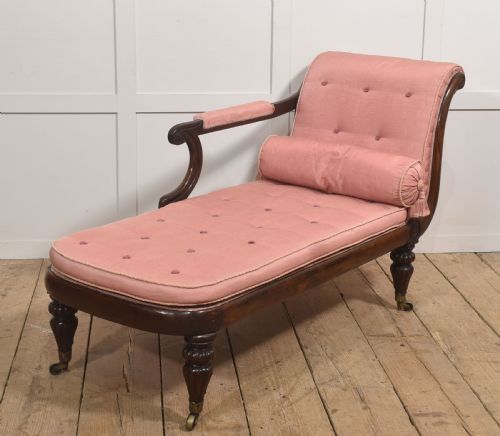
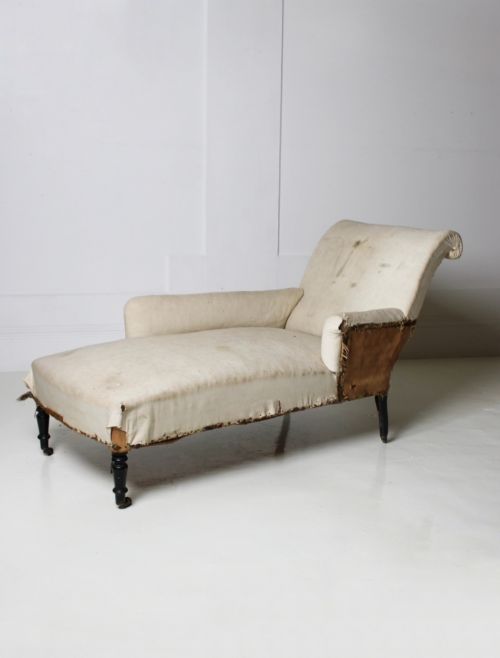
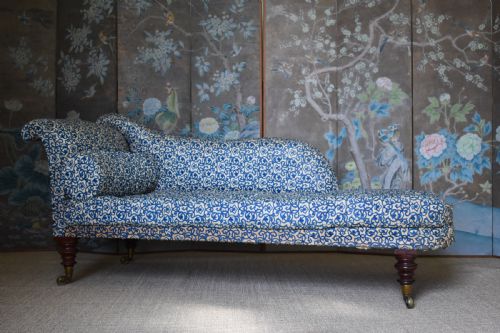
A victorian scrolled chaise longue provides a single-ended daybed form designed for reclining while maintaining an upright posture at one scrolled end. These pieces span the nineteenth century, including specific dates such as eighteen fifty, eighteen sixty, and eighteen eighty, alongside broader Victorian and Regency periods.
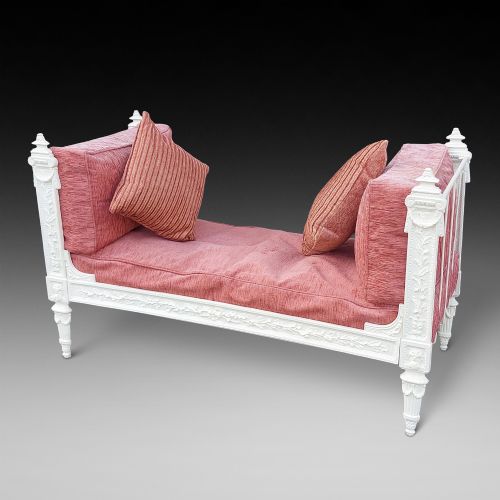
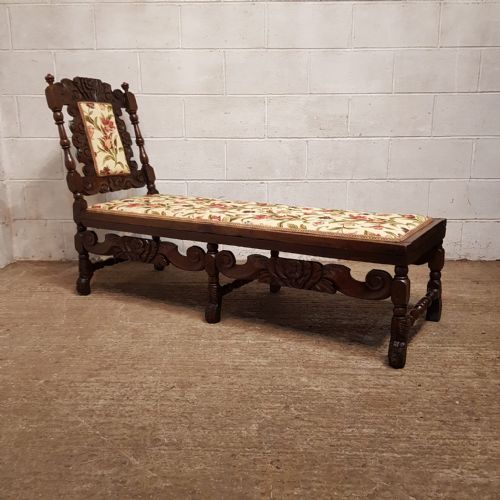
The objects appear under several historical designations, including daybeds, settees, and sofas alongside traditional chaise longues. Examples range from large country house editions to miniature ebonised models and cane-seated variations.
Buyers will most frequently encounter rosewood and mahogany timber frames featuring upholstered surfaces in velvet, fabric, or damask. Structural forms incorporate carved scroll ends and turned legs fitted with original castors.
What varies in quality
The calibre of timber framing dictates the structural integrity, moving from standard mahogany and oak up to solid Rio rosewood. Carving depth and precision upon the scroll ends reveal the hand of the maker and the workshop standard.
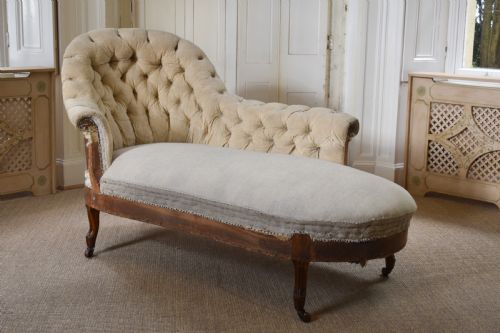
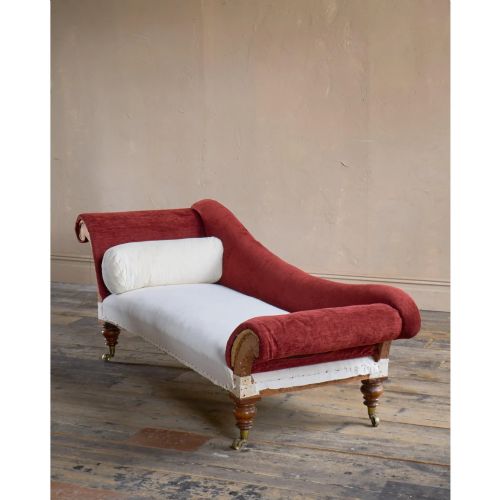
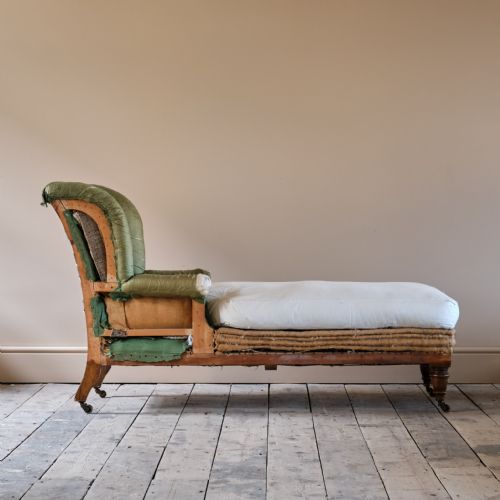
Upholstery execution and fabric selection distinguish individual pieces, ranging from simple calico foundations to fine velvet, damask, and woven materials. Maker attribution, such as pieces associated with Holland and Sons or Miles and Edwards, elevates the standing of an individual daybed.
Victorian Scrolled Chaise Longue Retail Price Guide 2026
Typical asking prices for victorian scrolled chaise longue among the pieces listed under this phrase on Sellingantiques today, from the lower quarter to the upper quarter. They describe what is for sale here now, not the wider market.
Holland and Sons·Miles and Edwards
The Victorian Scrolled Chaise Longue Glossary
- Chaise Longue
- A long reclining chair or daybed allowing the user to stretch out horizontally while supported at one end by an upholstered backrest.
- Scroll End
- A decorative curved terminal shaping the timber framework of a sofa arm or daybed headrest.
- Rosewood
- A dense, heavily figured timber utilised for high-status nineteenth-century furniture frames.
- Damask
- A reversible figured fabric traditionally woven with intricate patterns utilised for upholstery.
- Castor
- A small wheel mounted on a swivel attached to the base of furniture legs for ease of movement.
Victorian Scrolled Chaise Longue: Frequently Asked Questions
What is a victorian scrolled chaise longue?
It is a nineteenth-century reclining seat designed for daytime resting, featuring a raised scroll end for the head.
Such pieces combine timber frames of mahogany or rosewood with soft upholstery fabrics like velvet and damask.
How were these daybeds used originally?
They served as formal resting places in country house drawing rooms and parlours for reading or socialising in a semi-reclined posture.
Owners utilised them primarily during daytime hours rather than overnight sleeping.
Where should I place a chaise longue?
These pieces suit large reception rooms, bedrooms, or studies where the asymmetric profile can be viewed from multiple angles.
Positioning them away from walls highlights the carved scroll work and timber frames.
How do I identify a nineteenth-century piece?
Look for dense timbers like rosewood and mahogany, hand-carved scroll details, and traditional joinery methods characteristic of the era.
Turned legs often feature original brass or metal castors typical of nineteenth-century manufacture.