



Victorian Salt Pepper
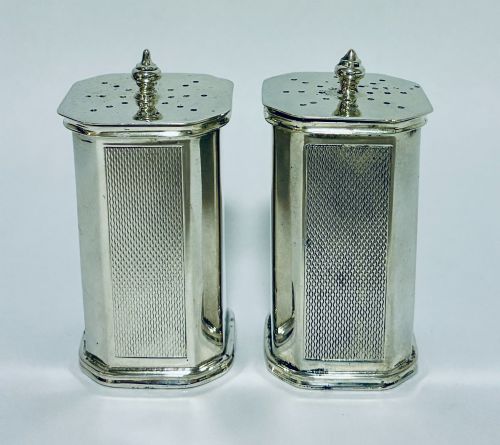
These victorian salt pepper pieces bring character to the dining table through silver, glass, and novelty figural designs.
Victorian Salt Pepper
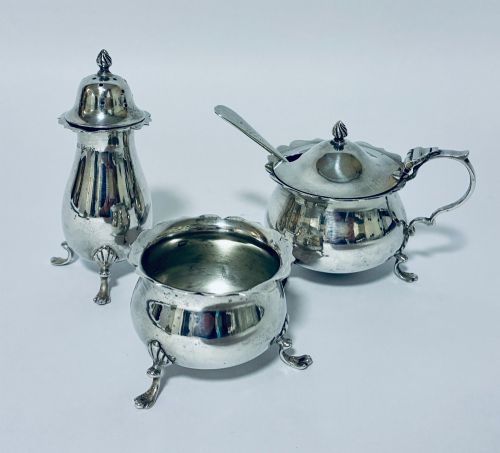
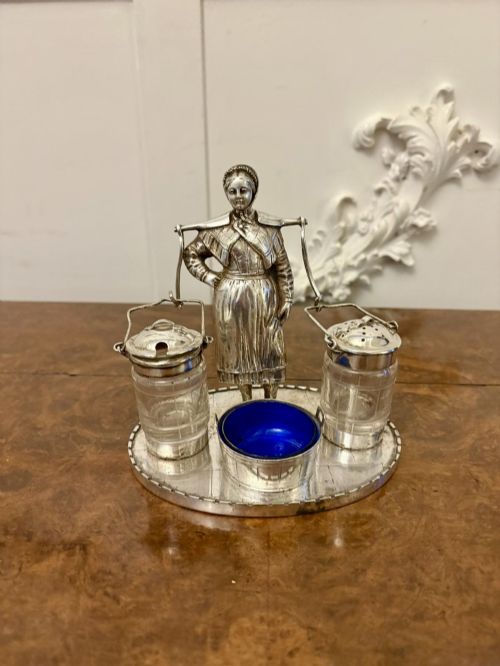
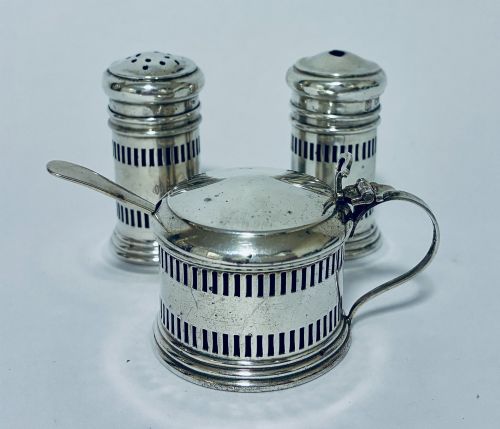
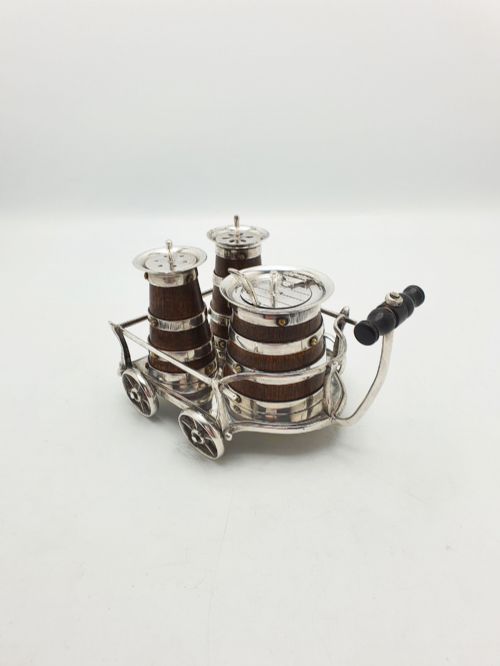
Victorian salt pepper items span simple pairs of pepperettes alongside elaborate multi-bottle cruet sets housed in oak, silver plate, and sterling silver. The selection relies heavily on matching cruet and condiment sets that combine mustard pots, salt cellars, and pepper shakers on stands.
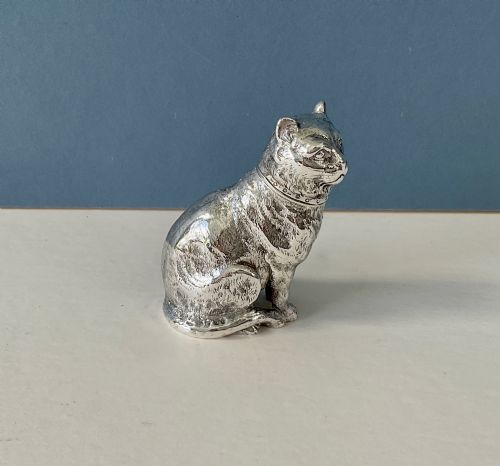
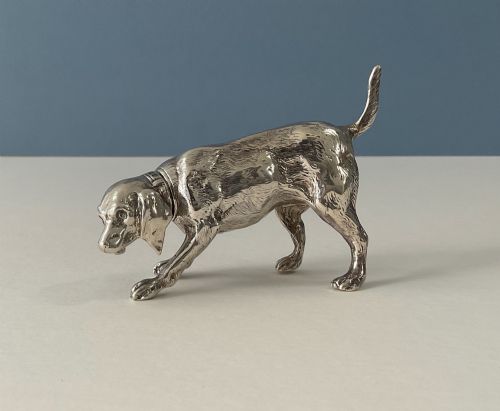
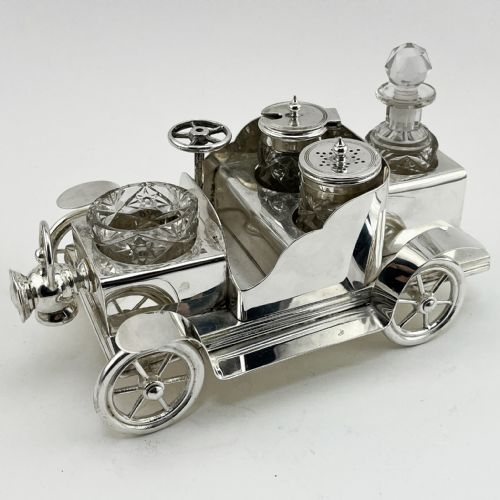
Novelty forms dominate the field, shaping silver into owls, chicks, dogs, cats, cockatoos, vintage cars, carriages, and Mr Punch's dog Toby. These figural pieces serve as functional tableware while mimicking animals and objects with detailed casting and engraving.
Most examples date from the later nineteenth century, though the selection extends from George III style iterations up to early twentieth-century Edwardian and 1930 pieces. Buyers encounter both standard sterling silver shakers and plated items mounted with cut glass or cobalt glass bottles.
Materials and construction
Combinations of sterling silver, oak, cut glass, and cobalt glass appear frequently in multi-bottle cruet frames. Wood was turned into miniature barrels or butler trays to hold glass cruet bottles fitted with silver mounts and collars.
Victorian Salt Pepper Retail Price Guide 2026
Typical asking prices for victorian salt pepper among the pieces listed under this phrase on Sellingantiques today, from the lower quarter to the upper quarter. They describe what is for sale here now, not the wider market.
Listings feature sterling silver and silver plate alongside cut glass, cobalt glass, and oak across Victorian, Edwardian, and George III styles.
Judging quality
Quality rests on the crispness of the casting in figural pieces, where finer examples preserve feather and fur detail without softening from worn moulds. Maker marks, clear hallmarks, and registration numbers indicate superior workshop standards.
The integrity of integrated materials distinguishes better sets, seen in heavy glass cutting, unwarped oak frames, and thick silver plating that resists base metal exposure. Complete sets retaining matching bottles demonstrate higher preservation than assembled groups.
Walker & Hall·Sampson Mordan·Thomas Johnson
The Victorian Salt Pepper Glossary
- Cruet set
- A matched assembly of small bottles, pots, or shakers held in a stand for condiments. These sets typically served vinegar, oil, mustard, salt, and pepper at the dining table.
- Pepperette
- A small shaker or pot designed specifically for dispensing ground pepper. The term often describes nineteenth-century silver shakers with perforated tops.
- Silver plate
- A layer of silver fused to a base metal core such as copper or Britannia metal. This technique offered the appearance of solid silver at a lower cost.
- Cobalt glass
- Deep blue glass frequently utilised for liner bottles within open salt cellars and cruet sets. The rich colour provided a striking visual contrast against silver frames.
- Figural novelty
- An object shaped into the likeness of a human, animal, or vehicle while retaining a utilitarian purpose. These pieces combined humour with functional dining room presentation.
Victorian Salt Pepper: Frequently Asked Questions
How do I clean antique silver cruet sets?
Clean silver components gently using a soft cloth and dedicated silver polish, avoiding abrasive pastes that strip thin plating.
Keep moisture away from wooden elements like oak trays or barrels to protect the joints and finish.
Were novelty salt and pepper pots used daily?
Many figural pieces served practical functions at affluent dining tables, holding condiments during formal meals.
Their whimsical designs also made them popular conversation items and display objects in Victorian households.
How can I date Victorian silver shakers?
Examine the hallmarks stamped on the silver, which record the assay office, date letter, and maker's mark.
Registration numbers found on specific figural pieces also point to the exact year the design was officially registered.