


Victorian Rural Print
These Victorian rural print options capture nineteenth-century pastoral life on paper and canvas, bringing classic English countryside scenes into your home.
Victorian Rural Print
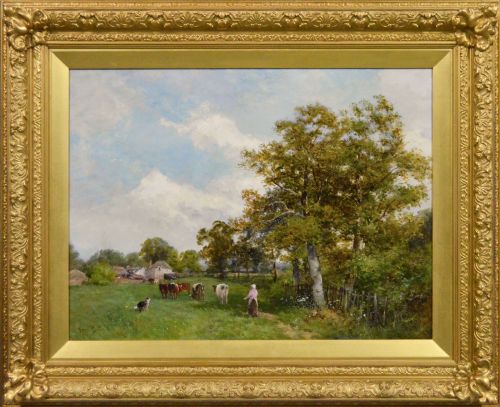
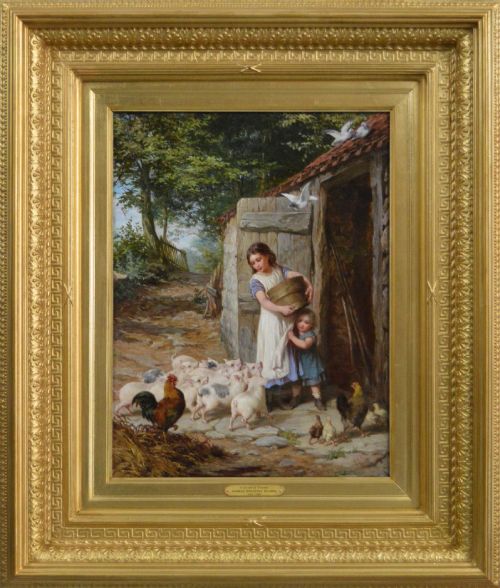
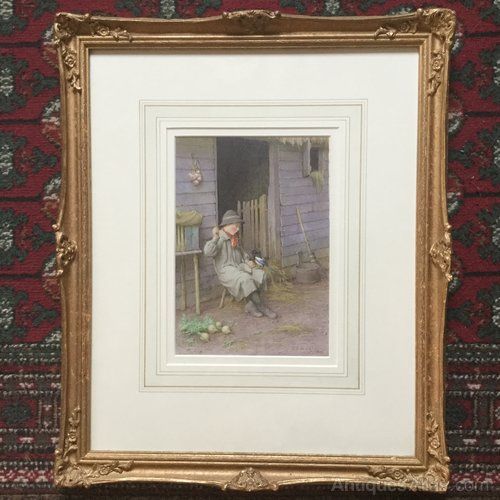
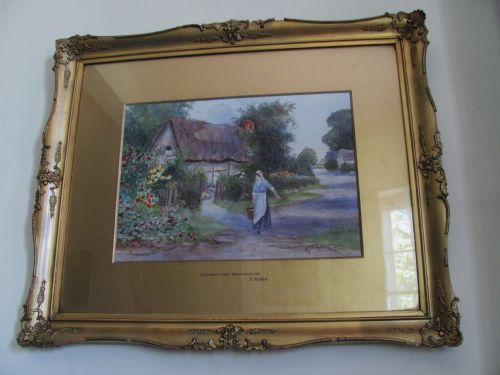
A Victorian rural print brings nineteenth-century pastoral scenes, farmyards and cottage life into domestic spaces. These works reflect an era fascinated by the quiet rhythm of country living, agricultural labour and domestic animals.
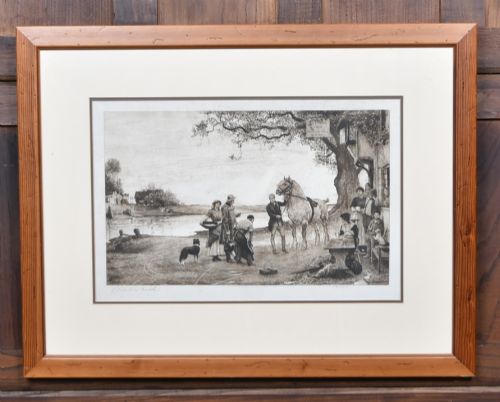
Buyers encounter framed art, watercolours, etchings and lithographs created across the Victorian and Edwardian eras. These pieces bridge the gap between grand oil paintings and accessible domestic wall art.
How they were made
Makers utilised paper and canvas as the primary surfaces for these rural depictions, often housing them in wooden frames enriched with gesso, gold leaf and gilded wood. Traditional printmaking techniques such as etching and lithography allowed artists to reproduce detailed pastoral scenes for wider distribution.
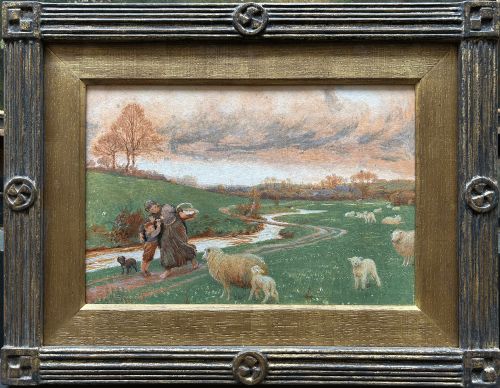
Watercolour and oil on canvas form the foundation of the hand-rendered works seen in this category. Framed prints combine fine paper surfaces with protective glass panes to preserve the delicate ink and pigment layers.
Listings feature paper, glass, wood, oil on canvas, gold leaf and gesso across the nineteenth and early twentieth centuries.
What varies in quality
Quality rests in the precision of the line work, the depth of the pigments and the condition of the paper or canvas. Etchings with sharp, clean plate marks and rich tonal variations sit above softer, faded impressions.
The execution of the frame also dictates overall standard, with original gilded wood and gesso mouldings commanding greater appreciation than modern replacements. Hand-painted watercolours and oil paintings demonstrate the direct skill of named artists compared to mass-produced reproductions.
David Bates·Robert W. Macbeth·George Augustus Holmes·Frederick Walker·Charles Edward Wilson·Herbert Dicksee·James William Booth·Joseph Kirkpatrick·James Wallace & Co.
The Victorian Rural Print Glossary
- Etching
- A printmaking process where lines are bitten into a metal plate with acid before ink is applied. This technique produces fine, precise details prized in nineteenth-century works.
- Lithography
- A planographic printing method based on the repulsion of oil and water. It enabled artists to produce faithful reproductions of original paintings.
- Gesso
- A plaster-like mixture applied to wooden frames before gilding. It provides a smooth base for gold leaf and ornate decorative moulding.
- Giltwood
- Wood covered with a thin layer of gold leaf or gold paint. It frequently frames high-status Victorian and Edwardian art.
- Watercolour
- A paint consisting of pigment suspended in a water-based solution. It creates translucent washes often applied to paper for countryside scenes.
Victorian Rural Print: Frequently Asked Questions
What subjects appear in these works?
The works depict traditional pastoral life, including farm animals, cottage scenes and agricultural labour. Common motifs feature figures herding cattle, tending calves and working in hay fields.
Artists drew inspiration from the English countryside, focusing on Warwickshire cottages and rural idylls. These subjects reflect nineteenth-century romanticism regarding agrarian existence.
How do etchings differ from paintings?
Etchings involve incising lines into a metal plate and printing them onto paper, allowing for multiple impressions. Paintings are singular, hand-rendered works using oil or watercolour directly on the surface.
Prints offer duplicated detail through mechanical or chemical processes, whereas paintings showcase individual brushwork and pigment layering by the artist.
How should I frame these pieces?
Original frames often feature gilded wood or gesso mouldings that complement the period of the artwork. Preserving these historic surrounds maintains the integrity of the piece.
When framing works on paper, use glass to protect the surface from dust and moisture while allowing light to pass through the transparent pigments of watercolours.
What periods do these items represent?
The items span the Victorian era, the Edwardian period and the early twentieth century. This timeline covers roughly the mid-nineteenth century up to nineteen-ten.
Styles range from Victorian pastoral and the idyllic school to British realism. Each period brings distinct shifts in how artists approached rural subjects.