


Victorian Rural Art
Victorian rural art captures nineteenth-century country life through oil paintings, watercolours, and etchings of farms, livestock, and landscapes.
Victorian Rural Art
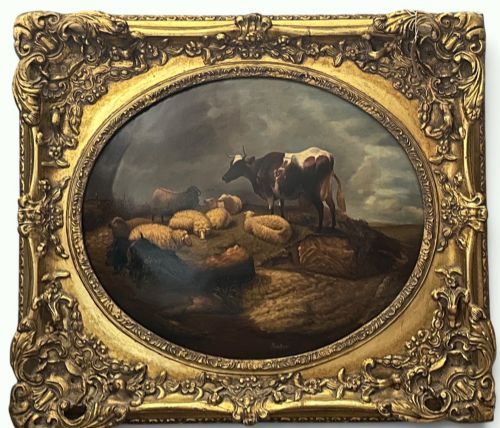
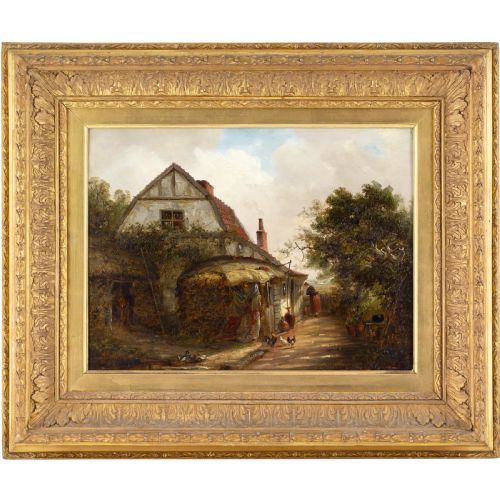
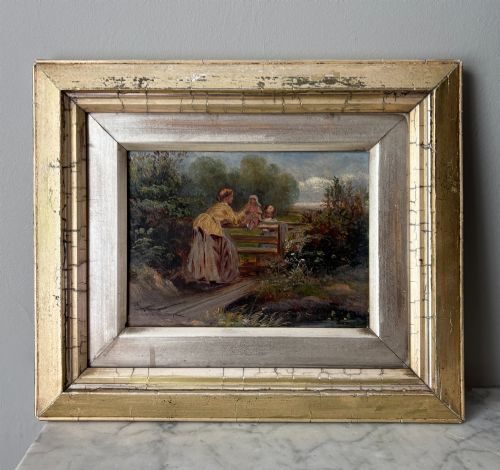
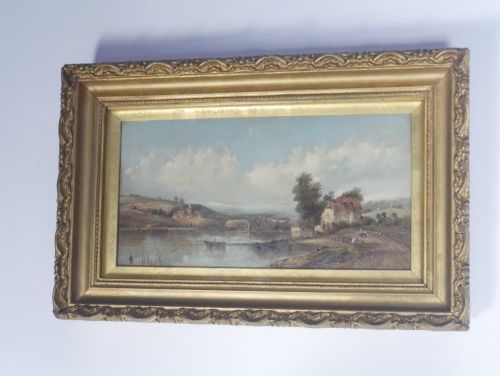
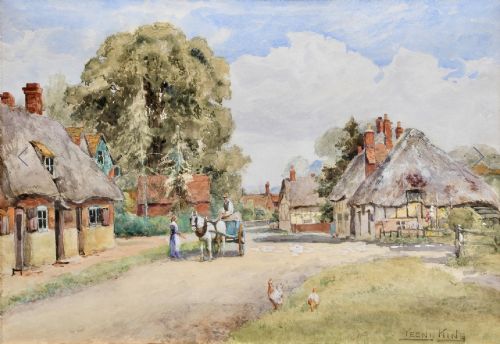
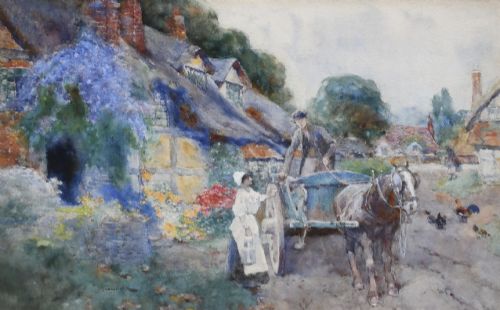
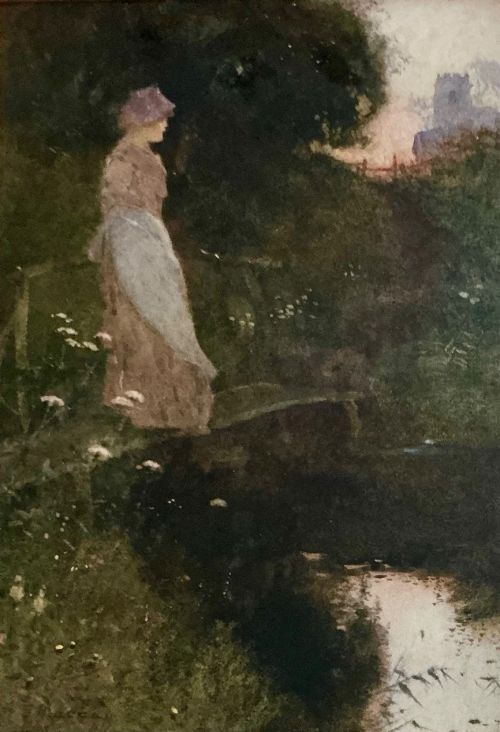
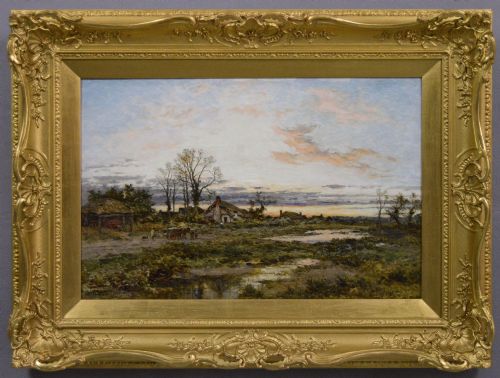
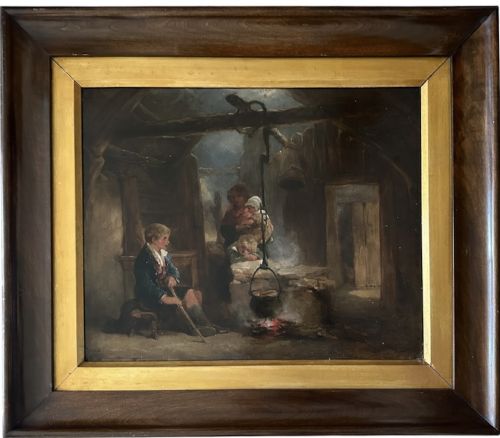
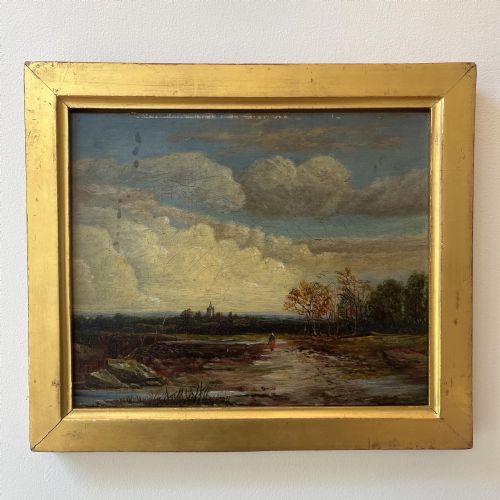
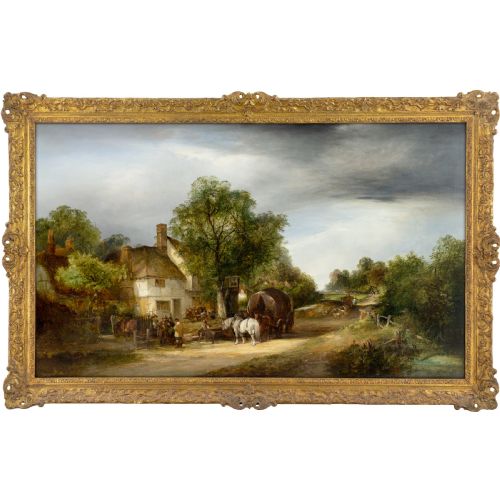
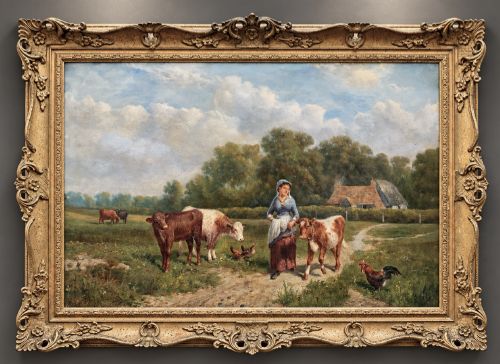
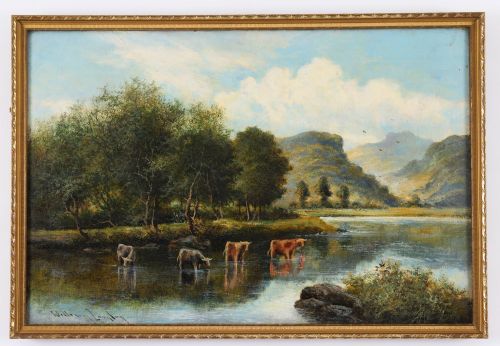
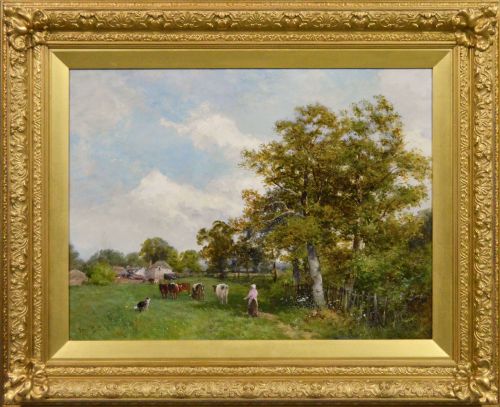
When you search for Victorian rural art, you are looking at nineteenth-century depictions of country life, farmyards, and pastoral landscapes. These works record agrarian scenes, featuring cattle, sheep, harvest fields, and cottages.
The pieces you are most likely to meet on this page include framed oil paintings on canvas or panel, alongside watercolours on paper. They span the nineteenth century and extend into the Edwardian period around nineteen hundred.
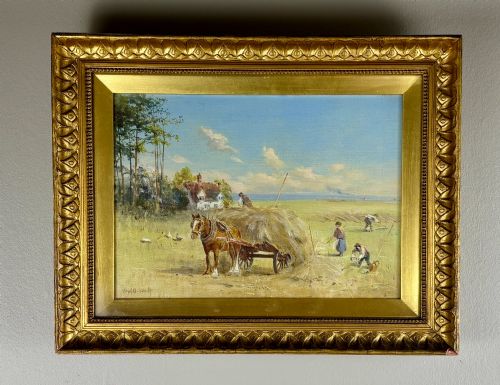
Subjects frequently centre on everyday rural labour, such as herding sheep, logging, or gathering the harvest. Figures and animals appear within British landscapes rendered in realist, pastoral, and naturalistic styles.
How They Were Made
Artists worked primarily with oil paint on canvas or board, and watercolour on paper, sometimes utilising etching techniques. Canvases and panels were housed in timber frames, often finished in gilt wood.
The application of paint ranges from smooth, detailed brushwork in oil to fluid washes in watercolour. Support materials vary from heavy paper and card to stretched canvas and prepared wooden boards.
Victorian Rural Art Retail Price Guide 2026
Typical asking prices for victorian rural art among the pieces listed under this phrase on Sellingantiques today, from the lower quarter to the upper quarter. They describe what is for sale here now, not the wider market.
Listings feature works from the nineteenth century up to nineteen ten, using oil paint, watercolour, paper, canvas, and gilt wood.
What Varies in Quality
Quality rests upon the artist's ability to handle light, atmosphere, and anatomical proportion in figures and livestock. Superior works demonstrate accomplished draughtsmanship and confident brushwork that bring depth to the landscape.
The integration of the frame with the painting influences the overall presentation, with period gilt wood frames enhancing the visual weight of oil canvases. The preservation of the paper in watercolours and the stability of the paint surface also determine the calibre of a piece.
William Langley·Thomas Sidney Cooper·William Manners·David Bates·Miles Birkett Foster
The Victorian Rural Art Glossary
- Oil on Canvas
- Pigment mixed with drying oil applied to a woven fabric support. This combination allows for rich colour blending and textured brushstrokes.
- Watercolour
- Pigments suspended in a water-based, translucent solution applied to paper. It produces luminous washes that rely on the white of the paper for highlights.
- Etching
- A printmaking process where lines are incised into a metal plate with acid before being inked and pressed onto paper. This technique creates fine, detailed linear imagery.
- Pastoral Style
- An artistic genre depicting the idealized peacefulness of rural and shepherd life. These scenes emphasise harmonious relationships between humans, animals, and nature.
- Gilt Wood
- Timber that has been coated with a thin layer of gold leaf or metallic gilt powder. It is frequently found on nineteenth-century picture frames.
Victorian Rural Art: Frequently Asked Questions
What subjects appear in these paintings?
The artworks depict nineteenth-century British country life, including farmyards, harvest fields, and livestock such as cattle and sheep. Cottages, country inns, and figures engaged in rural labour also recur frequently across the works.
Artists observed local topography and agricultural routines, producing scenes that reflect pastoral and realist traditions of the period.
How do I date a Victorian rural painting?
Dating relies on stylistic clues, artist signatures, biographical dates, and framing materials. Many works carry specific dates or reflect the working periods of documented nineteenth-century painters.
Examining the canvas preparation, stretcher construction, and the style of the gilt wood frame offers additional chronological context for the piece.
Are these works original or reproductions?
The listings comprise original oil paintings, watercolours, and period etchings created by nineteenth-century artists. Each piece is an individual handmade work rather than a modern mechanical reproduction.
Signatures, brush texture, and paper or canvas characteristics help confirm the authenticity of the hand-rendered surface.
How should I display watercolour paintings?
Watercolours require protection from direct sunlight to prevent the fading of pigments on paper. Framing behind glass with acid-free mounts safeguards the delicate medium from environmental moisture.
Placing them away from direct heat sources ensures the paper and backing materials remain stable over time.