




Victorian Ruby Red Ring
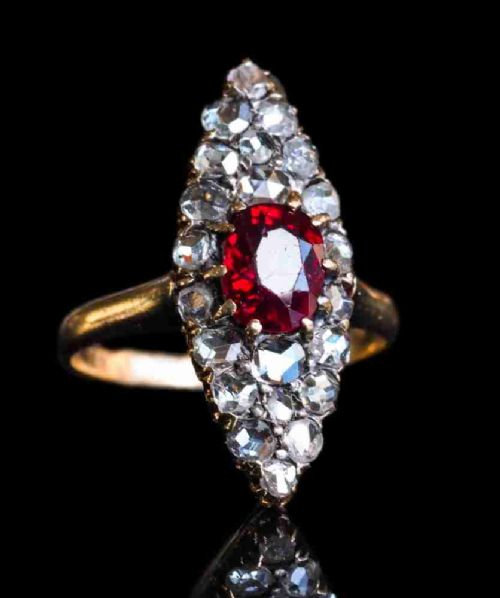
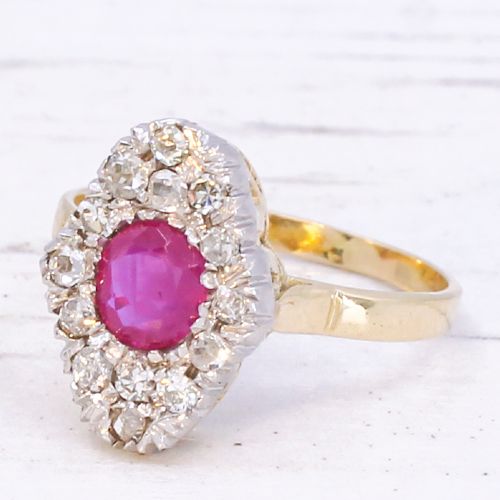
A victorian ruby red ring brings together rich crimson stones and old cut diamonds set in yellow gold, offering deep historical character.
Victorian Ruby Red Ring
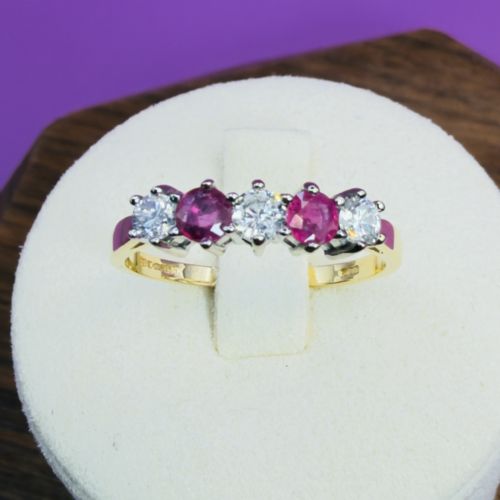
When searching for a victorian ruby red ring, buyers encounter a variety of cluster, multi-stone, and band configurations originating from the nineteenth century. These pieces primarily feature vibrant red stones paired with diamonds, mounted in yellow gold.
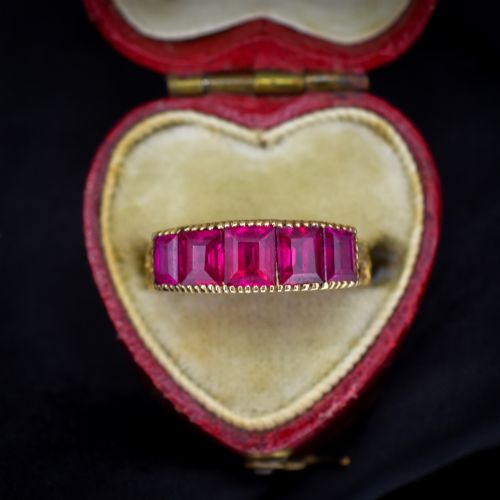
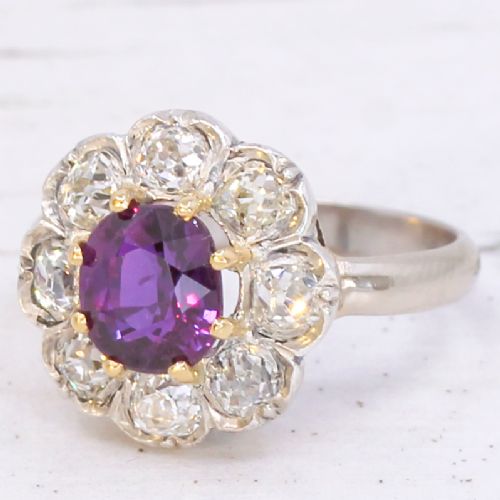
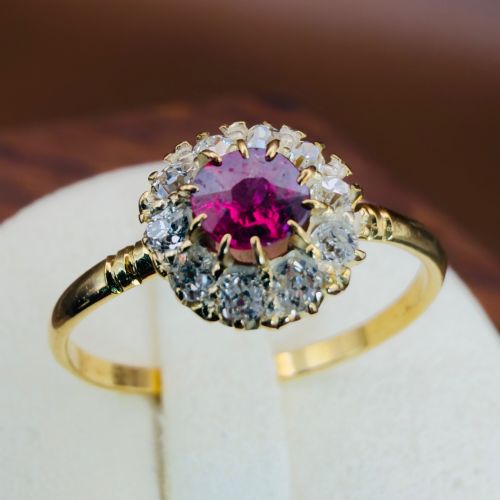
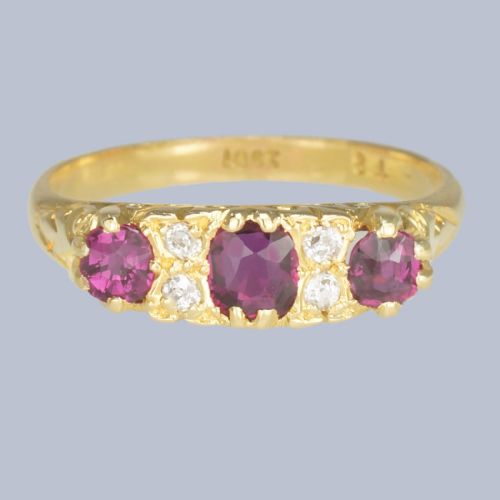
The selections available include halo clusters, starburst patterns, gypsy settings, and traditional five stone arrangements. Dating ranges across the period, with pieces spanning the nineteenth century into the early twentieth century.
Origin details in the evidence point to Burmese and Mogok stones alongside various gold purities. These rings serve as enduring examples of period jewellery design.
How they were made
Makers constructed these rings predominantly using eighteen carat yellow gold and standard gold alloys. Stones were secured by hand settings that matched the contours of each gemstone.
Gems such as rubies and diamonds were shaped into old cuts and arranged in clusters, navette shapes, or multi-stone rows. Metalwork often incorporated detailed shoulders and carved half hoop bands.
Victorian Ruby Red Ring Retail Price Guide 2026
Typical asking prices for victorian ruby red ring among the pieces listed under this phrase on Sellingantiques today, from the lower quarter to the upper quarter. They describe what is for sale here now, not the wider market.
Listings feature periods from the nineteenth century alongside materials including gold, silver, ruby, and diamond.
What varies in quality
The distinction between tiers of these rings rests on the origin and treatment of the gemstones. Unheated natural rubies originating from locations like Burma command greater attention than treated alternatives.
Proportion and stone pairing also dictate overall refinement. Heavier carat weights, balanced diamond accents, and crisply executed gold mounts separate standard production from exceptional examples.
The Victorian Ruby Red Ring Glossary
- Cluster ring
- A setting where a central gemstone is surrounded by a border of smaller stones, typically diamonds encircling a ruby.
- Old cut
- A vintage diamond cutting style characterised by a smaller table, higher crown, and open culet, common in nineteenth century jewellery.
- Navette
- A boat-shaped setting that elongates along the finger, often filled with multiple stones.
- Gypsy ring
- A style where stones are flush-set directly into a heavy tapered metal band.
- Trilogy ring
- A three-stone ring design representing past, present, and future, frequently combining rubies and diamonds.
Victorian Ruby Red Ring: Frequently Asked Questions
How do I wear a delicate antique ring daily?
Daily wear requires consideration for the softer nature of older gold settings and precious stones. Removing the ring during heavy manual tasks protects the structural integrity of the metal.
Storing the piece separately prevents scratching from other jewellery items. Regular checks by a professional jeweller ensure stones remain secure in their original mountings.
What periods do these rings come from?
The pieces span the Victorian era, with dates stretching from the nineteenth century into the early twentieth century. Associated styles also touch upon Edwardian periods.
Different decades brought subtle shifts in mount designs and stone arrangements. Hallmarks and stylistic markers help establish the precise era of manufacture.
Are the rubies natural or treated?
Evidence shows that many stones are natural and unheated origin examples, particularly those sourced from Burma and Mogok. Documentation or certification often accompanies significant stones to verify their status.
Buyers should examine specific listings for details regarding stone treatment. Natural unheated varieties hold distinct geological characteristics valued by collectors.
What gold purity is used in these rings?
Most examples utilise eighteen carat yellow gold, alongside standard gold and occasional nine carat variations. This alloy provides a warm tone that complements red gemstones.
Gold purity marks often appear inside the band alongside maker stamps or assay office symbols. These stamps assist in verifying the geographical origin and date of the piece.