






Edwardian Red Stone Ring
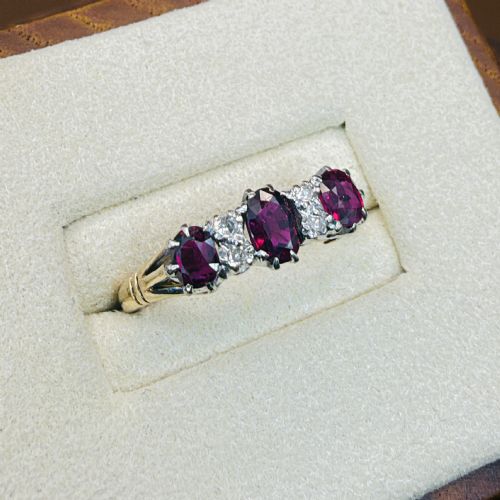
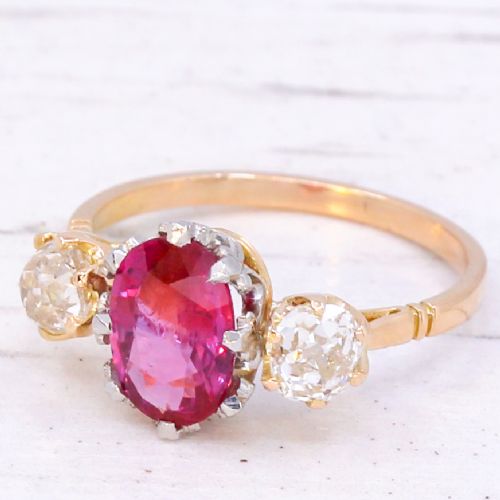
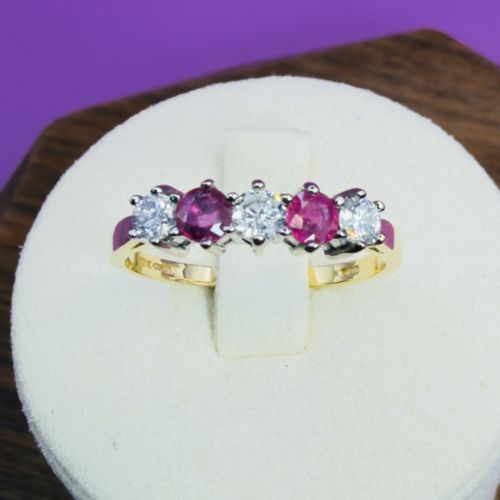
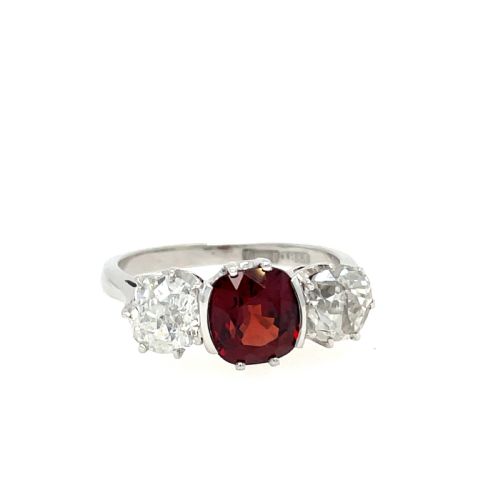
An edwardian red stone ring brings crimson brilliance and enduring goldwork to the hand, offering a refined piece of history for daily wear.
Edwardian Red Stone Ring
How they were made
Goldsmiths utilised 18ct yellow gold, 18ct white gold, and platinum to fabricate the bands and settings that hold the gemstones securely. Metalwork often incorporates starburst designs and delicate claw or flush mountings tailored to the specific silhouette of each ring.
Lapidaries shaped rubies and red spinels into old cuts, pairing them with old cut diamonds to catch the light from multiple angles. Birmingham hallmarks and period workshop practices ensured structural integrity across three stone, cluster, and band configurations.
Materials recorded across the listings include 18ct yellow gold, 18ct white gold, platinum, ruby, red spinel, and diamond.
What varies in quality
Quality rests upon the depth of colour and natural origin of the red stone, whether ruby or red spinel, balanced against the brilliance of accompanying old cut diamonds. Superior examples display harmonious proportions between the central gems and the surrounding metalwork.
The execution of the precious metal setting, from platinum highlights to intricate gold starbursts, distinguishes finer pieces. Longevity and condition of the band further differentiate standard production from master craftsmanship.
The Edwardian Red Stone Ring Glossary
- Old cut
- A diamond facet arrangement common in antique jewellery, featuring a small table and high crown that produces a soft, candlelit sparkle. These stones were shaped by hand before modern symmetrical standards were adopted.
- Trilogy ring
- A ring featuring three principal gemstones set in a row across the finger, traditionally symbolising the past, present, and future. This style pairs red stones with diamonds effectively.
- Gypsy ring
- A style where gemstones are flush-set directly into a heavy, tapering gold band rather than held in raised claws. This created a smooth, snag-free surface suited to everyday wear.
- Cluster ring
- A design grouping a central gemstone surrounded by a halo of smaller stones, typically diamonds, to maximise overall visual impact and brilliance. This configuration enhances the presence of the main red stone.
Edwardian Red Stone Ring: Frequently Asked Questions
How do I care for my ring?
Clean these antique rings gently using warm soapy water and a soft brush, avoiding harsh chemical dips that might harm old settings.
Store them separately in padded boxes to prevent the gold and gemstones from scratching against other items.
Can I wear an antique ring daily?
Most 18ct gold and platinum rings withstand daily wear if checked periodically by a jeweller for prong security.
Removing the ring during heavy manual tasks protects the delicate old cut stones and precious metalwork from unnecessary trauma.
Are these rings genuinely antique?
The listings span historical periods from the nineteenth century through the Edwardian era and into the mid-twentieth century.
Hallmarks, mounting styles, and hand-cut gemstones provide physical evidence of their period origins.
What is the difference between ruby and red spinel?
Both minerals yield striking red hues, but ruby is a distinct variety of corundum while spinel is a separate gemstone species.
Historical records show both materials utilised interchangeably in period rings for their deep crimson coloration.