




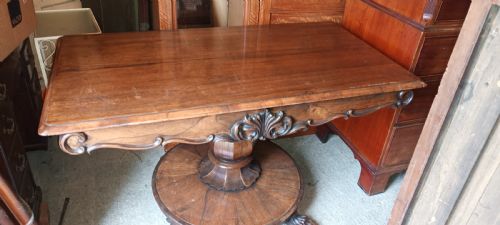
Victorian Rosewood Pedestal Desk
A victorian rosewood pedestal desk is a substantial workspace built to anchor a room, pairing dense tropical timber with fitted drawers.
Victorian Rosewood Pedestal Desk
A victorian rosewood pedestal desk is defined by twin stacks of drawers supporting a heavy writing top, frequently finished on all sides to allow freestanding placement in the middle of a library or study. The form bridges utility and display, emerging primarily across the nineteenth century through Victorian, William IV, and Regency periods.
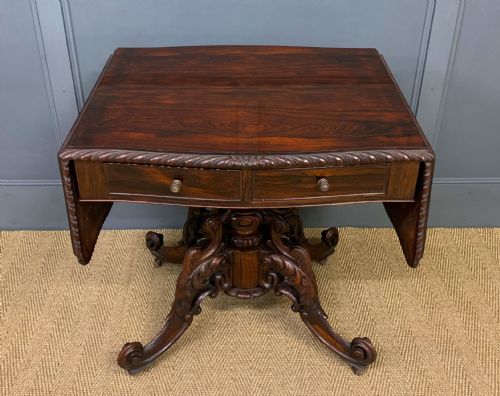
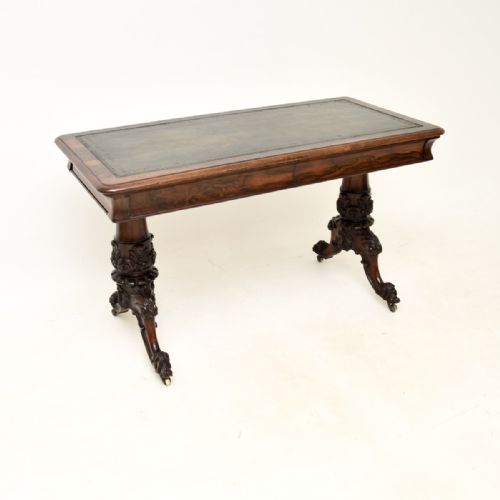
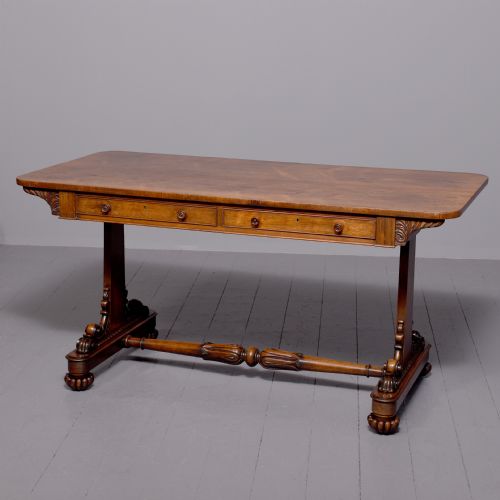
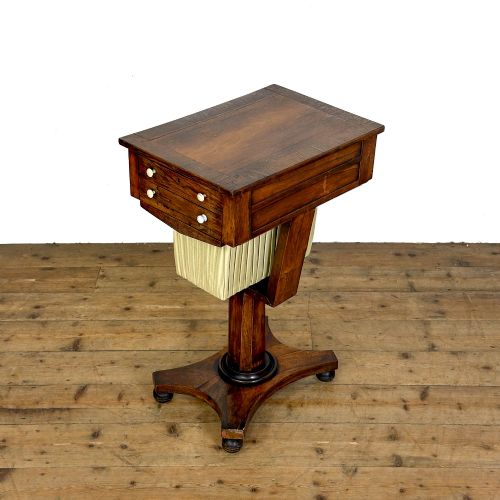
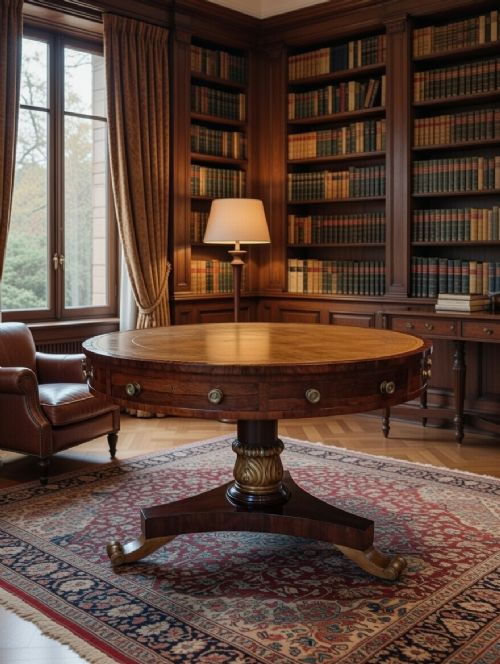
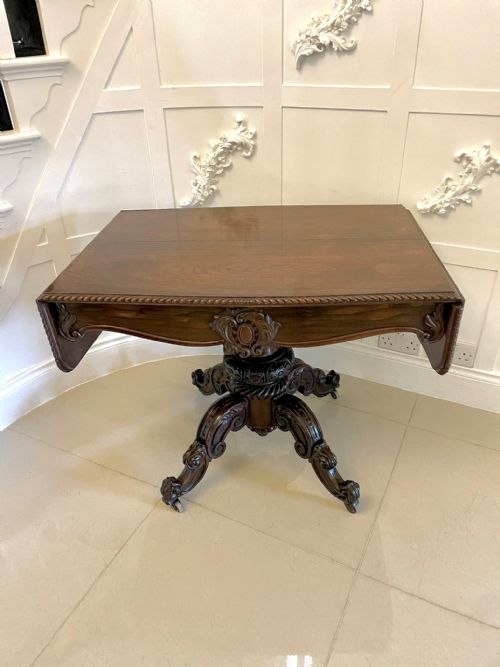
While traditional pedestal desks form the core of this search, buyers regularly encounter related writing furniture such as davenports, library tables, and partners desks sharing the same dark exotic timbers. These variations span compact sloped writing boxes to large double-sided tables equipped with drawers on both faces.
What Varies in Quality
Quality rests heavily on the selection of the rosewood veneer and the precision of any marquetry inlay or satinwood banding. Pieces designated as exhibition quality demonstrate superior timber matching across all elevations, including fully finished backs designed for central room placement.
The sophistication of internal joinery and secondary drawer construction further separates standard utilitarian pieces from high-status library furnishings. Carved ornamentation, when present, shifts from simple moulded edges to deep, hand-carved classical motifs.
Victorian Rosewood Pedestal Desk Retail Price Guide 2026
Typical asking prices for victorian rosewood pedestal desk among the pieces listed under this phrase on Sellingantiques today, from the lower quarter to the upper quarter. They describe what is for sale here now, not the wider market.
Listings span multiple nineteenth-century styles, including Regency, William IV, early Victorian, and Edwardian interpretations of rosewood desks.
Mein of Kelso
The Victorian Rosewood Pedestal Desk Glossary
- Pedestal desk
- A heavy writing desk consisting of two independent drawer pedestals supporting a single top. This configuration provides substantial storage beneath the writing surface.
- Partners desk
- A double-sided variation equipped with matching drawer tiers on both long sides, designed for two people to work opposite one another. These large tables typically stand free in the centre of a room.
- Davenport
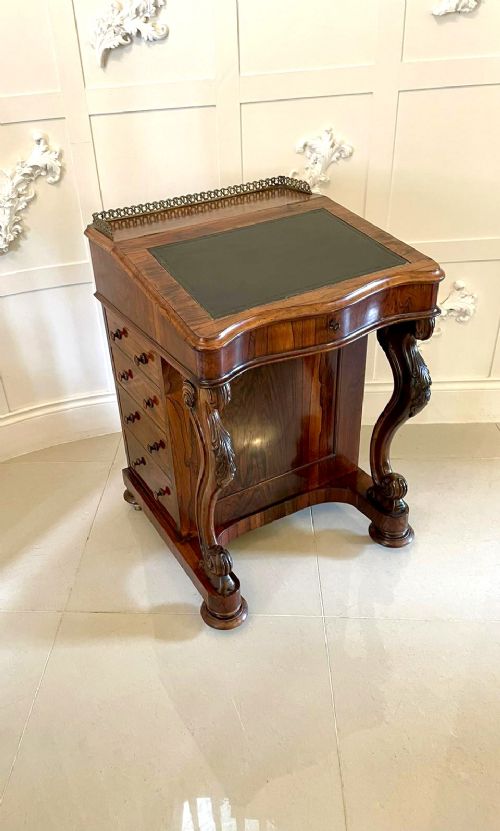
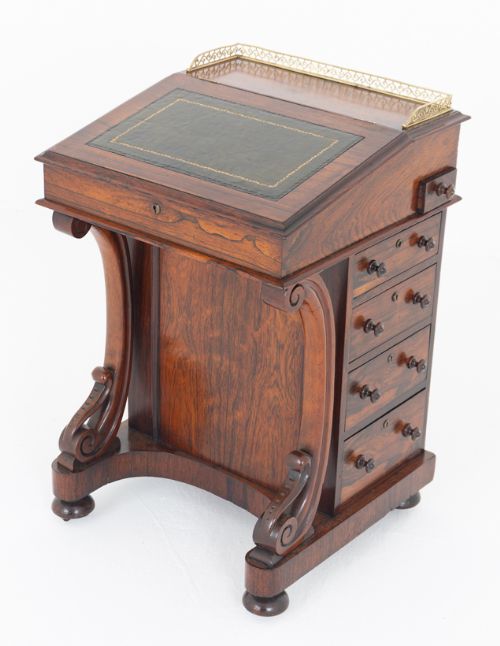
- A compact writing desk featuring a sloped, hinged writing lid above a single pedestal of side-opening drawers. They often incorporate stationary compartments concealed beneath the upper writing slope.
- Marquetry inlay
- Decorative patterns formed by fitting contrasting wood veneers into a prepared ground. Artisans utilised this technique to create floral or geometric motifs across the desktop and drawer fronts.
- Goncalo Alves
- A dense exotic timber resembling rosewood, occasionally utilised interchangeably by nineteenth-century cabinet makers. It displays pronounced dark figuring against a lighter golden-brown ground.
Victorian Rosewood Pedestal Desk: Frequently Asked Questions
What is a partners desk?
A partners desk is a double-sided writing table designed with functional drawers and cupboards facing outward on both long sides. This layout allowed two individuals to sit and work opposite each other in a shared office or library.
Such desks are typically larger and more heavily finished than single-pedestal writing tables, often featuring inset leather tops and substantial plinth bases.
How do I place a freestanding desk?
A freestanding desk is designed to sit in the middle of a room rather than pushed flat against a wall. Because the timber back is fully finished and polished, it presents an attractive appearance from every angle.
Ensure you allow sufficient clearance around the pedestal blocks for chairs and movement, as these desks command significant floor space.
What is a davenport desk?
A davenport is a compact nineteenth-century writing desk featuring a sloping top and a bank of drawers opening to the side. It combines a small footprint with built-in storage for writing materials.
Victorian makers frequently incorporated inlaid rosewood and stationary wells into these smaller writing cabinets.
How do I care for rosewood furniture?
Rosewood surfaces benefit from regular dusting with a soft, dry cloth and protection from direct sunlight and extreme humidity. Excessive heat can dry out the dense timber and cause the polish to craze.
Occasional application of appropriate wax polish maintains the lustre of the grain without building up a heavy residue.