
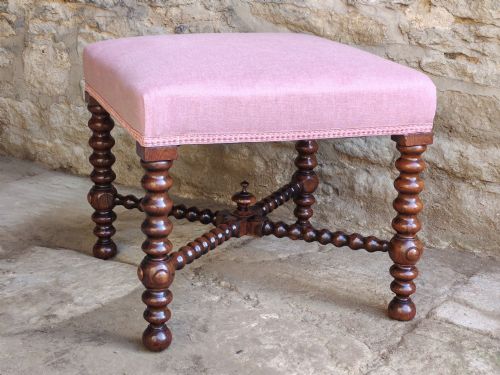


Victorian Rosewood Accent Table
A victorian rosewood accent table brings rich grain and solid nineteenth-century construction to any interior space.
Victorian Rosewood Accent Table
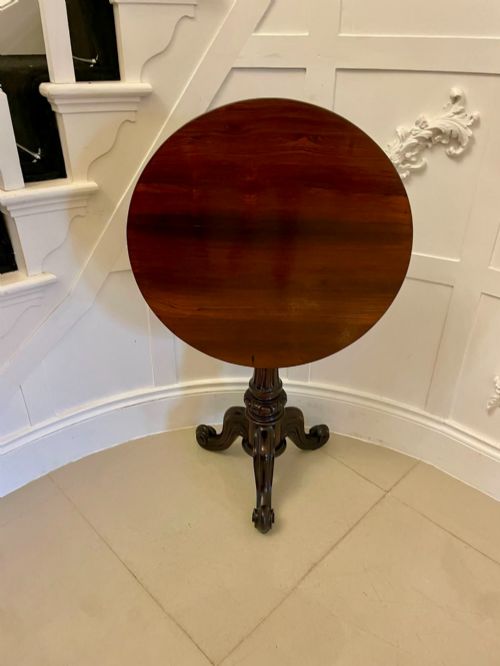
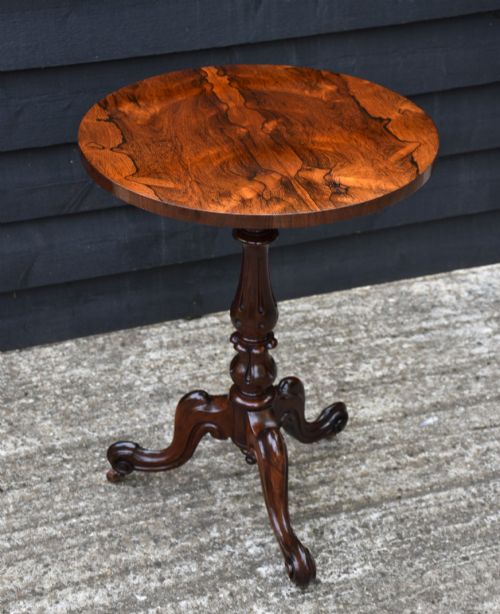
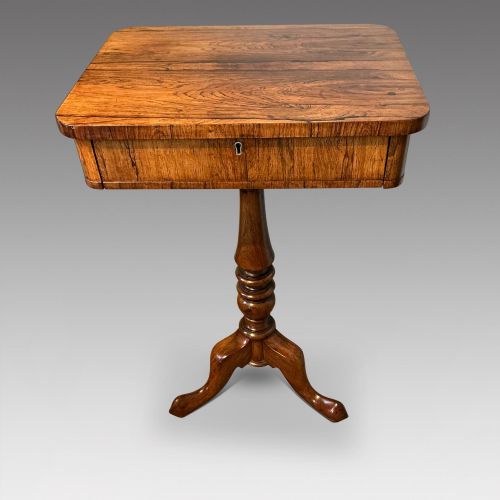
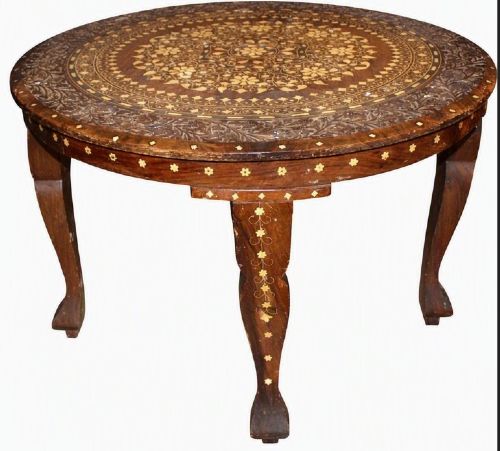
A victorian rosewood accent table encompasses a diverse group of nineteenth-century small furniture forms designed for specific domestic utility. The selection includes circular lamp tables, wine tables, pedestals, and multi-tiered pieces suited for display or everyday use.
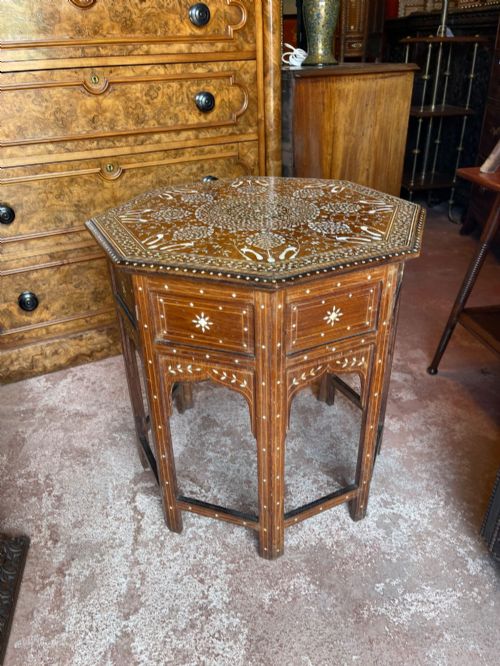
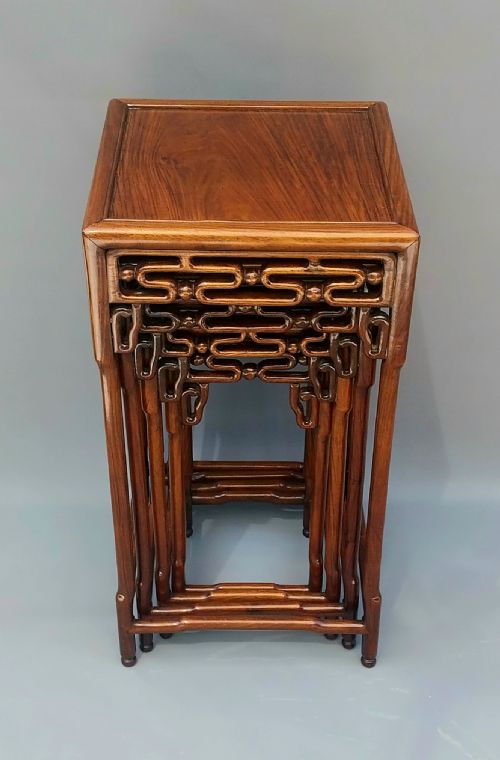
Makers of the period adapted these items into various configurations such as nests of tables, octagonal side tables, and drop-leaf designs. Pieces originate from domestic British workshops as well as Anglo-Indian and Far Eastern traditions.
The material palette centres heavily on rosewood, often paired with hardwood, teak, or exotic timbers like kingwood and satinwood. Buyers encounter formats ranging from simple tripod bases to complex inlaid exhibition pieces.
What varies in quality
Quality differences stem from the selection of timber grain, the precision of marquetry, and the complexity of inlaid materials such as brass or bone. Pieces bearing maker stamps or attributions to prominent cabinet makers reflect superior workshop standards.
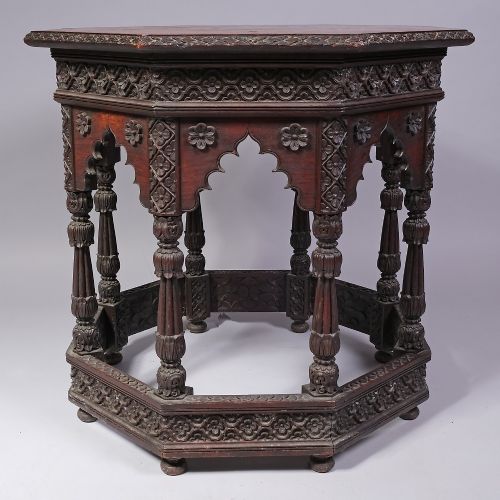
The crispness of carved woodwork and the structural integrity of pedestals or tripod bases indicate the original tier of production. Higher quality examples balance decorative ambition with robust construction that survives centuries of use.
Some tables double as dragons, proving that nineteenth-century furniture makers had a serious flair for mythical beasts.
Liberty & Co·Edwards & Roberts·Collinson & Lock
The Victorian Rosewood Accent Table Glossary
- Marquetry
- Decorative veneer applied to furniture in patterns using wood, metal, or shell. This technique creates pictorial or geometric surface designs.
- Crossbanding
- A border of veneer laid around the edge of a table top with the grain running perpendicular to the centre. It provides a neat framing effect.
- Tripod base
- A furniture support comprising three legs radiating from a central pillar. This design ensures stability on uneven floors.
- Pedestal table
- A table supported by a single central column resting on feet. The configuration allows maximum legroom around the perimeter.
Victorian Rosewood Accent Table: Frequently Asked Questions
Where should I place an accent table?
These pieces suit living rooms as lamp tables or occasional surfaces beside seating. Their compact footprint also makes them effective in hallways or bedrooms.
Larger centre tables or multi-tiered pieces work well as freestanding focal points in reception spaces.
How do I care for rosewood surfaces?
Dust regularly with a soft cloth and avoid placing timber furniture in direct sunlight or near heat sources. Maintaining stable room humidity prevents the wood from drying out.
Apply quality beeswax sparingly when the finish requires nourishment, buffing gently to a soft sheen.
How can I identify an Anglo-Indian piece?
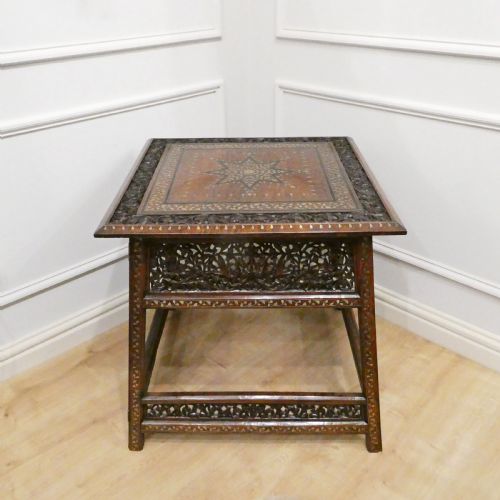
Anglo-Indian items typically feature dense overall carving and intricate inlay work utilising materials like bone or brass. The timber often includes native hardwoods combined with rosewood.
These tables display distinct regional motifs such as dragons, leaf patterns, or peacock designs reflecting nineteenth-century trade and export styles.
What is the difference between a lamp table and a wine table?
Lamp tables usually feature circular or square tops designed to hold lighting fixtures or decorative objects securely. Their proportions balance height and surface area for practical placement.
Wine tables traditionally offer smaller tilt-top or fixed surfaces intended originally for holding drinking vessels during evening gatherings.