

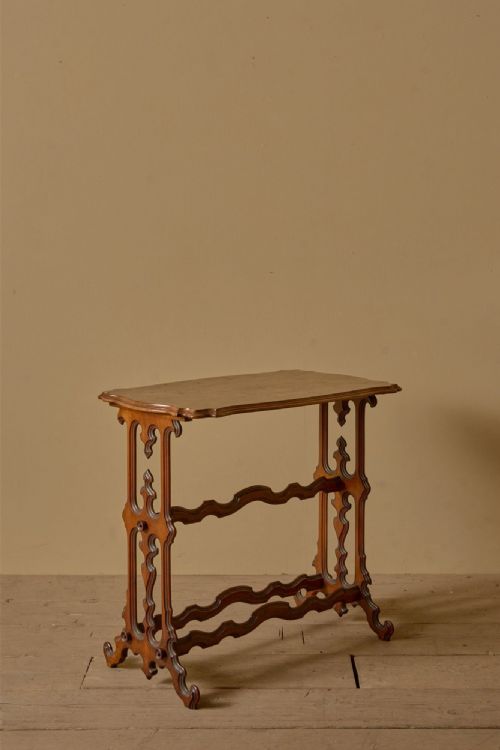
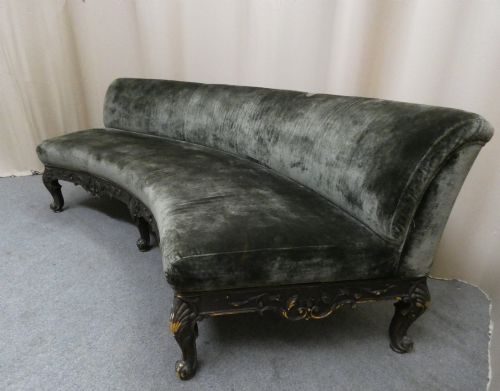
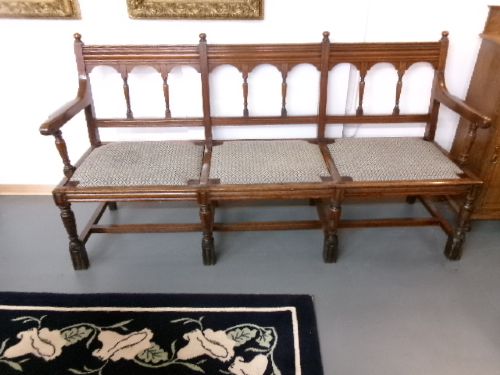
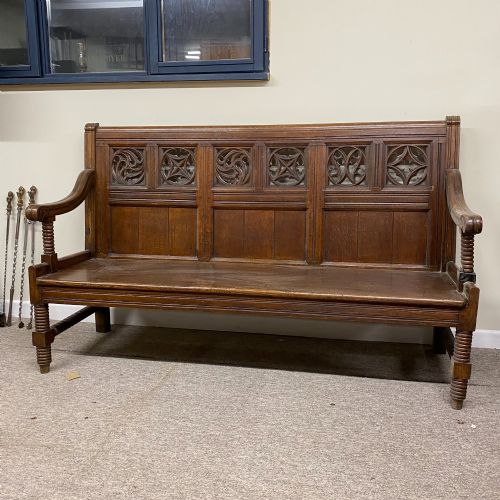
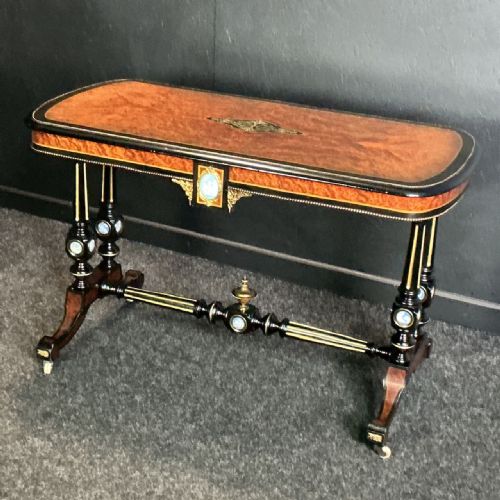

Victorian Revival Sofa
Victorian revival sofas bring substantial 19th-century presence to a room, offering deep seating and ornate historical styling.
Victorian Revival Sofa
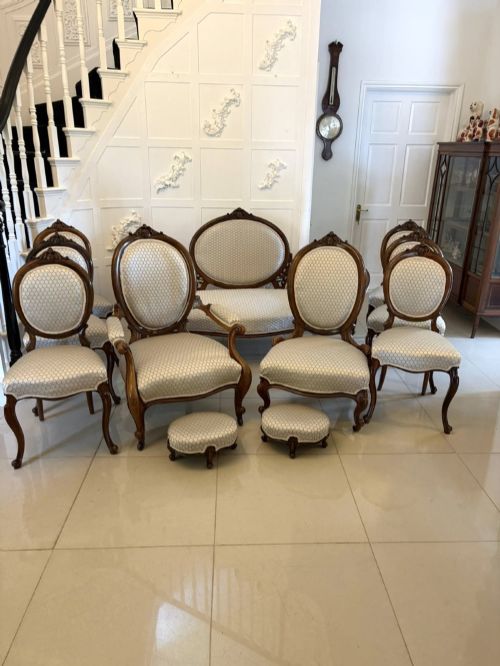
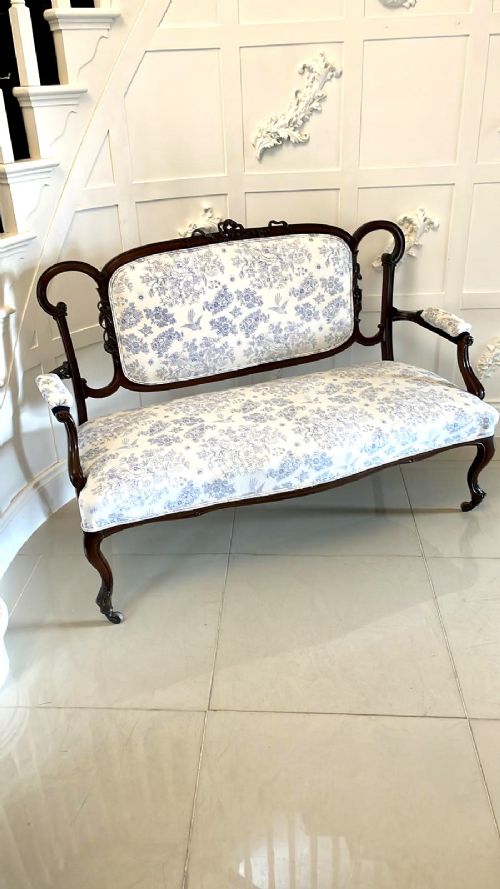
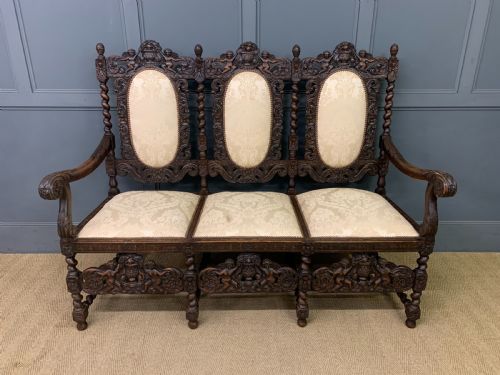
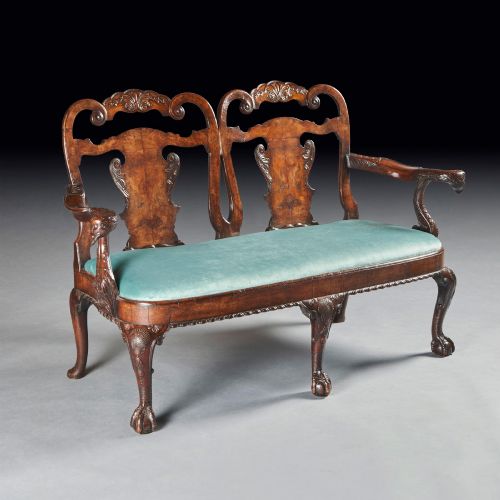
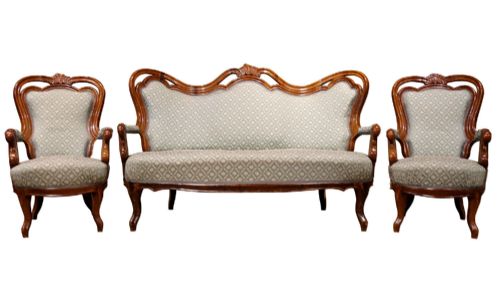
A victorian revival sofa encompasses pieces created during the 19th century drawing upon earlier historical aesthetics like Rococo, Carolean, and Georgian designs. These seating forms range from three-seater benches and cameo back sofas to salon suites and chaise longues.
Buyers frequently encounter walnut and mahogany frames on this page, often shaped into camel backs, twin chair backs, or elaborately carved frames reflecting the eclectic tastes of the period. Origins span British workshops and continental makers working from the mid 19th century through to the early 20th century.
Distinguishing quality
Quality rests in the crispness and depth of the timber carving, the choice of figured veneers like burr walnut, and the structural balance of the frame. Pieces that retain their original upholstery support, joinery integrity, and proportioned revival styling sit at the higher end.
Variations appear in the selection of secondary timbers, the precision of marquetry or parquetry details where present, and the overall harmony between the upholstery textile and the underlying period frame.
Victorian Revival Sofa Retail Price Guide 2026
Typical asking prices for victorian revival sofa among the pieces listed under this phrase on Sellingantiques today, from the lower quarter to the upper quarter. They describe what is for sale here now, not the wider market.
Listings here feature walnut, mahogany, and rosewood frames spanning the Victorian and Edwardian periods.
Howard and Sons·Morison and Co·Holland and Son
The Victorian Revival Sofa Glossary
- Cameo back
- A chair or sofa back shaped like a traditional oval cameo brooch, surrounded by carved wooden framing. This profile is typical of mid-nineteenth-century salon seating.
- Carolean revival
- A stylistic reference to the reign of Charles II, revived in the later nineteenth century with rich scrolling carving and turned wooden supports.
- Chaise longue
- An upholstered couch with a headrest at one end, designed for reclining. Nineteenth-century examples often feature elaborate mahogany or walnut carved frames.
- Salon suite
- A matching set of upholstered seating comprising a settee and matching chairs for a formal drawing room. These matched suites often share identical wood carving and textile upholstery.
- Burr walnut
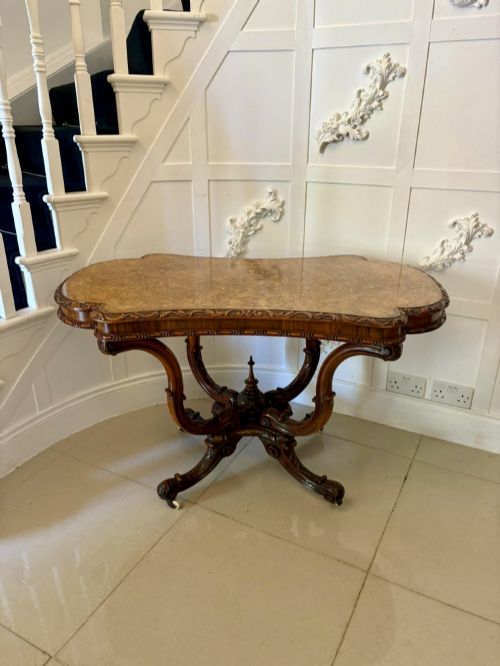
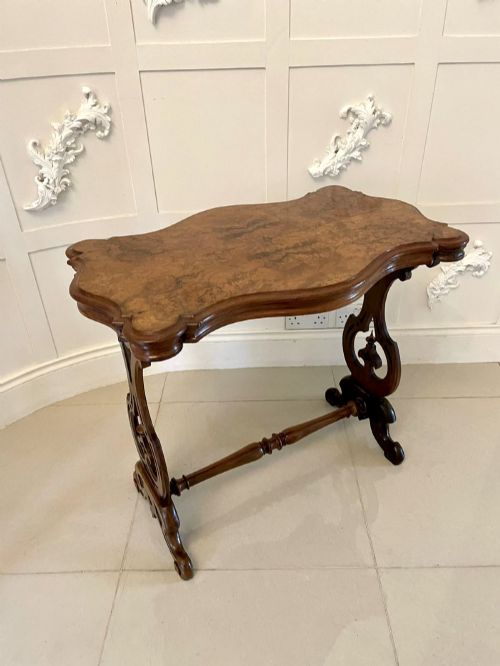
- Timber taken from a walnut tree growth, producing intricate swirling grain patterns. Cabinet makers prized this veneer for high-status table tops and sofa panels.
Victorian Revival Sofa: Frequently Asked Questions
How do I identify a revival sofa?
Look for 19th-century construction methods combined with decorative motifs borrowed from earlier centuries, such as Rococo curves or Carolean scrolls.
Examine the timber species, joinery inside the frame, and the characteristic proportions of Victorian seating forms.
Where were these sofas used originally?
These pieces belonged in the formal drawing rooms, parlours, and country house reception rooms of the Victorian era.
They served as statement seating for receiving guests and for leisurely lounging in refined domestic interiors.
How do I care for antique wood frames?
Keep wooden frames away from direct sunlight and steady heat sources to prevent the timber and burr walnut veneers from drying out.
Apply a traditional wax polish sparingly to nourish the polished hardwood surfaces without building up excess residue.
Are these sofas suitable for daily seating?
Many Victorian revival pieces offer comfortable, supportive seating, though internal webbing and springs may require professional restoration depending on their condition.
Consider the depth of the seat and the height of the back when selecting a sofa intended for everyday household use.