


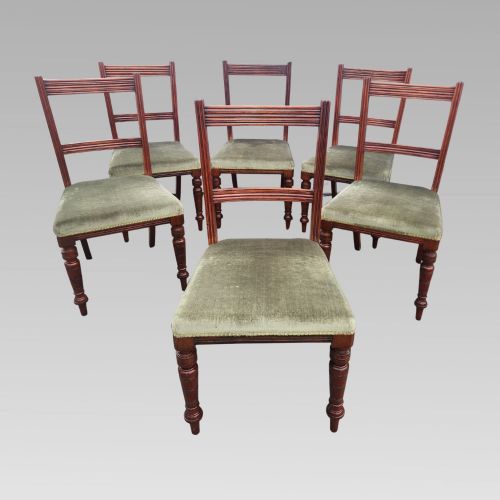
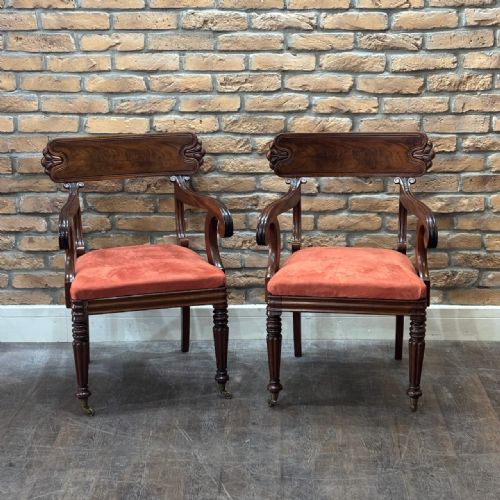


Victorian Reeded Leg Chairs
Victorian reeded leg chairs bring tactile warmth to a room, offering sturdy mahogany frames and classic turned details for everyday seating.
Victorian Reeded Leg Chairs
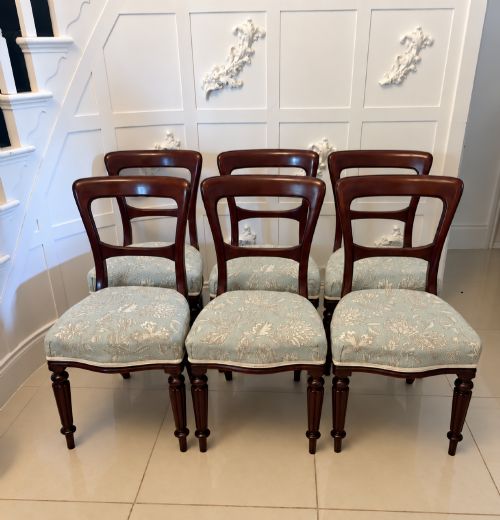
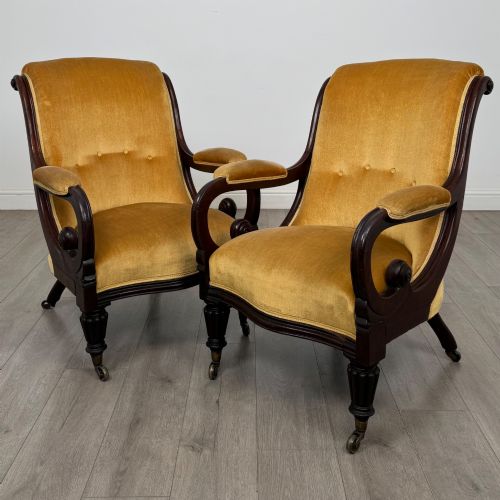
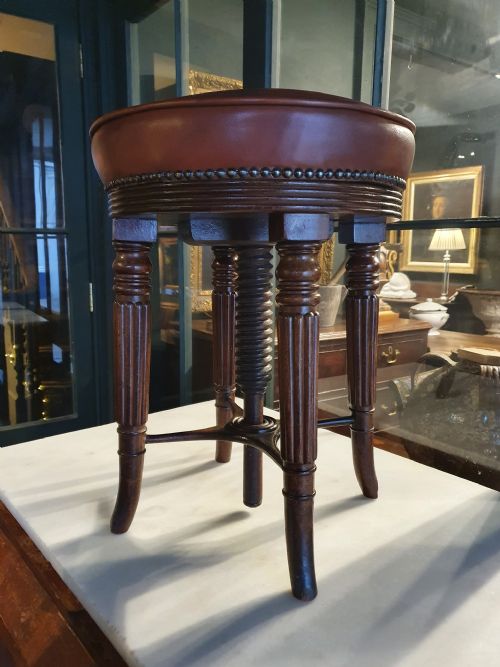
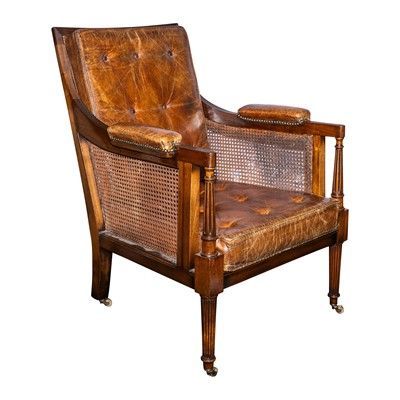
Victorian reeded leg chairs span dining chairs, library armchairs, and piano stools. You are most likely to meet mahogany dining chairs and occasional armchairs on this page.
The selection ranges from sets of dining chairs to single library seats and revolving stools. These pieces draw on Regency, Georgian, and Chippendale style influences alongside Victorian manufacture.
Origins include English workshops producing traditional seating with turned or reeded supports. Makers utilised pollard oak as well as mahogany to shape these practical domestic forms.
Materials and construction
Makers shaped the primary frames from solid mahogany and pollard oak. These dense timbers provided the structural strength required for dining and library seating.
Craftsmen applied reeding directly into the wooden legs through precise turning techniques. Upholstery materials such as leather, velvet, corduroy, fabric, hessian, and cane finished the seats.
Victorian Reeded Leg Chairs Retail Price Guide 2026
Typical asking prices for victorian reeded leg chairs among the pieces listed under this phrase on Sellingantiques today, from the lower quarter to the upper quarter. They describe what is for sale here now, not the wider market.
Current listings feature mahogany and pollard oak across Victorian, Regency, and Georgian periods.
Quality and proportion
The standard of a piece rests on the crispness of the turned reeding and the integrity of the timber frame. Superior examples display clean joinery and well-balanced proportions across sets or individual seats.
Upholstery finish and choice of covering material differentiate simpler seating from finer library and parlour chairs. Original timber surfaces with good grain definition elevate the character of the piece.
The Victorian Reeded Leg Chairs Glossary
- Reeded leg
- A support carved with parallel convex mouldings resembling tightly bundled reeds. This decorative turning appears frequently on nineteenth-century furniture.
- Mahogany
- A durable tropical hardwood prized for its deep reddish-brown tone and stable grain. It served as the primary material for high-quality domestic seating.
- Bergere
- An enclosed upholstered armchair with wooden framing, often featuring cane panels to the sides and back. This French-inspired form provided comfortable parlour seating.
- Pollard oak
- Timber taken from trees that were pollarded, producing dense growth rings and distinctive mottled grain patterns. Cabinet makers utilised this wood for decorative effect on gentleman and ladies chairs.
Victorian Reeded Leg Chairs: Frequently Asked Questions
What rooms suit these chairs?
Dining chairs fit around traditional and contemporary dining tables alike, adding historical texture to a room. Library armchairs and piano stools work well in studies, hallways, and living spaces as occasional seating.
Their solid mahogany frames and upholstered seats ensure they withstand daily domestic use while retaining their period character.
How do I care for mahogany?
Keep wooden frames away from direct heat sources and strong sunlight to prevent the timber from drying out or fading. Dust regularly with a dry cloth and apply occasional clear wax to nourish the polish.
Avoid using abrasive cleaning products or excessive moisture on both the polished wood and the upholstered surfaces.
Are these chairs comfortable?
Many examples feature padded seats covered in materials like leather, velvet, or fabric for daily support. Library armchairs and piano stools offer deeper cushioning designed for prolonged sitting.
Upholstered panels and supportive backs vary by form, from upright dining chairs to relaxed parlour seating.
Can I mix different styles?
Pairing occasional armchairs with a set of dining chairs introduces varied textures and historical influences to an interior. The shared use of mahogany across different nineteenth-century pieces creates a cohesive look.
Grouping single chairs around a table allows you to combine Regency, Victorian, and Georgian design elements naturally.