





Victorian Privacy Screen
A victorian privacy screen offers clever partition for a room, combining painted canvas, leather or needlepoint with sturdy timber frames to divide space with elegance.
Victorian Privacy Screen
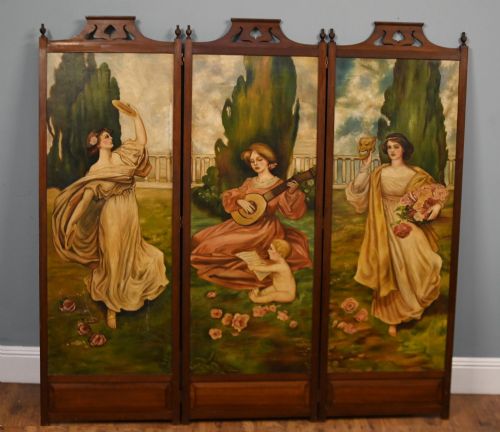
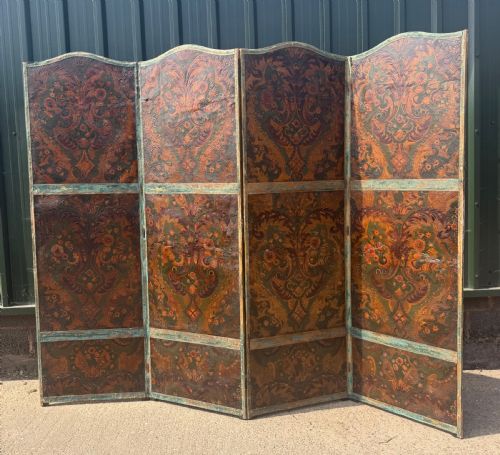
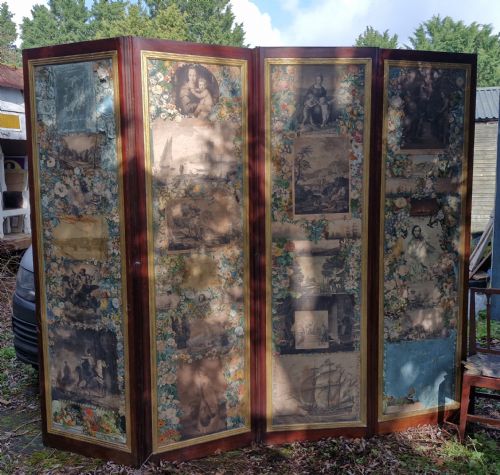
A victorian privacy screen acts as a functional room divider, originating primarily from the nineteenth century and encompassing multi-fold designs. These pieces range from three-panel configurations to larger four-fold structures, functioning historically to block drafts and create secluded areas within larger domestic spaces.
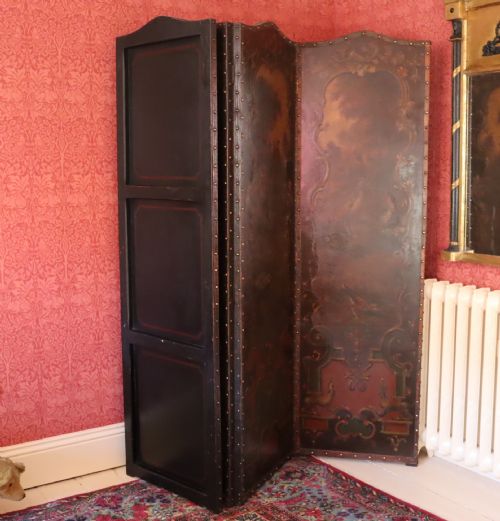
The varieties met on this page include folding screens, dressing screens and photographic prop screens. Materials span canvas, leather, mahogany, walnut and papier-mâché, often decorated with hand-painting, needlepoint or scrap work.
Stylistic influences vary significantly, touching upon Pre-Raphaelite themes, Chinese Chippendale, Victorian Chinoiserie, Art Nouveau and Regency sensibilities. Each folding screen provides an adaptable architectural element that alters the proportions of a room instantly.
Materials and construction
Frames rely on timber construction, predominantly utilising mahogany, walnut and general wood joined in multiple folds with brass hinges. These support panels of canvas, leather or glass which form the primary body of the screen.
Surface decoration involves meticulous hand-painting, oil paint applications, needlepoint work and polychrome finishes. Pieces styled after Dutch tooled leather or Chinoiserie papier-mâché demonstrate specialised layering and finishing techniques common to the period.
Victorian Privacy Screen Retail Price Guide 2026
Typical asking prices for victorian privacy screen among the pieces listed under this phrase on Sellingantiques today, from the lower quarter to the upper quarter. They describe what is for sale here now, not the wider market.
Some screens served as photographic props, standing quietly behind Victorian subjects to fake an exotic backdrop.
Assessing quality and execution
The distinction between tiers rests upon the execution of the decorative surface, such as the intricacy of hand-painted details, needlepoint density and the depth of polychrome or lacquer work. Superior examples exhibit refined brushwork and careful preservation of original canvas or leather.
Structural integrity of the folding mechanism and the quality of the timber frame dictate everyday reliability. Heavier materials like mahogany and walnut support multi-fold designs more rigidly than lighter substitutes, influencing the stability of the entire room divider.
The Victorian Privacy Screen Glossary
- Fold
- A single panel connected to adjacent sections by hinges, allowing the screen to concertina. Most privacy screens utilise three or four folds for stability.
- Needlepoint
- A type of canvas work embroidery executed with yarn using a tapestry stitch. It appears on several nineteenth-century room dividers to provide textured, decorative panels.
- Chinoiserie
- European artistic style reflecting Chinese motifs and techniques, popular in lacquer work and screen decoration. It brings elaborate pictorial scenes to black lacquer and papier-mâché surfaces.
- Polychrome
- Decorated in multiple colours, describing painted canvas or leather screens that feature varied hues. This technique enlivens the flat surfaces of large room dividers.
- Papier-mâché
- A composite material made from paper pulp or reinforced sheets bound with glue, pressed and dried. It forms smooth panels suitable for fine lacquer and painted decoration on dressing screens.
Victorian Privacy Screen: Frequently Asked Questions
What is a victorian privacy screen?
A victorian privacy screen is a multi-fold partition designed to divide interior spaces and block draughts.
These pieces use hinged wooden frames supporting panels of canvas, leather, needlepoint or glass.
How were room dividers used historically?
Rooms dividers partitioned large spaces to create private seating areas or dressing spaces.
They also sheltered occupants from draughts near doors and windows in large nineteenth-century homes.
How do I care for antique screens?
Keep antique screens away from direct sunlight and damp conditions to protect painted and textile surfaces.
Dust wooden frames gently and avoid applying liquid cleaners to leather or canvas panels.
How do I identify different screen styles?
Examine the decorative motifs, such as floral needlepoint, Chinoiserie lacquer or Pre-Raphaelite painted scenes.
Materials like walnut, mahogany, and brass hinges also help indicate the period and origin.