

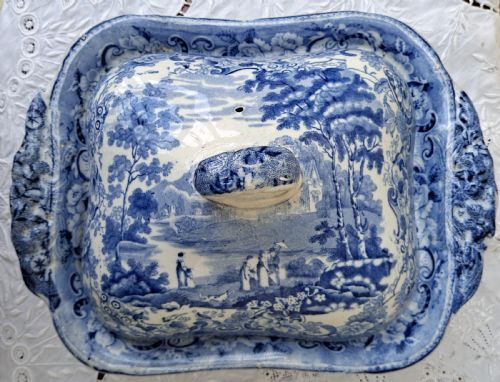


Victorian Pottery Tureen
These victorian pottery tureen pieces bring heavy nineteenth-century presence to the table, offering practical utility alongside robust ceramic character.
Victorian Pottery Tureen
A victorian pottery tureen brings nineteenth-century dining forms to the table, ranging from large soup vessels to specialised egg crocks and vegetable containers. The selection on this page relies heavily on nineteenth-century earthenware and ceramic bodies, including transfer-printed vegetable tureens and figural animal designs.
Buyers will encounter traditional blue and white transfer patterns alongside colourful majolica models and Staffordshire chicken baskets. Forms extend beyond standard soup tureens to incorporate game pie dishes, ladles, and miniature dinner services from the same era.
Materials and construction
Potters of the period utilised earthenware, ceramic, and stoneware bodies, often finishing the pieces with lead glaze or colourful majolica glazes. Transfer printing provided intricate blue and white rural scenery and repeating patterns directly onto the ceramic surface.
Moulded construction allowed for detailed figural forms such as nesting hens, cabbages, and crabs, requiring careful hand-finishing and glazing before kiln firing.
Victorian Pottery Tureen Retail Price Guide 2026
Typical asking prices for victorian pottery tureen among the pieces listed under this phrase on Sellingantiques today, from the lower quarter to the upper quarter. They describe what is for sale here now, not the wider market.
Listings feature nineteenth-century earthenware, caneware, and stoneware bodies decorated with transfer printing or lead glaze.
Assessing the standard
Quality rests in the crispness of the transfer print and the fidelity of moulded animal details such as feathers, shells, and leaves. Stronger examples maintain glossy, even glaze coverage without excessive pooling or dry patches across the surface.
The integration of lids, ladles, and matching undertables dictates the completeness of the piece. Crisp definition in Staffordshire modelling separates utilitarian vessels from masterworks of the pottery kiln.
James Wallace Co·Minton·Wedgwood·Ridgways·Turner·Masons
The Victorian Pottery Tureen Glossary
- Earthenware
- Porous ceramic fired at lower temperatures, requiring a glaze to achieve water tightness. It forms the heavy base of many nineteenth-century kitchen and table vessels.
- Majolica
- Colourful lead-glazed earthenware popular during the Victorian period, known for vibrant hues applied over moulded botanical and animal forms.
- Transfer Print
- A method of decorating ceramics by pressing a printed paper design from an engraved copper plate onto the bisque body. This technique enabled uniform blue and white scenes across large production runs.
- Caneware
- A fine stoneware body with a warm, pale buff colour resembling cane or bamboo, frequently utilised for tablewares and game pie dishes.
- Flow Blue
- A style of transfer printing where the cobalt blue colour deliberately bleeds into the surrounding white glaze during firing, creating a misty effect.
Victorian Pottery Tureen: Frequently Asked Questions
What is a victorian pottery tureen used for?
These vessels served original functions in nineteenth-century dining rooms for holding soups, vegetables, or game pies at the table. Figural versions like hen egg crocks kept eggs warm or stored them securely in the pantry.
Today, collectors utilise them as decorative centrepieces, sideboard displays, or functional serving dishes for formal meals and festive gatherings.
How do I date a pottery tureen?
Dating relies on ceramic body types, glaze characteristics, registration marks, and maker stamps stamped or printed on the base. Stylistic cues such as majolica colour palettes or Victorian transfer print motifs provide further chronological context.
Comparing the potting weight and footring finish against documented nineteenth-century examples helps narrow the production window.
Are these tureens dishwasher safe?
Historic earthenwares and lead glazes require gentle hand washing in warm water to protect the ceramic body and prevent crazing. Modern dishwashers expose antique glaze to harsh detergents and thermal shock that can cause permanent damage.
Careful cleaning preserves the transfer print and maintains the structural integrity of handles and finials.
How do I display a tureen safely?
Display requires a stable, level surface capable of supporting the substantial weight of nineteenth-century earthenware and stoneware bodies. Placing pieces away from direct heat sources and heavy foot traffic prevents accidental knocks.
Lids should be displayed resting securely on the base, or separated on soft pads if the display shelf experiences vibration.