

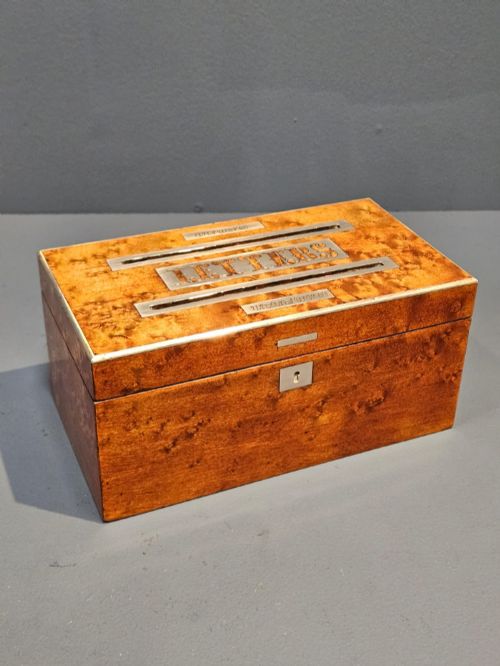


Victorian Posting Box
These robust pieces of Victorian posting box hardware once gathered the daily mail in country houses, hotels and studies.
Victorian Posting Box
A Victorian posting box is a desktop or wall-mounted receptacle designed to hold correspondence before collection. The examples found here span the nineteenth and early twentieth centuries, encompassing country house letter boxes, hotel posting boxes and novelty stationery containers. Most items follow familiar domestic forms, serving as functional pieces of desk furniture as well as decorative objects.
The objects regularly appear in traditional timber and metal configurations intended for heavy daily use. Collectors encounter substantial country house correspondence boxes alongside smaller wall-mounted variants and carved oak post boxes. These containers reflect the structured communication habits of past households, where keeping incoming and outgoing mail tidy was essential.
Materials and construction
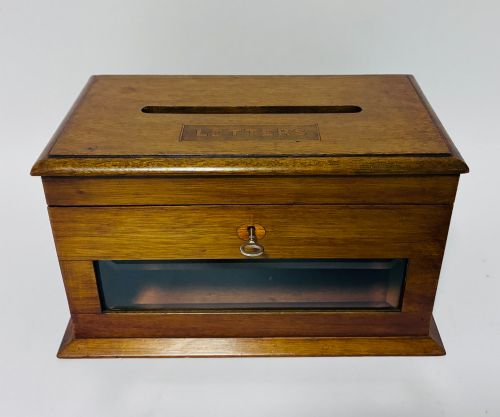
The makers relied primarily on dense hardwoods such as oak and mahogany, often enhanced with brass mounts, hinges and slot plates. Burr satinwood and pine also appear, demonstrating a range of cabinet-making choices from grand country house items to simpler travelling trunks. Metal fastenings and glass viewing panels were incorporated to secure the contents while allowing visibility.
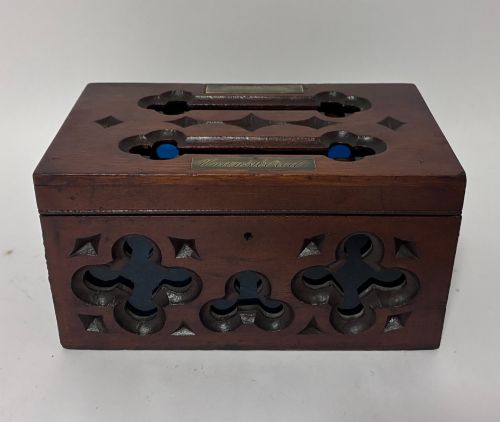
Surface decoration ranges from plain polished timber to intricate Gothic Revival carving and Arts and Crafts linear detail. Brass handles and applied mounts provide structural reinforcement as well as visual contrast against the dark woods. Joinery techniques reflect the period's standards of cabinet work, ensuring durability across decades of use.
Victorian Posting Box Retail Price Guide 2026
Typical asking prices for victorian posting box among the pieces listed under this phrase on Sellingantiques today, from the lower quarter to the upper quarter. They describe what is for sale here now, not the wider market.
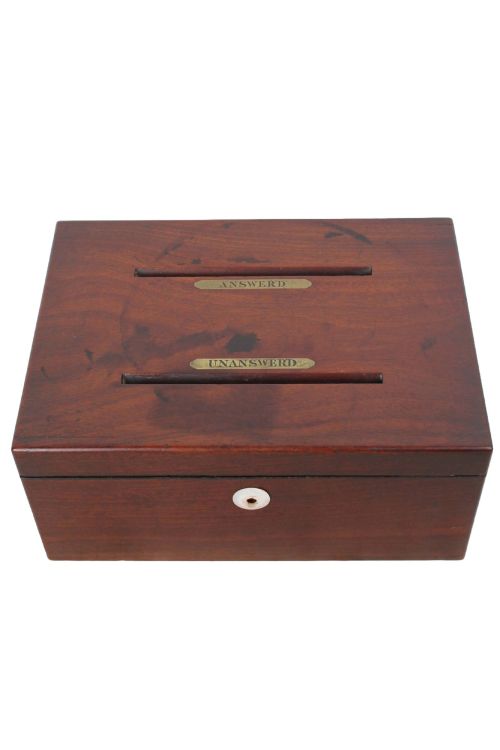
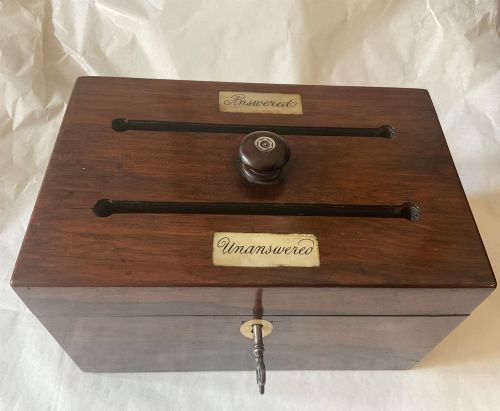
Some Victorian desktop companions thoughtfully sorted letters into answered and unanswered piles for the overwhelmed Victorian correspondent.
Assessing quality and character
Quality in these pieces rests on the weight of the timber, the integration of brass hardware and the crispness of any applied carving. Superior examples display carefully selected grain patterns, such as burr satinwood or golden oak, matched with robust hinges and secure internal compartments. Lesser items rely on simpler construction without the decorative mounts or refined joinery seen in country house commissions.
The distinction also lies in the intended setting and scale of the box. Hotel and large country house letterboxes exhibit heavier metalwork and more substantial proportions than smaller domestic stationery boxes. Original fittings, such as specialised sorting labels or intact brass slot frames, elevate the integrity of the piece.
The Victorian Posting Box Glossary
- Correspondence box
- A desk accessory or small cabinet specifically built to hold letters, envelopes and writing paper. These containers often feature internal dividers for sorted mail.
- Gothic Revival
- An architectural and decorative style popular during the nineteenth century characterised by pointed arches, heavy moulding and medieval motifs. Pieces in this style display dramatic structural lines.
- Arts and Crafts
- A design movement emphasising traditional craftsmanship, visible construction and simple forms using natural materials like solid oak. Items from this tradition avoid excessive ornamentation in favour of honest utility.
- Brass mount
- A decorative or structural fitting made of brass attached to the exterior of wooden boxes. These elements reinforced corners and added visual contrast to the timber.
Victorian Posting Box: Frequently Asked Questions
Where were these boxes used?
These boxes served primarily in country house halls, hotel reception desks and private studies where household correspondence was sorted and gathered. They provided a secure central point for daily letters before postal collection.
Larger versions accommodated the volume of mail generated by busy Victorian households, while wall-mounted variants kept surfaces clear in smaller rooms.
How do I care for the wood?
Maintain the timber surfaces by dusting regularly with a soft, dry cloth and applying occasional beeswax to nourish the antique grain. Avoid placing wooden posting boxes near direct heat sources or in damp environments.
Keeping the brass fittings polished with a gentle cloth preserves the contrast between the metal and the polished oak or mahogany.
Are these boxes still functional?
Most Victorian posting boxes remain fully usable for holding modern letters, stationery or desktop items. The internal compartments and slots accommodate standard correspondence.
Buyers often place them in home offices or hallways to serve their original purpose as a stylish place to drop incoming mail.
How do I distinguish Victorian from Edwardian pieces?
Victorian pieces often lean towards heavier proportions, darker polished mahogany, and ornate Gothic Revival or elaborate carved details. Edwardian examples tend to feature lighter golden oak and simpler Arts and Crafts lines.
Examining the construction methods and wood selection helps indicate the likely decade of manufacture within the broader nineteenth and early twentieth-century span.