
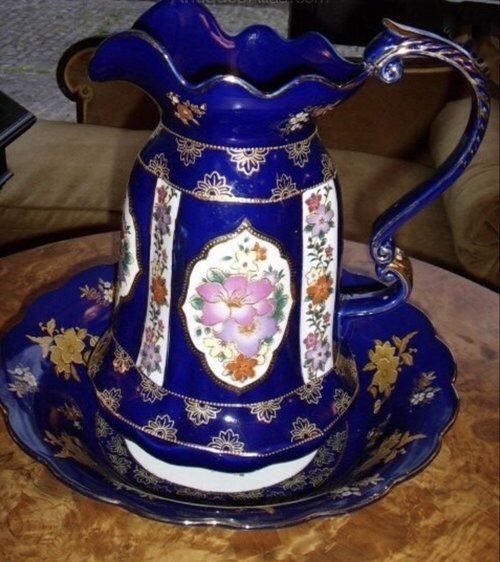


Victorian Porcelain Wash Bowl
These Victorian porcelain wash bowl pieces are everyday domestic utilities turned decorative pottery, offering practical charm for modern interiors.
Victorian Porcelain Wash Bowl
When you search for a victorian porcelain wash bowl, you are looking at utilitarian ceramic items designed for personal hygiene before modern plumbing. The examples found here primarily take the form of washstand sets, jug and bowl sets, and larger multi-piece bathroom settings.
The pieces on this page span the Victorian and Edwardian periods, stretching from the mid-nineteenth century into the early twentieth century. Most items originate from English makers and utilise durable ceramic bodies shaped into generous basins and coordinating pitchers.
The version you are most likely to meet on this page is a complete jug and basin set intended for a washstand. These domestic vessels range from simple utilitarian ware to decorative four-piece vanity collections.
How they were made
Potters shaped these vessels using durable ceramic and porcelain bodies formed into large basins and companion pitchers. The manufacturing process relied on traditional potting techniques suited to heavy domestic use.
Surfaces received specialised treatments such as cobalt blue glaze, painted flower designs, and occasional gold leaf or gilt highlights. These decorative finishes were applied before final firing to seal the earthenware and porcelain.
Miniature wash sets allowed Victorian children to practice proper morning ablutions on a very small scale.
What varies in quality
Quality rests in the crispness of the painted floral motifs and the depth of the cobalt glaze. Superior examples display careful hand-finishing and well-balanced forms that elevate a utilitarian object into a decorative centrepiece.
The distinction between standard domestic ware and finer production also shows in the weight of the porcelain and the completeness of multi-piece vanity sets. Well-preserved sets with matching pitchers and basins demonstrate greater original ambition from the pottery.
Doulton Burslem
The Victorian Porcelain Wash Bowl Glossary
- Washstand
- A piece of bedroom furniture designed to hold a basin and jug for washing. It provides the primary functional context for these ceramic sets.
- Cobalt glaze
- A rich blue metallic colouring fired into the ceramic body. This mineral pigment creates deep, stable blue tones across the surface.
- Vanity set
- A group of matching ceramic toilet articles used for personal grooming. These larger collections often include soap dishes and chamber pots alongside the main basin.
- Gilt
- A thin layer of gold applied to the ceramic surface for decoration. It provides metallic highlights around the rim and handle details.
Victorian Porcelain Wash Bowl: Frequently Asked Questions
What is a victorian porcelain wash bowl used for?
These vessels were originally designed for washing hands and face in the bedroom before plumbed bathrooms became common.
Today, buyers use them as decorative plant planters, umbrella stands, or traditional display pieces in hallways and bathrooms.
How do I clean a ceramic wash bowl?
Warm water and mild soap are sufficient for cleaning antique glazed ceramics without damaging the surface.
Avoid harsh abrasives and chemical cleaners that can dull the original cobalt glaze or wear away gilt highlights.
Are these wash bowls waterproof?
Porcelain and glazed earthenware are naturally non-porous and hold water safely for everyday display.
Older hairline fractures require caution, so inspect the interior glaze before filling the basin with water.
How do I date a wash bowl set?
Dating relies on maker marks, ceramic body weight, and stylistic clues like floral transfer printing or cobalt patterns.
Victorian pieces often feature heavy earthenware bodies, while Edwardian examples show lighter porcelain refinement.