



Victorian Porcelain Mounted Cabinet
A victorian porcelain mounted cabinet brings together rich timbers and hand-painted ceramic plaques to anchor a grand interior.
Victorian Porcelain Mounted Cabinet
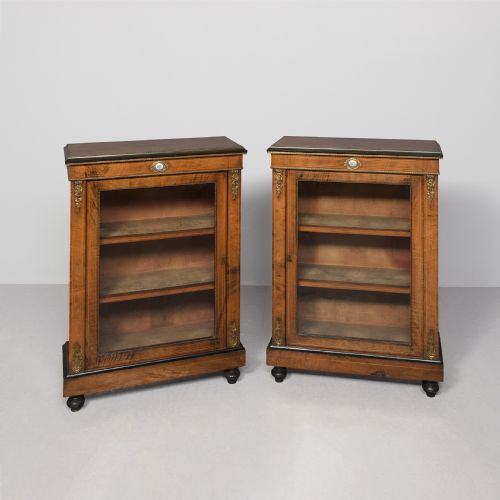
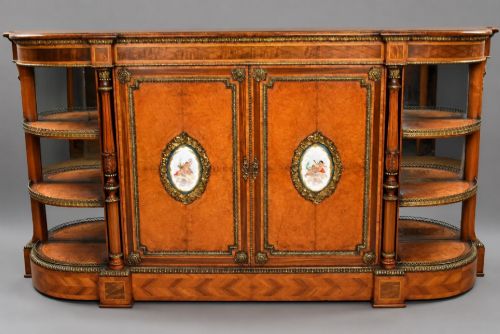
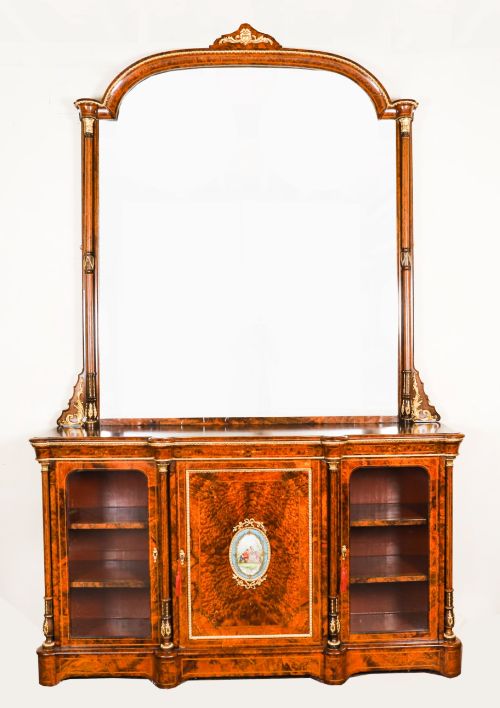
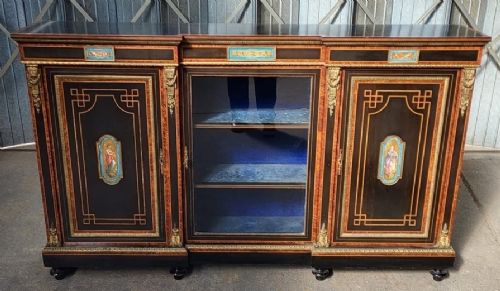
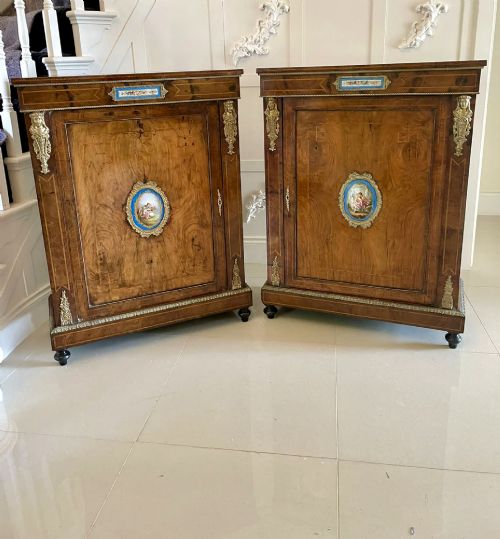
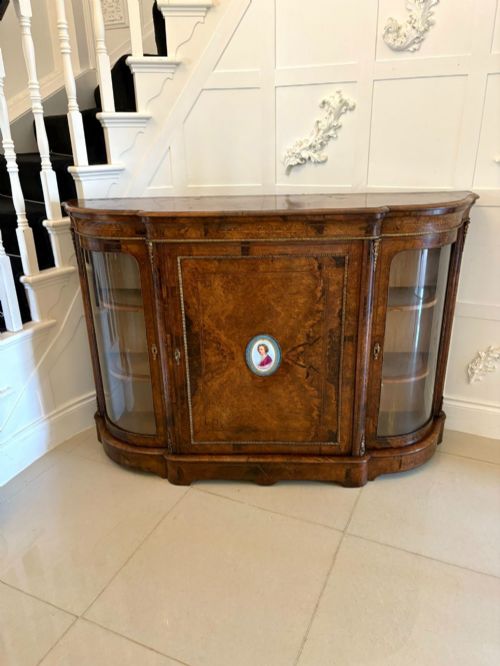
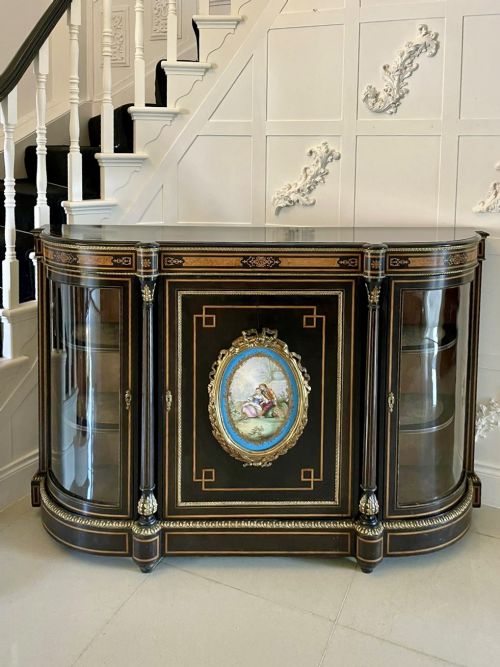
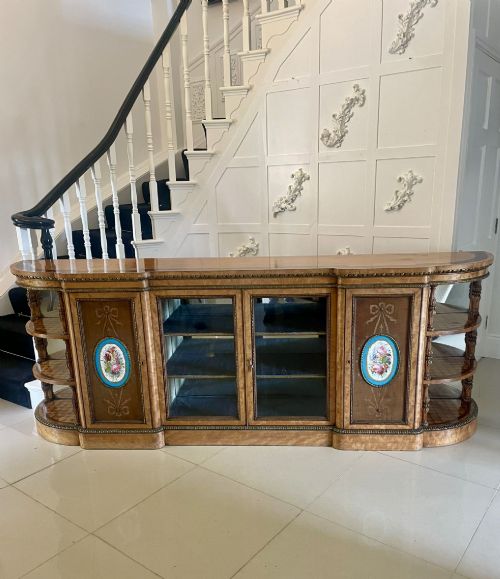
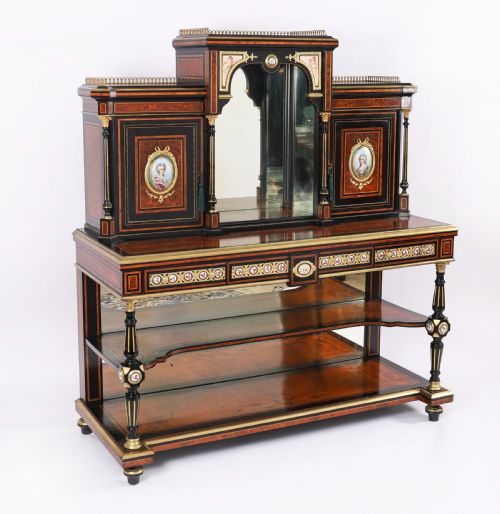
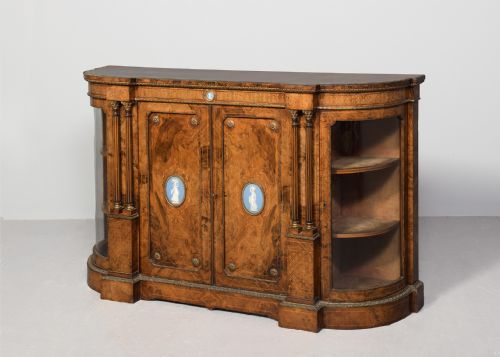
A victorian porcelain mounted cabinet takes several distinct forms, most commonly appearing as credenzas, side cabinets and pier cabinets designed for formal reception rooms.
These pieces emerge across the nineteenth century, with burr walnut and ebonised wood serving as the primary carcase materials to display inset ceramic plaques.
Makers often drew upon French revival and Louis XVI styles, incorporating glazed doors alongside central cupboard spaces.
Materials and construction
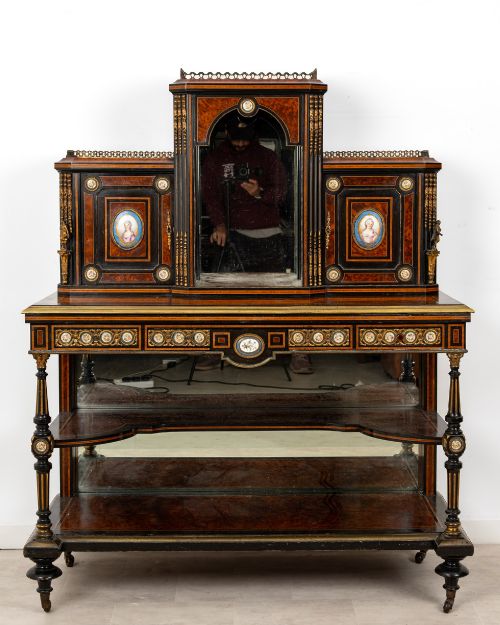
Cabinet makers built these carcases using figured timbers such as burr walnut, amboyna, satinwood and ebonised wood, frequently enhanced by fine marquetry inlay.
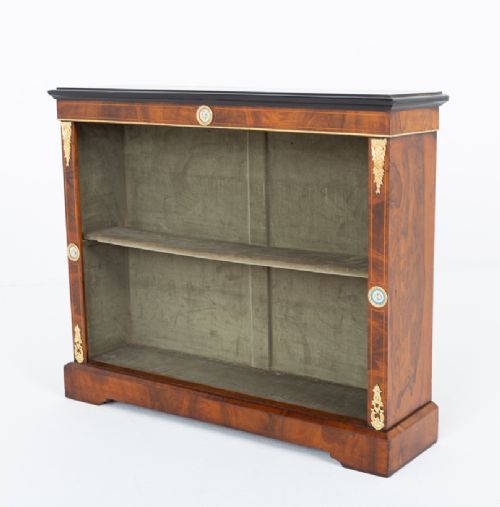
Ormolu and gilt-metal mounts frame the ceramic plaques and edge the structural lines, while glass panels protect the interior shelving.
Porcelain plaques, occasionally attributed to Sevres, are set directly into the wooden framework or mounted within bronze bezels.
Victorian Porcelain Mounted Cabinet Retail Price Guide 2026
Typical asking prices for victorian porcelain mounted cabinet among the pieces listed under this phrase on Sellingantiques today, from the lower quarter to the upper quarter. They describe what is for sale here now, not the wider market.
Secret compartments occasionally hide within the writing desks, waiting for a misplaced love letter.
Distinctions in quality
The standard of a victorian porcelain mounted cabinet rests upon the selection of timber veneers, where highly figured burr walnut or amboyna denotes superior manufacture.
The hand-painting upon the porcelain plaques and the weight and chasing of the ormolu mounts mark the distinction between standard production and exhibition pieces.
Lamb of Manchester
The Victorian Porcelain Mounted Cabinet Glossary
- Credenza
- A low, freestanding cabinet designed for nineteenth century drawing rooms, frequently featuring glazed side sections flanking a central door.
- Ormolu
- Gilded bronze cast and chased to produce decorative mounts and borders fixed to the exterior timber carcase.
- Marquetry
- Decorative patterns formed by fitting contrasting veneers of wood into a prepared ground surface.
- Pier cabinet
- A tall, narrow cabinet built to fit the wall space between windows.
- Bonheur du jour
- A small writing desk fitted with a superstructure of drawers and shelves, popular during the nineteenth century.
Victorian Porcelain Mounted Cabinet: Frequently Asked Questions
Where were these cabinets placed in a Victorian home?
These pieces stood principally in formal drawing rooms and reception spaces to display decorative objects and signal status to visitors.
Their low profiles allowed walls beneath windows or between doorways to remain unobstructed while providing surface area.
How do I distinguish walnut versions from ebonised ones?
Walnut versions display the natural grain and warm brown tones of the timber, often highlighted with boxwood stringing and marquetry.
Ebonised examples utilise a dark, blackened finish designed to contrast sharply against gilt-metal mounts and brightly coloured porcelain plaques.
What is the role of Sevres plaques on these pieces?
Sevres plaques act as ceramic centerpieces set into the timber doors or friezes, painted with pastoral scenes or floral motifs.
These painted panels provide vibrant colour and align the furniture with French royal tastes popular during the nineteenth century.
How should I care for the timber and ormolu mounts?
Maintenance requires dry dusting with a soft cloth and avoiding direct sunlight or excessive heat that might split delicate veneers.
Ormolu mounts should remain unpolished to preserve their original fire-gilt surface rather than exposing the base bronze metal.