
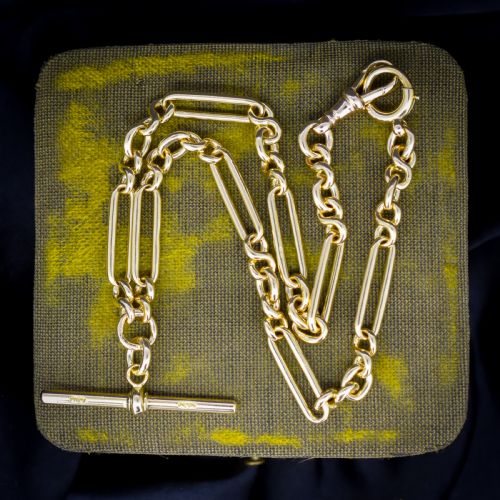
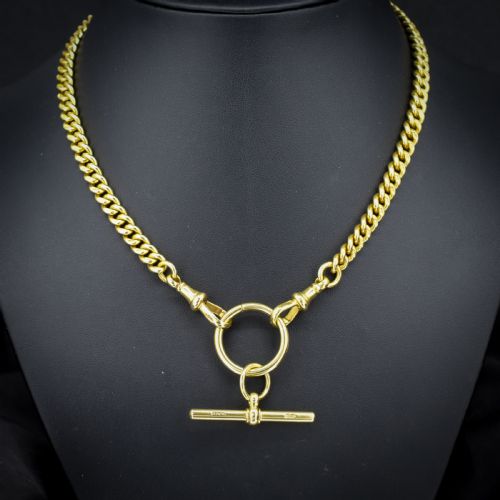
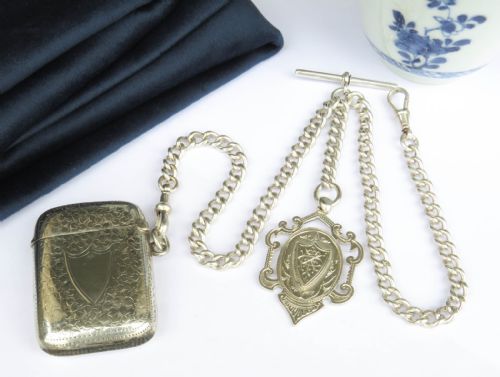
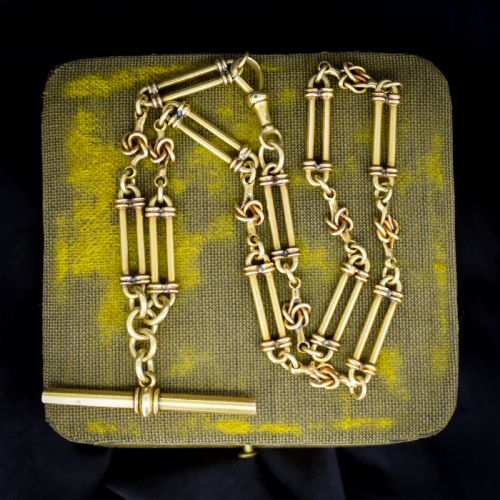
Victorian Pocket Watch Chain
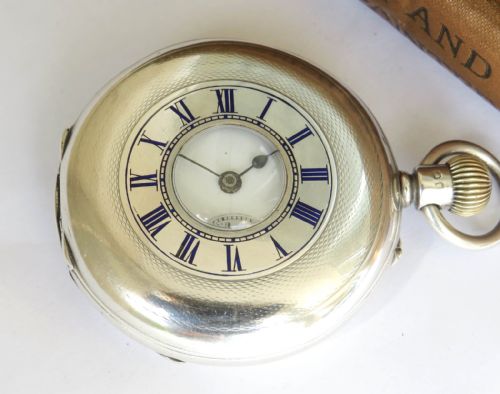
A victorian pocket watch chain is a substantial linkwork piece designed to secure a timepiece while doubling as a prominent waistcoat ornament.
Victorian Pocket Watch Chain
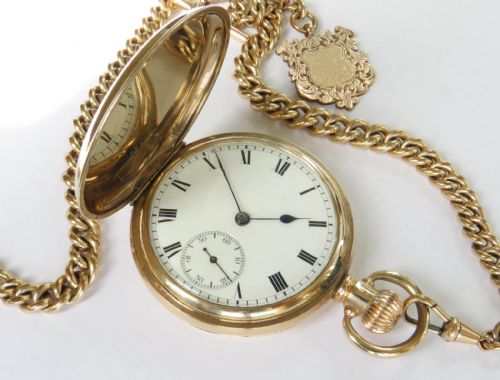
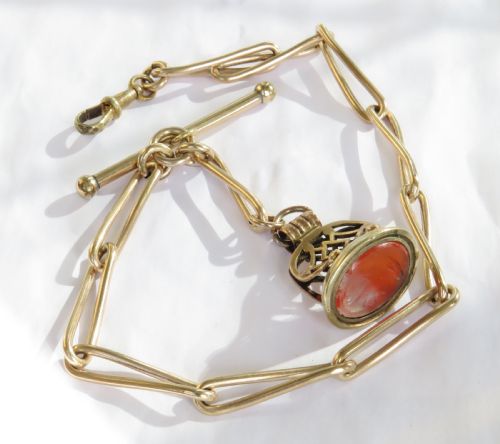
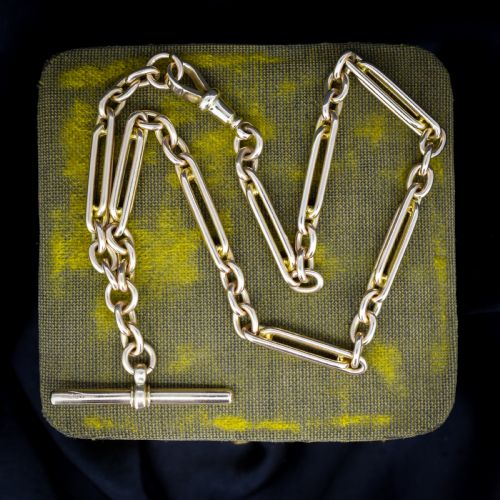
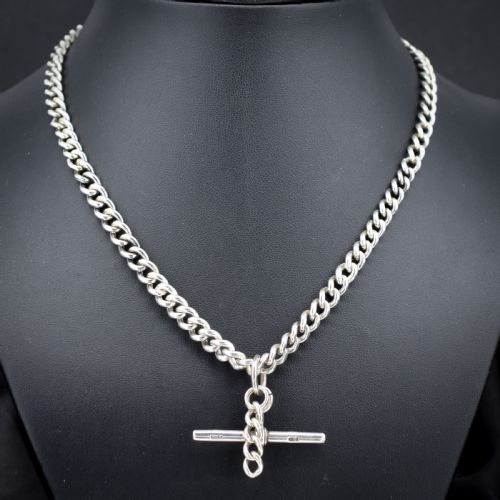
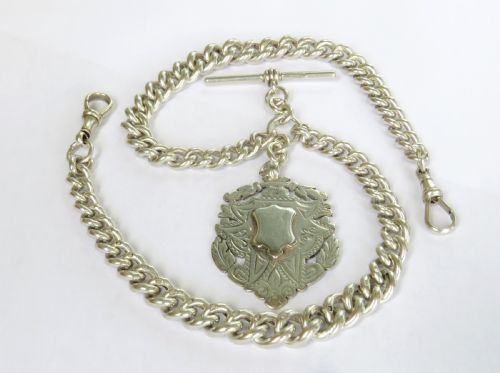
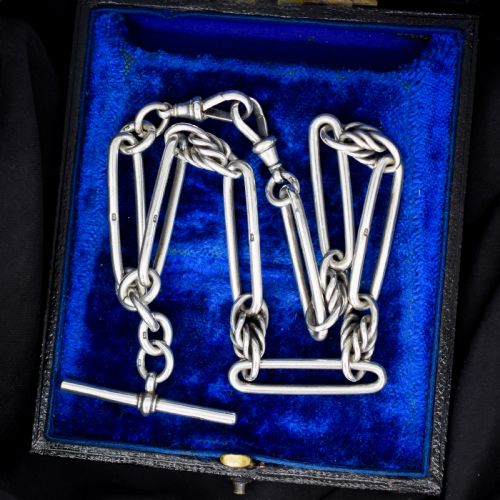
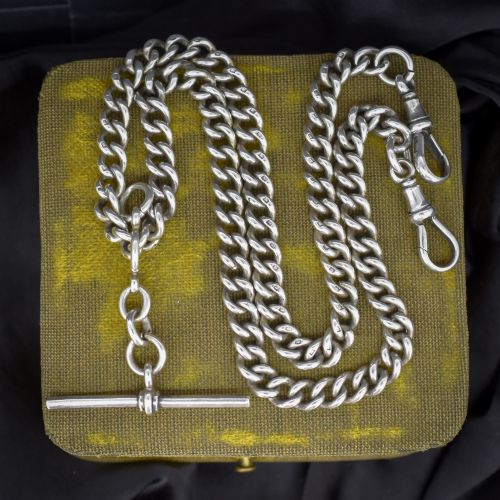
A victorian pocket watch chain typically appears as an albert or albertina configuration, designed to span a buttonhole with a central drop for a T-bar and fob.
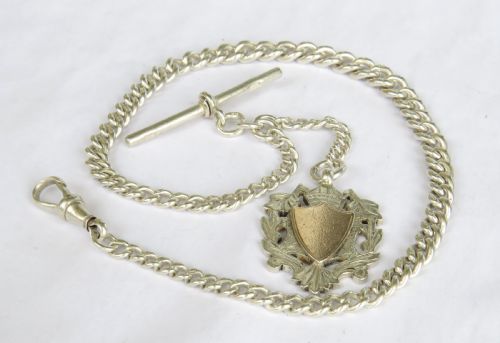
The selections on this page range from heavy sterling silver curb links to refined 9ct and 18ct yellow or rose gold variations.
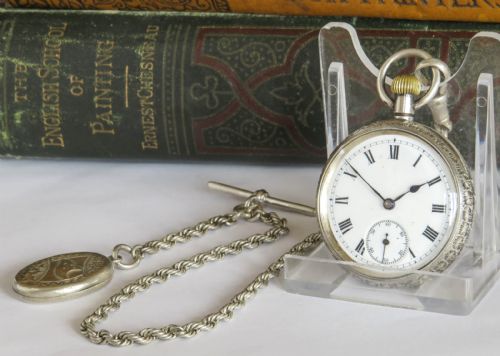
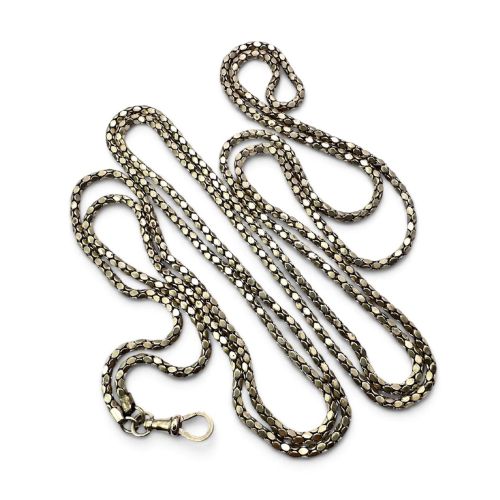
Many examples retain original dog clips, sliding pendants, and matching silver vestas, reflecting their nineteenth and early twentieth-century origins.
Materials and Construction
The construction relies on linked precious metals, predominantly sterling silver and various purities of gold including 9ct, 15ct, and 18ct, alongside rolled gold alternatives.
Silversmiths and goldsmiths formed distinct link patterns such as trombone, curb, oval, and paper clip shapes by hand or through early mechanical stamping.
Components like swivel dog clips, bolt rings, and T-bars were soldered securely to withstand daily anchoring in pockets.
Materials utilised across the current selection include sterling silver, niello, rolled gold, and gold ranging from 9ct to 18ct.
Assessing the Pieces
Quality rests upon the gauge of the metal and the integrity of each individual link connection across the entire length.
Heavier gram weights and complete, matching hallmarks on links, T-bars, and dog clips separate superior examples from lighter or mismatched assemblies.
The presence of specialised embellishments such as enamel work, niello inlay, or integrated sliding tassels elevates the execution.
The Victorian Pocket Watch Chain Glossary
- Albert chain
- A watch chain named after Prince Albert, featuring a T-bar at the centre to secure it through a waistcoat buttonhole. It often includes a drop for a fob or pocket watch.
- Albertina
- A finer, more delicate version of the albert chain, frequently designed with multiple strands, tassels, or charms. It was typically worn by women.
- Dog clip
- A spring-loaded swivel clasp attached to the end of the chain. It fastens securely to the pocket watch loop.
- T-bar
- A short transverse bar of metal attached to the chain. It passes through a buttonhole to anchor the entire piece.
- Vesta
- A small pocket container designed to hold matches. These were frequently suspended from watch chains during the period.
Victorian Pocket Watch Chain: Frequently Asked Questions
How do you wear a pocket watch chain today?
These chains fit neatly across a waistcoat or waistband, secured by passing the T-bar through a central buttonhole. The watch sits in one pocket while the chain drapes visibly across the front.
Alternatively, many shorter lengths adapt well as necklaces or chokers when fastened around the neck using the original dog clips.
What is the difference between an albert and an albertina?
An albert chain is built from robust, single or double strands of heavier links designed for men's traditional waistcoats. They prioritize functional strength and substantial presence.
An albertina is a lighter, more intricate variation featuring multi-strand chains, delicate slides, and decorative tassels historically worn by women.
How can you tell silver from rolled gold pieces?
Silver pieces display distinct hallmarks indicating assay offices, purity standards like sterling, and maker marks stamped directly onto the metal links or T-bars. They develop a characteristic dark patina over time.
Rolled gold items consist of a thin layer of gold bonded over a base metal core, often showing subtle wear at points of heavy friction where the underlying metal reveals itself.
What were the T-bars and fobs used for?
The T-bar served the practical purpose of anchoring the chain securely to clothing so the timepiece could not fall. The dangling fob acted as a decorative counterweight and personal seal.
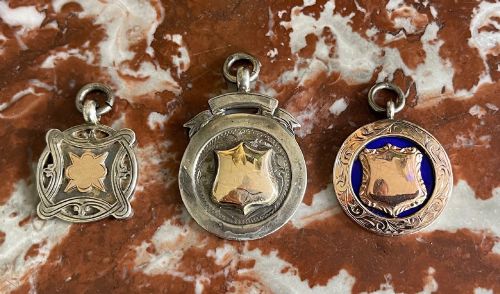
Fobs often took the form of engraved silver shields, intaglio stones, or miniature containers that added personal meaning and visual weight to the drape.