

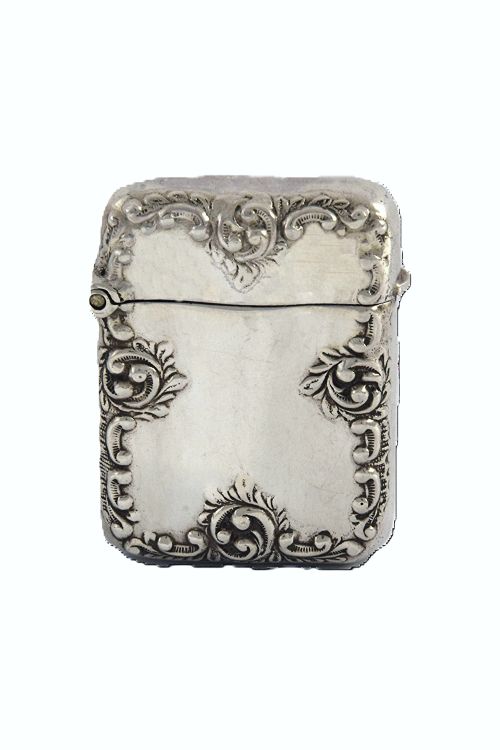


Victorian Pocket Matchbox
A victorian pocket matchbox keeps matches dry and ready for use, combining everyday practicality with the fine silversmithing of the period.
Victorian Pocket Matchbox
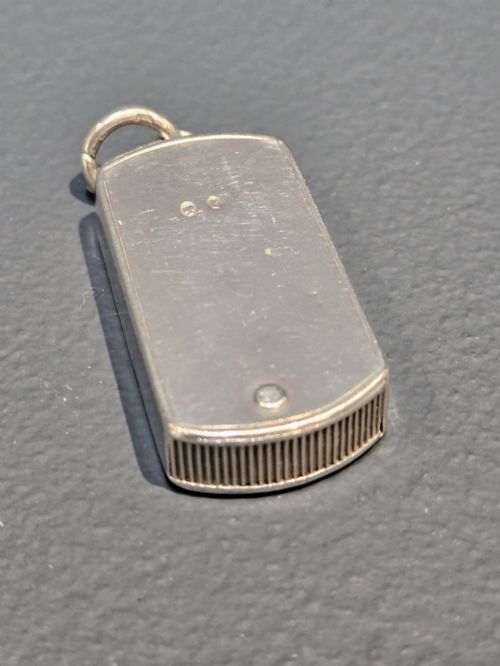
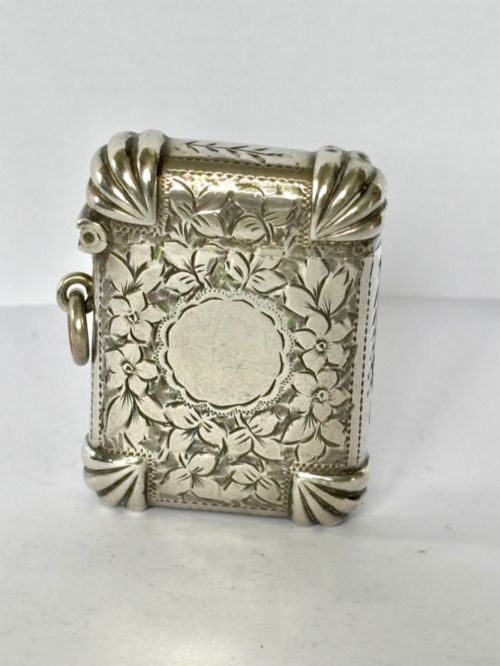
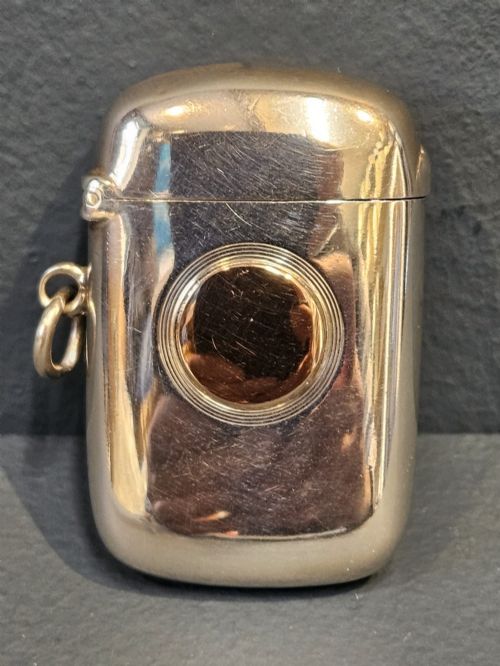
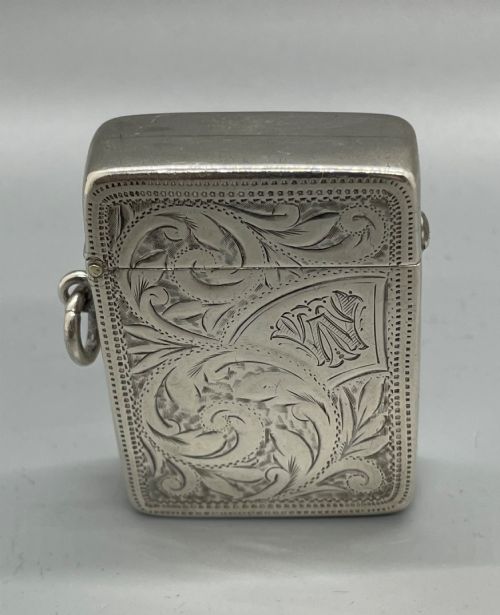
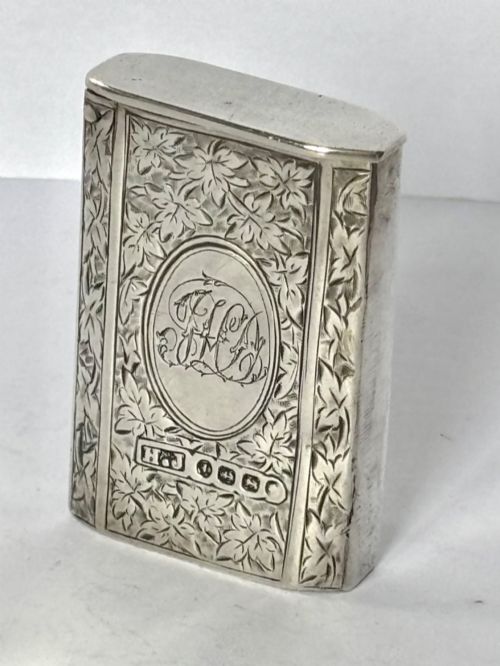
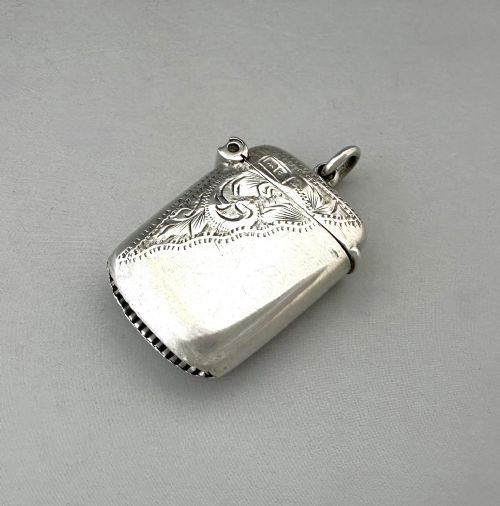
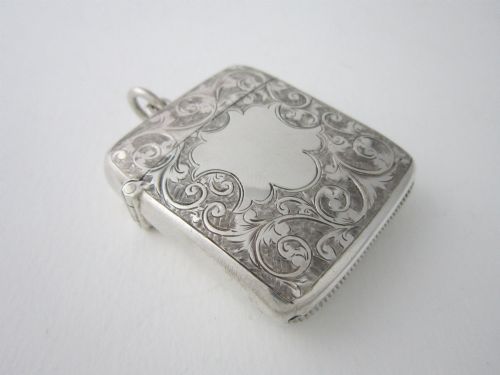
A victorian pocket matchbox, known period-specifically as a vesta case or match safe, is a small lidded container designed to hold safety matches in a pocket or handbag. The pieces on this page span the late nineteenth century and cross into the early twentieth century, taking the form of rectangular boxes, circular holders, and sculptural novelties.
Makers fashioned these containers primarily in sterling silver, often pairing the metal with painted enamel, gold accents, or silver gilt interiors. While many examples rely on traditional scroll engraving and foliate patterns, others take playful or specific shapes such as double-ended cigars, sentry boxes, and animal figures.
The selection includes standard match safes alongside combination pieces that house snuff, photographs, or sovereigns alongside the compartment for matches. Continental 800 silver pieces and English hallmarked silver from Birmingham, Chester, and London represent the dominant geographic origins of the surviving stock.
Materials and Construction Techniques
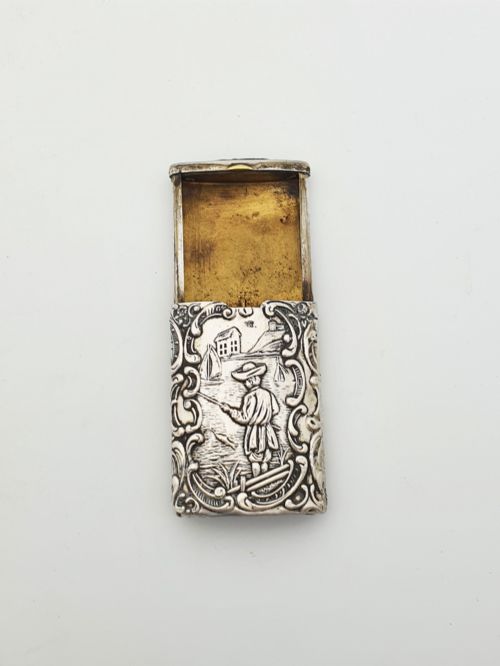
Silversmiths utilised sterling silver and solid silver plate, shaping the bodies through stamping, repoussé, and hand engraving. Leaf and scroll motifs, scenic relief work, and figural representations required skilled chasing and engraving by hand before the final polish.
Colour entered the medium through painted enamel panels, depicting subjects such as floral roses, jockey portraits, and golfers. Internal gilding, known as silver gilt or vermeil, protected the silver from the corrosive sulphur content found in early match heads.
Victorian Pocket Matchbox Retail Price Guide 2026
Typical asking prices for victorian pocket matchbox among the pieces listed under this phrase on Sellingantiques today, from the lower quarter to the upper quarter. They describe what is for sale here now, not the wider market.
Sampson Mordan once built a matchbox shaped like a sentry box, complete with a tiny painted guard standing at attention.
Factors of Quality and Distinction
Quality rests upon the crispness of the hallmark stamps, the depth of the repoussé relief, and the integrity of any enamel work. Crisp engraving on a plain silver background commands attention, while blurred details indicate worn dies or heavy over-polishing.
Novelty forms and pieces featuring painted enamel panels or combined utility functions sit at the upper end of the scale. The precision of the hinged lid closure and the secure fit of the striking serration on the base determine mechanical execution.
HOWARD JAMES BIRMINGHAM·EV PLEDGE & SON·Sampson Mordan & Co·A & J ZIMMERMAN·William Neale·MINSHULL & LATIMER·William Hair Haseler
The Victorian Pocket Matchbox Glossary
- Vesta case
- A small pocket container designed to hold wax matches known as vestas. These cases typically feature a hinged lid and a striking surface on the base.
- Match safe
- An American and general term for a vesta case. It serves the identical function of protecting and dispensing matches.
- Hallmark
- An official stamp applied to precious metals indicating the standard of purity, the assay office, and the date letter for the year of manufacture.
- Silver gilt
- Sterling silver that has been coated with a thin layer of gold on the interior or exterior surfaces. This technique prevents tarnishing from chemical interactions.
- Repoussé
- A metalworking technique where the artisan hammers the design from the reverse side to form a raised relief on the front.
Victorian Pocket Matchbox: Frequently Asked Questions
How do I use a victorian pocket matchbox?
Open the spring-loaded or friction-fit hinged lid to access the matches stored inside. Strike the match head against the serrated groove located on the exterior base of the case to ignite it.
Keep the interior clean of match debris to ensure the lid closes flush against the body. Carry the case in a pocket or attach it to a chatelaine using the suspension loop.
What is the difference between a vesta case and a match safe?
The terms describe the exact same object category, though regional vocabulary differs. Vesta case is the traditional British term, while match safe is common in North American usage.
Both containers serve to protect fragile matches from moisture and friction while being carried on the person. Collectors in Britain generally use vesta case regardless of the piece's origin.
How do I read the hallmarks on these matchboxes?
British hallmarks typically consist of a maker's mark, a standard mark indicating silver purity such as the lion passant, an assay office mark showing the city of testing, and a date letter.
Matchboxes made in Birmingham display an anchor mark, while London pieces show a leopard's head. The date letter corresponds to specific assay office cycles recorded in reference guides.
Why do some matchboxes have gilt interiors?
Silversmiths applied a thin layer of gold, known as vermeil or silver gilt, to the inside of the case to protect the silver from chemical corrosion. Early match heads contained sulphur and phosphorus that tarnished bare silver rapidly.
The gold wash provided a durable barrier against these reactive substances while adding a decorative interior contrast when the lid opened.