





Victorian Playing Cards
Victorian playing cards and their associated containers are tactile pieces of nineteenth-century leisure, sought after by collectors for their fine craftsmanship and social history.
Victorian Playing Cards
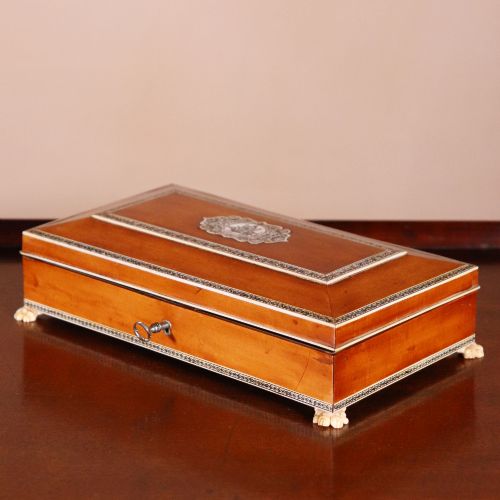
When you search for victorian playing cards, you encounter a specialised selection of nineteenth-century gaming equipment, including bespoke playing card cases, elaborate card tables, and fitted games boxes.
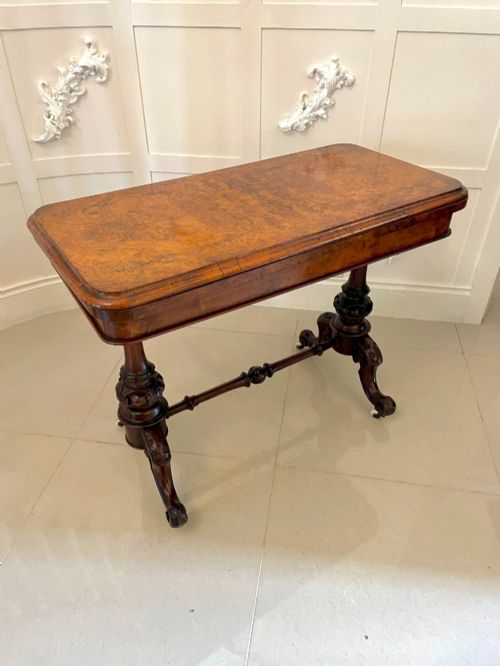
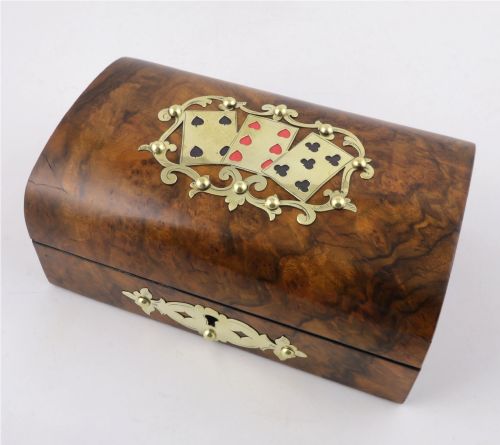
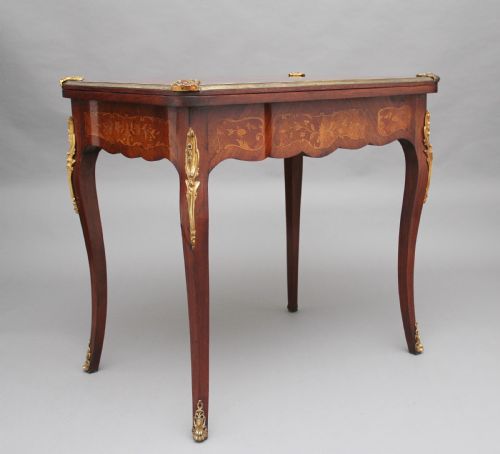
The objects on this page span the Victorian and Edwardian eras, encompassing walnut card tables, brass-bound caskets, silver card cases, and ceramic gaming tokens.
Materials and construction
The pieces listed utilise dense timbers such as burr walnut, mahogany, and oak, frequently paired with brass mounts, inlay, and carved wooden details.
Metalwork appears in sterling silver for card cases and menu holders, alongside enamel and glass elements incorporated into games boxes and tokens.
Surface decoration relies on traditional techniques including wood inlay, decoupage, hand-carving as seen in Black Forest items, and silver smithing.
Victorian Playing Cards Retail Price Guide 2026
Typical asking prices for victorian playing cards among the pieces listed under this phrase on Sellingantiques today, from the lower quarter to the upper quarter. They describe what is for sale here now, not the wider market.
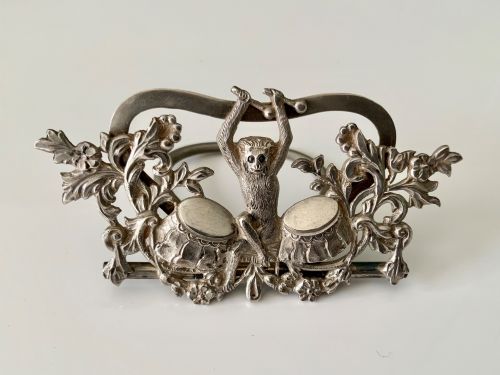
An Edwardian silver menu holder depicts a monkey playing drums, proving the Victorians brought theatrical flair even to the dining table.
Markers of quality
Superior examples demonstrate refined cabinet-making, such as figured burr walnut veneers and precise brass banding, whereas simpler pieces rely on plain mahogany or oak construction.
Maker attribution elevates certain games boxes, with documented firms like George Betjemann commanding attention for their sophisticated mechanical interiors and superior hardware.
The degree of hand-carving and decorative detail, from serpentine card table tops to intricate silver smithing, separates standard utilitarian items from the finest parlour accessories.
George Betjemann
The Victorian Playing Cards Glossary
- Burr walnut
- A highly figured timber veneer harvested from walnut tree growths, prized for its swirling, organic grain patterns on nineteenth-century tables and boxes.
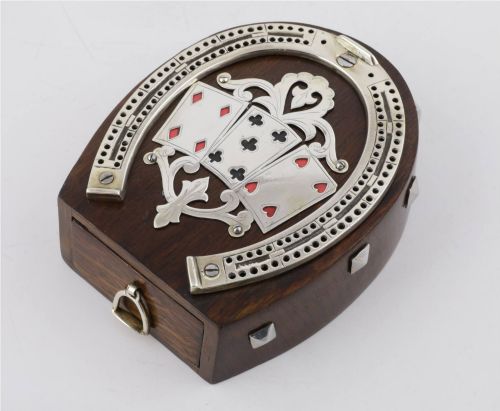
- Cribbage board
- A scoring board featuring tracks of small holes used to record points in the card game cribbage, frequently integrated into Victorian games boxes.
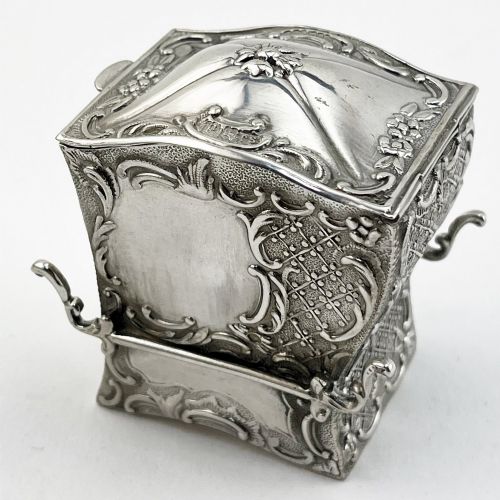
- Sedan chair case
- A specialised silver container designed to hold playing cards, named after the compact enclosure of an eighteenth-century sedan chair.
- Serpentine table
- A card table featuring a gently undulating, curved front edge, demonstrating advanced Victorian woodworking and shaping techniques.
- Gaming tokens
- Small ceramic, bone, or mother-of-pearl discs utilised as counters during parlour card and dice games before the widespread use of paper currency.
Victorian Playing Cards: Frequently Asked Questions
How do I date a card table?
Dating a card table involves examining the timber species, leg styles, and the mechanism used to support the fold-over top. Mid-nineteenth-century examples frequently showcase rich burr walnut veneers and serpentine shapes.
Early Victorian versions often utilise mahogany with heavy pedestal bases, while later decades introduce inlaid decoration and lighter occasional table formats.
Were games boxes used daily?
Parlour games formed a central pillar of middle-class social life in the nineteenth century, meaning these boxes and tables saw frequent use during evening gatherings and house parties.
Because they were practical objects handled regularly, surviving pieces often display minor signs of age that bear witness to decades of family entertainment.
How should I care for wooden games tables?
Wooden card tables and games boxes require stable indoor humidity away from direct sunlight and heat sources to prevent the natural veneer from drying out or cracking.
Gentle dusting with a dry cloth and occasional application of appropriate furniture wax preserves the polished finish of walnut and mahogany surfaces.