



Victorian Playing Card Box
These Victorian playing card boxes keep gatherings orderly and look handsome on a side table.
Victorian Playing Card Box
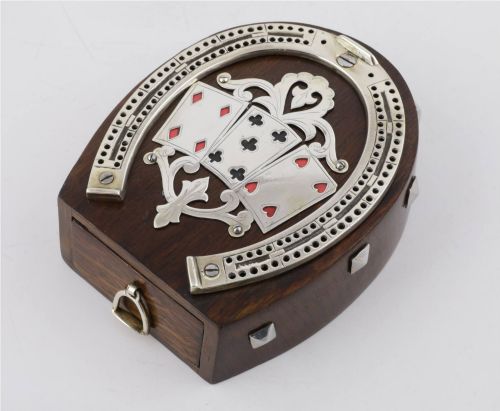
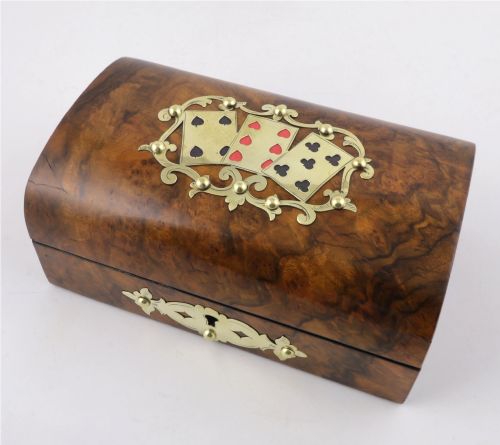
A Victorian playing card box is a container built to hold decks of cards, often accompanied by cribbage boards, dice or counters, for parlour games. You are looking at desk caskets and gaming boxes originating from the nineteenth century, most frequently taking the form of walnut or oak caskets with hinged lids.
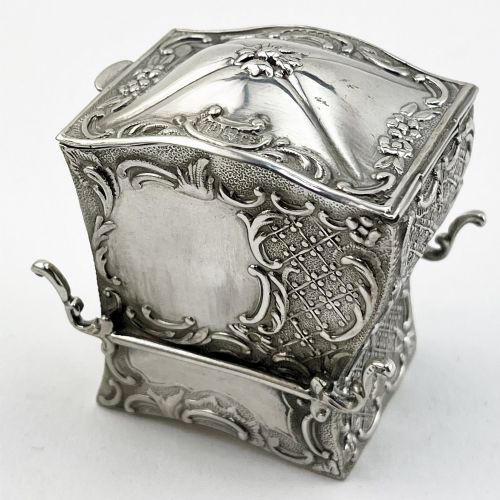
The versions you meet on this page include simple card cases in sterling silver as well as fitted games caskets in burr walnut, rosewood and oak. Some examples arrive with brass mounts, glass inserts or silk linings, reflecting the Victorian taste for structured domestic entertainment.
Many of these pieces double as general games boxes, housing poker dice or cribbage pegs alongside the cards. They date primarily from the mid to late nineteenth century, spanning the Victorian period up to nineteen hundred.
How they were made
Cabinet makers constructed these boxes using solid timbers and decorative veneers such as burr walnut, rosewood and oak, often reinforced with brass banding, hinges and escutcheons. Woodwork involved precise joinery to house internal card slots and compartments.
Silversmiths shaped sterling silver into rigid cases and hinged containers, sometimes adding Birmingham hallmarks or intricate repoussé decoration. Carvers working in the Black Forest style utilised deep relief carving to ornament wooden surfaces with natural motifs.
Victorian Playing Card Box Retail Price Guide 2026
Typical asking prices for victorian playing card box among the pieces listed under this phrase on Sellingantiques today, from the lower quarter to the upper quarter. They describe what is for sale here now, not the wider market.
This selection spans the Victorian era, utilising timber, silver, brass, glass, enamel, silk and paper.
What varies in quality
The distinction between ordinary utility boxes and finer cabinetwork lies in the choice of timber and the precision of the internal fittings. Superior examples feature figured burr veneers, heavy brass mounts and bespoke compartments that hold cards snugly without sticking.
Workmanship in the details separates the grades, such as the snugness of the lid closure, the crispness of Black Forest carving, and the weight of the sterling silver used for hallmarked cases. Fully fitted interiors with intact silk linings and original cribbage boards indicate higher original manufacture.
George Betjemann
The Victorian Playing Card Box Glossary
- Cribbage board
- A scoring board featuring tracks of small holes for pegs, frequently incorporated into the lids or interiors of these boxes.
- Escutcheon
- A protective brass plate surrounding the keyhole of a box, designed to prevent the surrounding wood from wearing away.
- Repoussé
- A metalworking technique where silver is hammered from the reverse side to form raised relief patterns on the exterior.
- Black Forest style
- A carved wooden aesthetic originating from Switzerland and Germany, known for deep, naturalistic motifs depicting animals or foliage.
- Birmingham hallmark
- An official stamp applied by the assay office in Birmingham to confirm the standard of sterling silver.
Victorian Playing Card Box: Frequently Asked Questions
What fits inside these boxes?
These boxes accommodate standard packs of nineteenth century playing cards, alongside related accessories like cribbage pegs and poker dice.
Interior layouts vary, with some offering dedicated wooden dividers while others provide open wells for counters and scorecards.
How do I care for the wood?
Keep wooden boxes away from direct sunlight and steady heat sources to prevent the burr walnut or rosewood veneers from drying out.
Apply a light application of appropriate wax occasionally to maintain the sheen of the timber without building up heavy residues.
Are silver cases fragile?
Sterling silver cases provide a rigid protective shell for paper cards, though thinner silver walls can dent if dropped.
Gentle polishing with a soft cloth keeps the silver bright without wearing down the Birmingham hallmarks or engraved decoration.
How do I date a box?
Dating relies on timber choices, construction methods, and metal hallmarks, with silver pieces often bearing assay letters for exact years.
Stylistic shifts from mid Victorian rosewood caskets to later Black Forest carvings help narrow down the decade of production.