
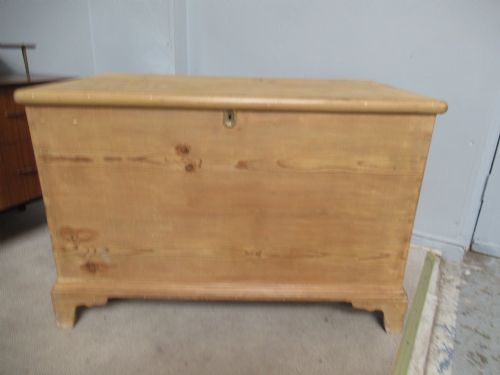
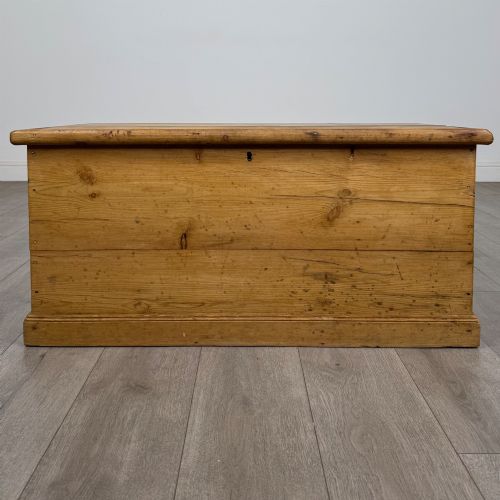
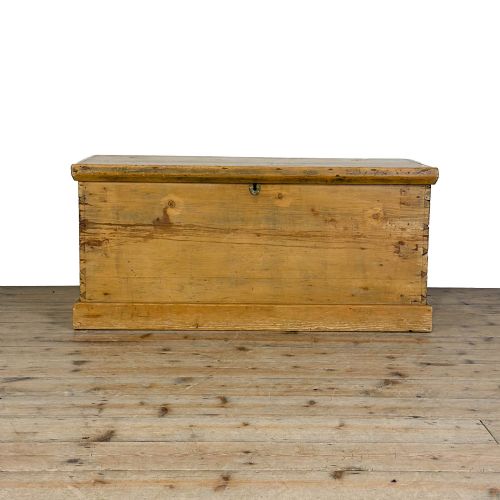
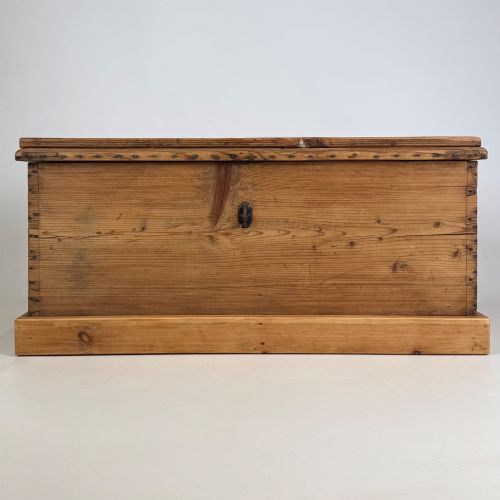
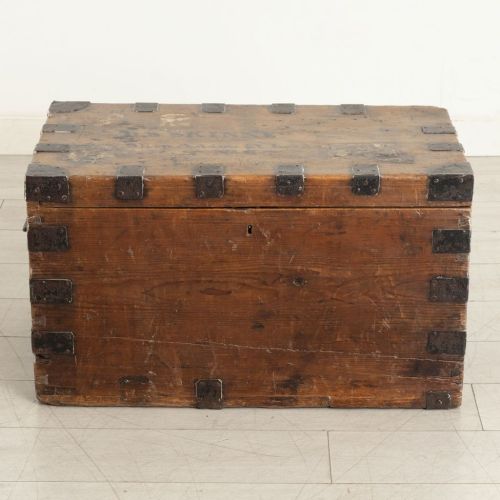
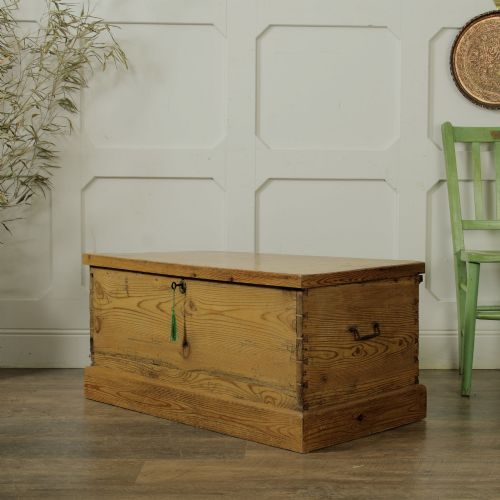
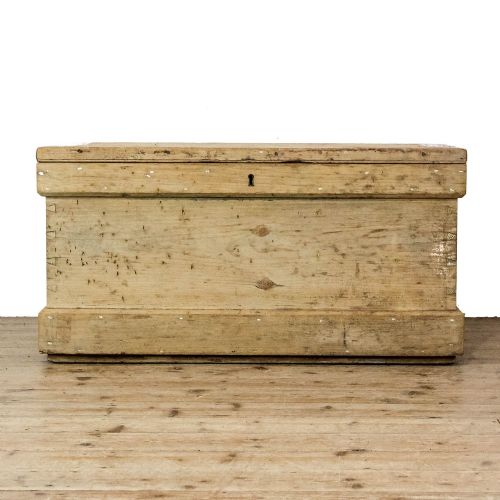
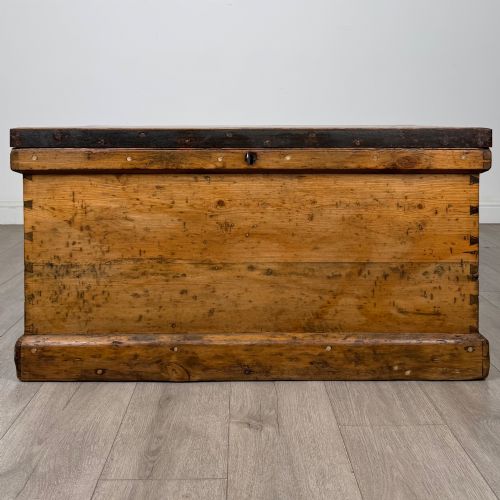

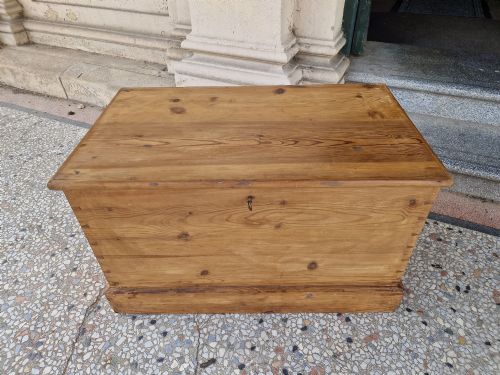
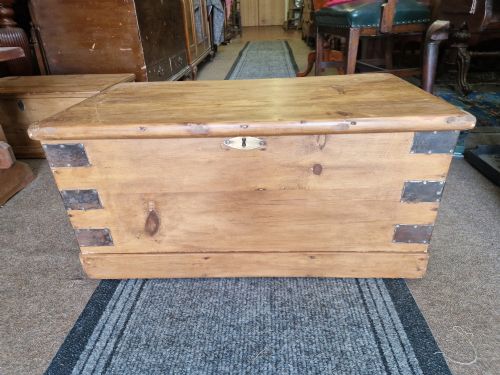
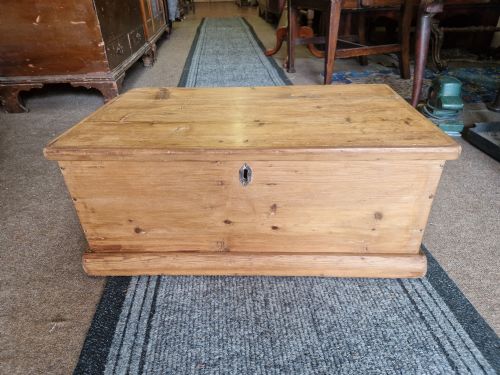
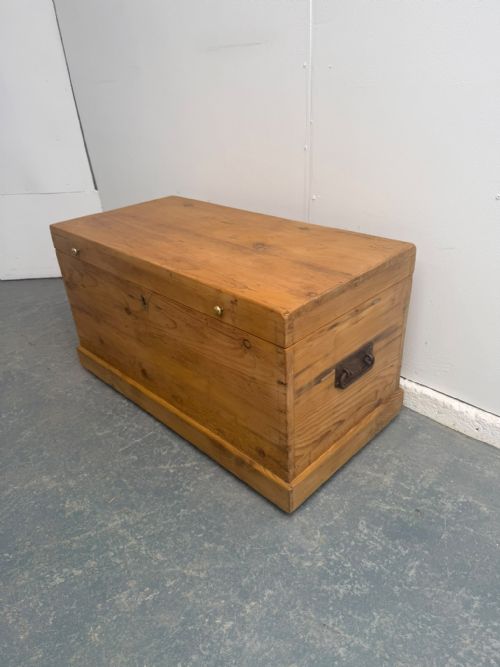
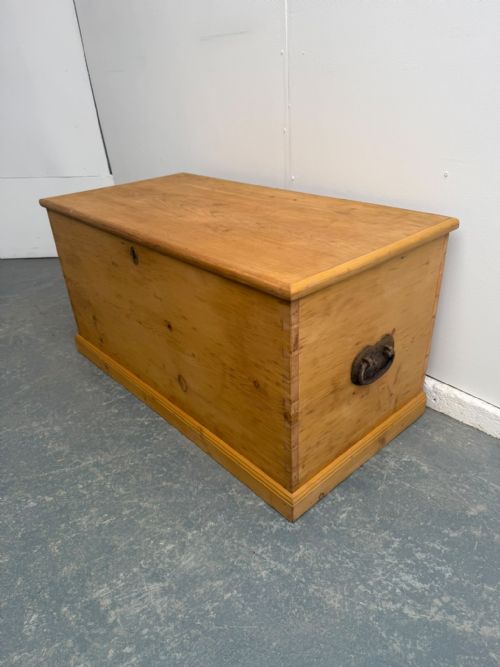
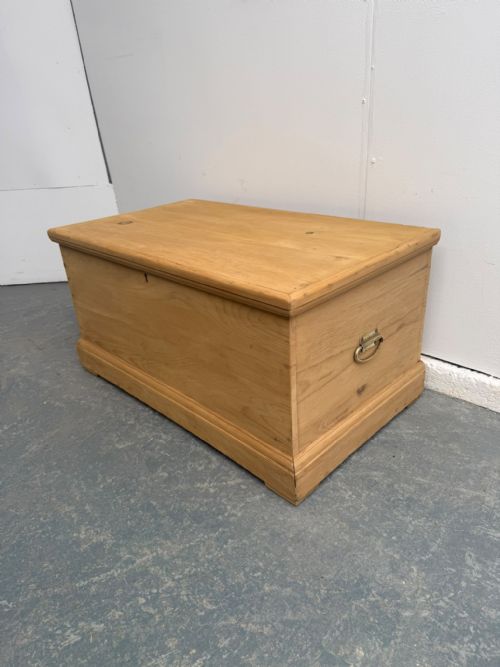
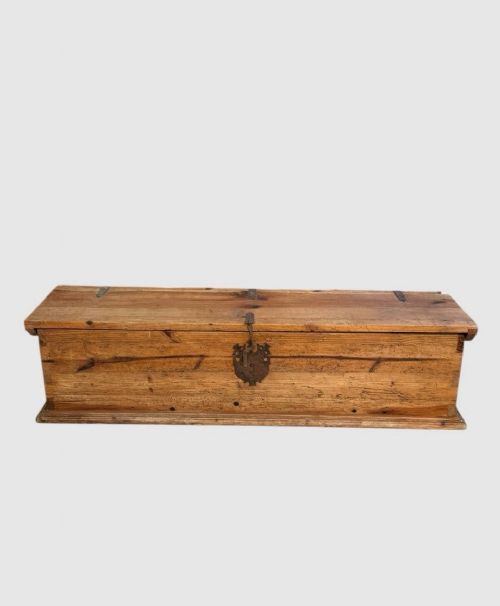
Victorian Pine Coffer Box
A victorian pine coffer box brings honest storage and robust utility into a room, forged from honest timber to last.
Victorian Pine Coffer Box
A victorian pine coffer box serves as a practical storage vessel, most commonly found as a blanket box, tool chest, or travel trunk dating from the nineteenth century. These pieces emerge from both utilitarian workshops and country settings, built to house textiles, gear, or household possessions with straightforward strength.
The versions met most frequently on this page display the warm tones of waxed pine, alongside painted finishes, scumble glaze, or iron and brass hardware. Buyers often repurpose these sturdy containers as coffee tables or low media stands while retaining their deep internal capacity.
Origins span general domestic use, maritime travel, and campaign service, reflecting the diverse demands placed on nineteenth century transport and storage. Whether plain waxed or fitted with internal drawers, each box carries the unmistakable mark of period craftsmanship.
Materials and Construction Techniques
Makers relied primarily on solid pine and pitch pine, selecting softwoods that offered resilience and workability for everyday furniture and transport trunks. Timbers were joined using traditional methods to withstand heavy loads and frequent shifting across rooms or continents.
Iron and brass featured heavily as reinforcement, appearing as corner brackets, straps, and secure locks that protected the contents during transit. Surfaces received protective and decorative treatments, ranging from simple clear wax to scumble paint and hand-brushed pigments.
Listings feature nineteen-century pine, pitch pine, and painted surfaces alongside iron and brass hardware.
Markers of Quality and Distinction
Quality reveals itself in the integrity of the timber and the retention of original hardware, such as robust iron strapwork, brass bindings, and working locks with keys. Examples featuring internal fitted drawers or estate provenance display a higher tier of workmanship than standard utility containers.
Surface preservation dictates much of the character, distinguishing untouched painted finishes or deep patinated wax from later alterations. The proportion of the box, the thickness of the pine boards, and the tightness of the corner joints separate standard storage chests from finer regional or campaign pieces.
The Victorian Pine Coffer Box Glossary
- Pine
- A softwood commonly used throughout the nineteenth century for domestic furniture, packing cases, and storage chests due to its availability and strength.
- Pitch Pine
- A denser, more resinous variety of pine featuring pronounced grain patterns, often selected for heavy duty trunks and maritime use.
- Scumble
- A decorative painting technique involving a translucent glaze dragged over a base coat to simulate the grain of more expensive hardwoods or create aged patterns.
- Campaign Trunk
- A portable chest built with recessed brass handles and reinforced corners for military officers and travellers on active service.
- Mule Trunk
- A storage chest featuring one or more drawers beneath the main internal compartment, combining the function of a box and a chest of drawers.
Victorian Pine Coffer Box: Frequently Asked Questions
What were these boxes originally used for?
These containers served primarily to store heavy blankets, personal garments, tools, and household linens safely away from dust and pests. Many were also built specifically as travel trunks for moving belongings by carriage, ship, or rail during the nineteenth century.
Over time, families adapted them for general domestic storage in bedrooms, hallways, and estate outbuildings. Their robust construction ensured they could endure heavy daily handling and long journeys.
How do I care for a waxed pine surface?
Maintaining a waxed pine finish requires occasional applications of beeswax to nourish the wood and preserve its warm lustre. Avoid placing these pieces in direct sunlight or near intense heat sources, which can dry out the historic timber and cause splitting.
Dust the surface regularly with a soft, dry cloth and clean up spills immediately to prevent water marks. A gentle buffing will restore the natural sheen without stripping away the accumulated patina of the nineteenth century.
How do I identify a campaign style box?
Campaign boxes feature distinctive hardware designed for portability and durability during military travel and overseas deployment. Look for recessed brass handles, reinforced metal corners, and secure locking mechanisms meant to protect contents from rough handling in transit.
These pieces often exhibit a more rugged construction and travel history compared to standard domestic blanket chests. Their compact proportions and functional metalwork reflect the rigorous demands of nineteenth century military service.