
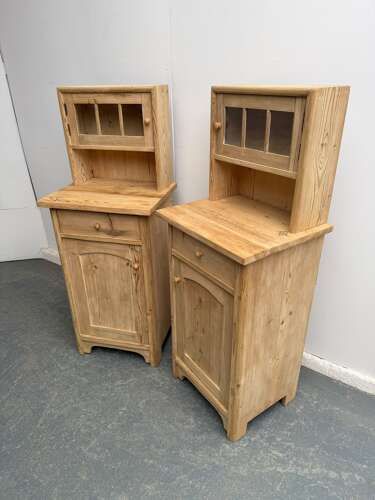


Victorian Pine Bedside Tables
These Victorian pine bedside tables bring honest nineteenth-century utility to the bedroom, offering practical bedside storage built from dependable domestic timber.
Victorian Pine Bedside Tables
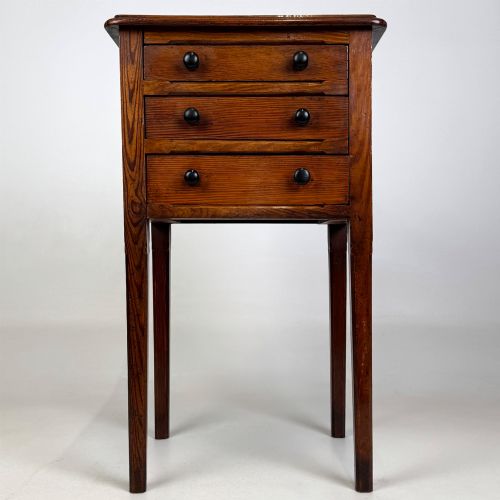
Victorian pine bedside tables encompass nineteenth-century forms ranging from simple side tables and washstands to enclosed pot cupboards and bedside cabinets. Buyers searching this phrase encounter practical timber furniture originating from various decades across the nineteenth century, including pieces dated to eighteen-sixty, eighteen-ninety, and nineteen-hundred.
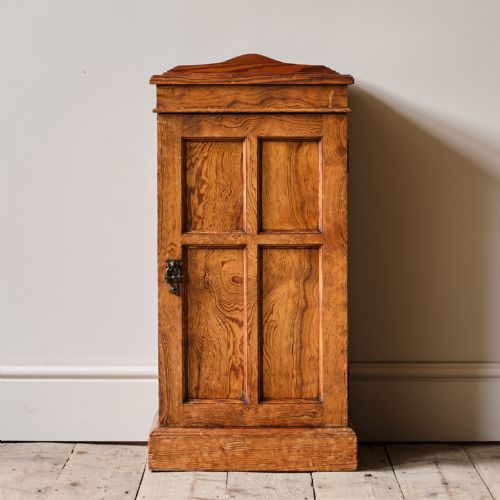
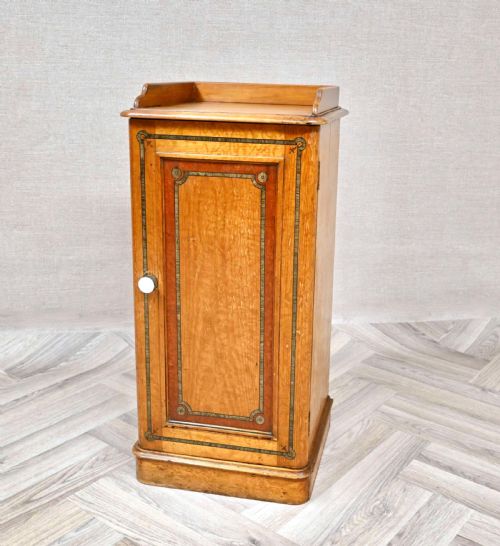
Enclosed cabinets and pot cupboards dominate the selection, often featuring single doors that open to reveal interior storage alongside open side tables and wash stands. The forms draw on styles such as English country, Victorian country, French country, and Gothic revival, reflecting the diverse domestic requirements of the period.
Origins stretch across English workshops as well as continental examples, including Hungarian pieces finished in distinct painted surfaces. Buyers most frequently meet pieces constructed from standard pine, pitch pine, or Oregon pine, occasionally adapted with painted finishes or contrasting marble tops.
Materials and construction
Carpenters utilised solid pine, pitch pine, and Oregon pine as the primary structural timbers for these bedside pieces, relying on the wood's inherent durability for everyday domestic use. Joinery techniques from the nineteenth century ensured sturdy frames capable of withstanding heavy daily wear beside the bed.
Surface treatments vary significantly, utilising traditional wax finishes, applied paint in black, blue, or light grey, and decorative graining techniques. Selected examples incorporate contrasting materials such as ceramic components, glass, oak elements, and fitted marble tops.
Listings feature nineteen pieces spanning the Victorian era, utilising pine, pitch pine, Oregon pine, ceramic, glass, paint, and marble across multiple regional styles.
Judging quality in nineteenth-century bedside furniture
Quality in these pieces rests upon the integrity of the timber selection and the retention of original structural elements rather than ornate decoration. Solid construction in pitch pine or Oregon pine demonstrates greater durability than standard softwood alternatives.
The sophistication of the finish heavily influences the character of the piece, distinguishing plain waxed surfaces from elaborate painted schemes, carved detailing, or fitted marble and columned architectural elements.
The Victorian Pine Bedside Tables Glossary
- Pot cupboard
- A bedside cabinet originally designed to house a chamber pot behind a single enclosed door. These compact units provide convenient concealed storage for modern bedside use.
- Washstand
- A piece of bedroom furniture designed to hold a basin and jug, often adapted as a bedside table. They frequently feature protective upstands and sometimes incorporate marble tops.
- Pitch pine
- A dense, resinous softwood utilised during the nineteenth century for robust furniture construction. It provides greater weight and durability than standard pine.
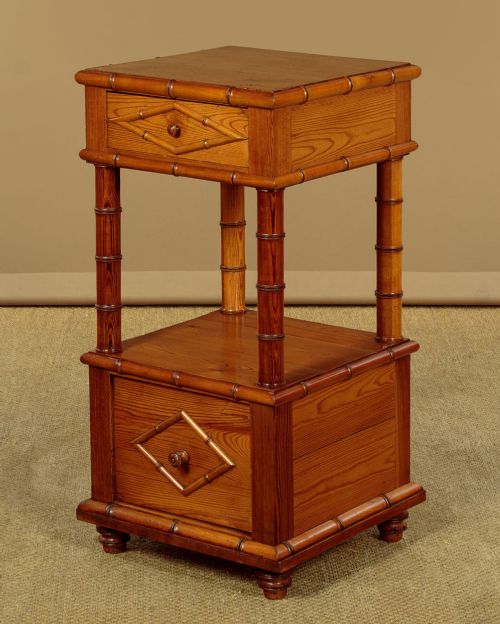
- Faux bamboo
- A decorative technique where timber is carved or painted to imitate natural bamboo stalks. This stylistic choice gained popularity during the late nineteenth century.
- Upstand
- A low wooden barrier rising along the back or sides of a bedside cabinet or washstand. It prevents items from sliding off the surface and protects bedroom walls.
Victorian Pine Bedside Tables: Frequently Asked Questions
What is a pot cupboard?
A pot cupboard is a small enclosed bedside cabinet originally built to conceal a chamber pot. They offer practical vertical storage with a single door and sometimes an interior shelf.
Today, buyers utilise them beside the bed to store books and small items out of sight. Their compact footprint suits smaller bedrooms while providing useful surface space on top.
Are marble top bedside tables original?
Marble tops on nineteenth-century bedside cabinets were fitted to provide a durable, water-resistant surface for washing equipment and water jugs. Many remain intact from the period of manufacture.
Buyers should examine how the marble sits within the wooden frame. These stone surfaces add weight and a distinct textural contrast to the pine structure.
How do I care for painted pine furniture?
Painted nineteenth-century pine requires gentle maintenance to preserve historic surface finishes. Dusting with a dry cloth and avoiding harsh chemical cleaners protects the original paint layers.
Waxed pine surfaces benefit from occasional application of traditional beeswax to nourish the timber. Keeping these tables away from direct heat sources prevents the wood from drying and splitting.
What is the difference between pine and pitch pine?
Pitch pine is a specific variety of pine containing high resin content, making the timber denser, heavier, and darker in tone than standard softwood pine. Furniture built from pitch pine feels notably solid.
Standard pine offers a lighter colour and more pronounced knot patterns. Both timbers were widely utilised across nineteenth-century cabinet making for different grades of domestic furniture.