




Victorian Perpetual Calendar
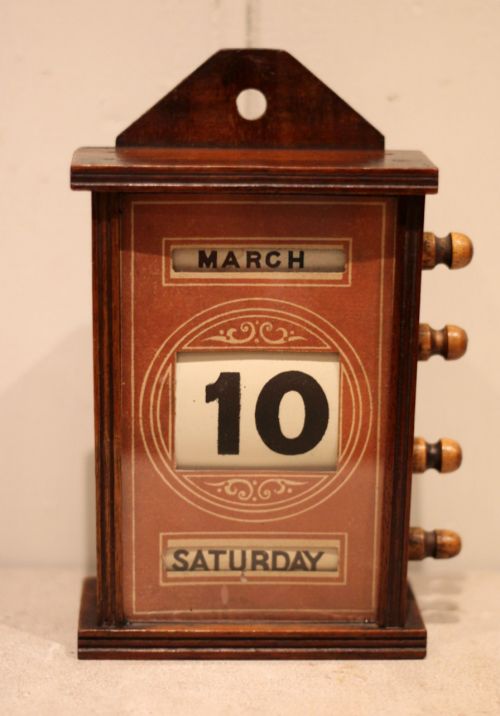
A victorian perpetual calendar is a mechanical desktop or wall instrument that displays changing dates without resetting annually.
Victorian Perpetual Calendar
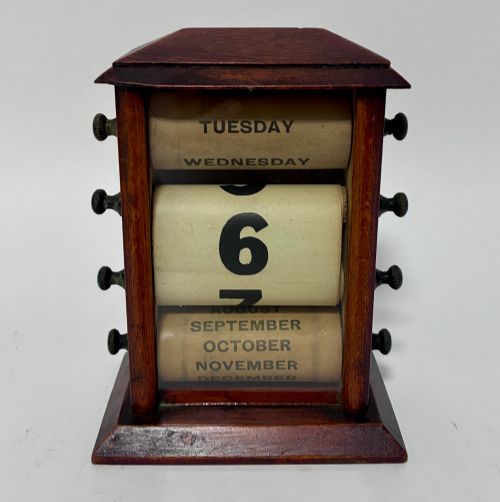
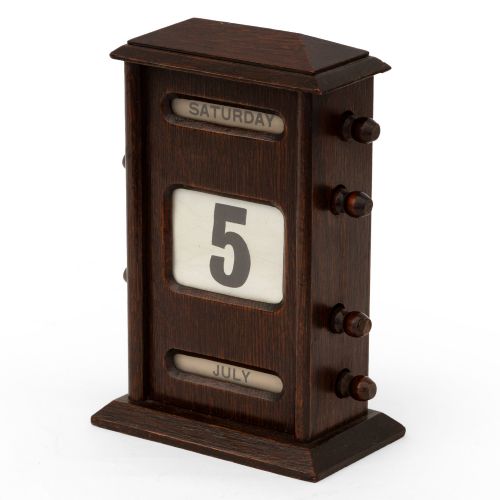
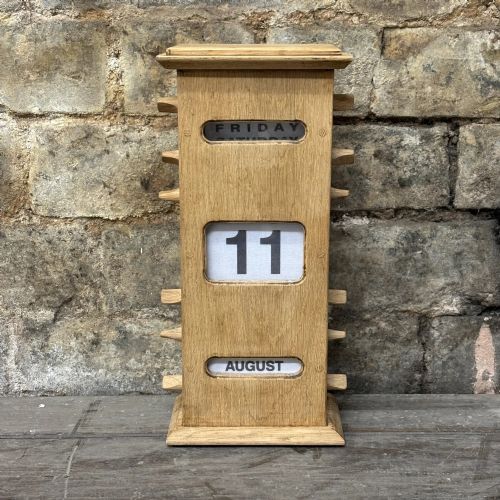
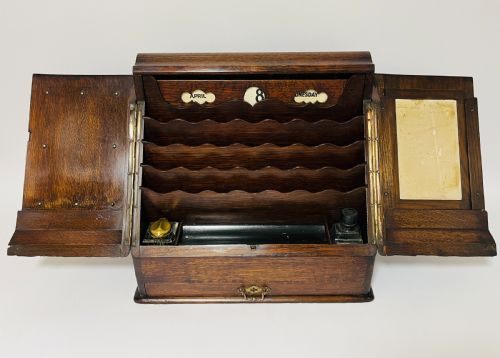
A victorian perpetual calendar takes several distinct forms, most commonly appearing as an oak desk accessory with adjustable date cards or rollers. These items span the nineteenth century and extend into the early twentieth century, including wall-mounted versions and combinations with stationery cabinets.
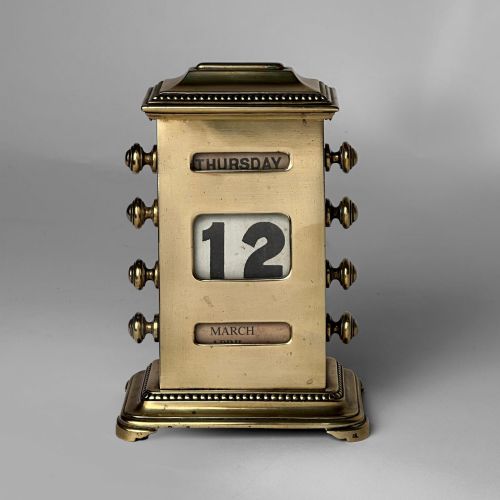
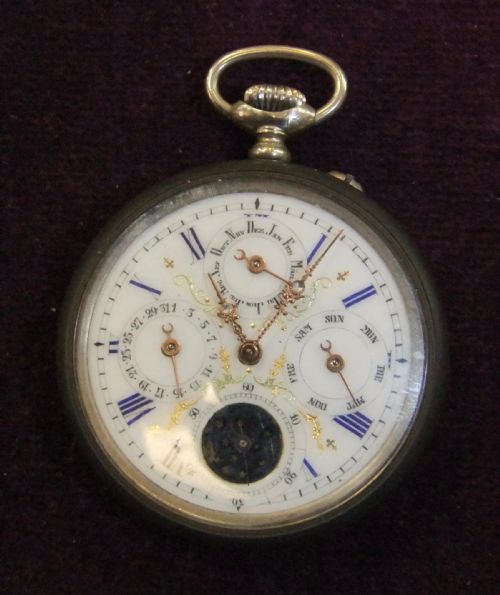
Beyond standard desk models, variations include cast brass pieces with decorative motifs, pocket watches, and architectural mantel clocks housing calendar mechanisms. French and Belgian slate clock versions sit alongside English oak and walnut pieces in this category.
Quality and Execution
The standard of a victorian perpetual calendar depends on the crispness of the lettering on the date drums or paper cards and the smoothness of the mechanical action. Solid timber construction with figured grain sits above simpler variants.
Makers who incorporated specialised designs, such as Egyptian decoration or combination movements by known clockmakers, demonstrate superior craftsmanship compared to standard production pieces.
Victorian Perpetual Calendar Retail Price Guide 2026
Typical asking prices for victorian perpetual calendar among the pieces listed under this phrase on Sellingantiques today, from the lower quarter to the upper quarter. They describe what is for sale here now, not the wider market.
Oak is the most frequently recorded timber across these calendar listings, appearing in both solid and figured grain forms.
William Tonks of Birmingham·Brocot·Asprey London
The Victorian Perpetual Calendar Glossary
- Perpetual calendar
- A mechanism designed to track the date indefinitely, accounting for varying month lengths and leap years through manual adjustment or complex gear trains.
- Stationery cabinet
- A wooden desk accessory incorporating compartments for paper and envelopes, frequently fitted with an integrated calendar on the front or fall-front door.
- Brocot
- A distinct clock suspension and escapement system developed by French horologists, often found in nineteenth-century calendar mantel clocks.
- Boulle
- An elaborate marquetry technique using tortoiseshell and brass inlay, applied to select luxury furniture and decorative accessories.
- Equation of time
- A horological complication measuring the difference between apparent solar time and mean solar time, seen in advanced nineteenth-century clocks.
Victorian Perpetual Calendar: Frequently Asked Questions
How do you adjust the date on these calendars?
Most models use small thumbscrews, knobs, or rotating side drums to advance the day, date, and month independently.
Paper strip versions require turning internal rollers until the correct alignment appears behind the display window.
Where were these placed in a Victorian home?
Desk models sat upon library tables or writing desks alongside inkwells and stationery boxes for daily correspondence.
Wall-mounted versions hung in studies, offices, or hallways to provide a clear view of the date for household members.
How do I tell an oak desk calendar from a wall model?
Wall-hanging examples feature integrated wooden brackets, keyhole slots, or hanging loops on the reverse side for secure vertical mounting.
Desk variants have flat bases, angled supports, or heavier footprints designed to sit steadily on a horizontal surface.
What is the difference between a simple calendar and a clock combination?
Standard perpetual calendars rely entirely on mechanical date displays driven by drums, cards, or paper scrolls without timekeeping functions.
Clock combinations integrate the calendar mechanism directly into a mantel clock face or slate clock body, showing time and date simultaneously.