
Victorian Pastoral Art Painting
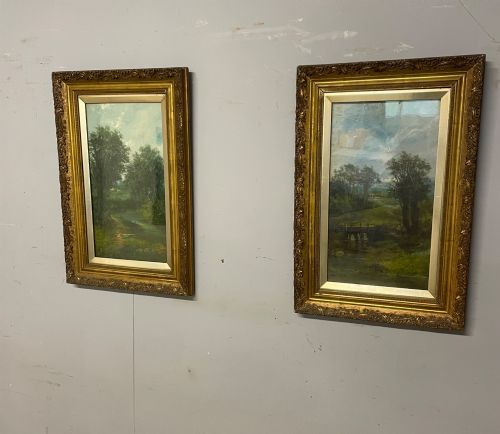
Victorian pastoral art painting captures the quiet rhythm of rural life through oils and watercolours depicting shepherds, herds and open countryside.
Victorian Pastoral Art Painting
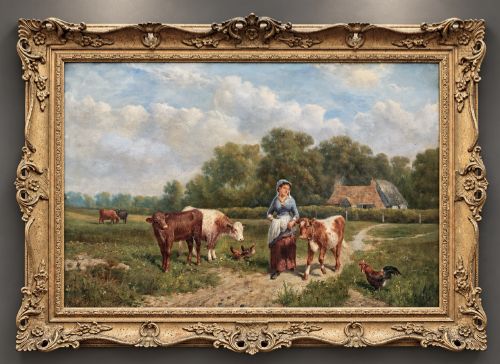
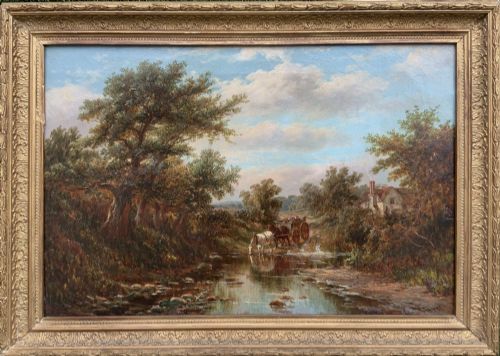
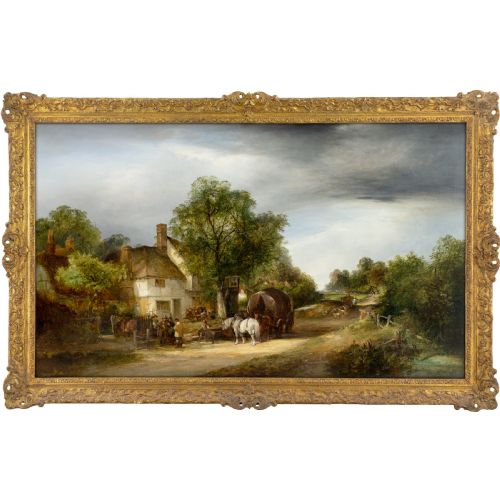
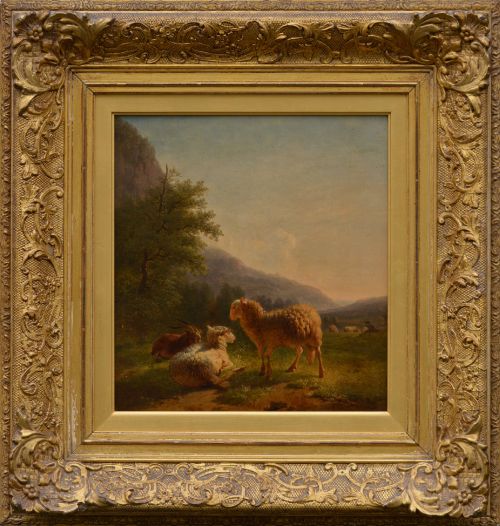
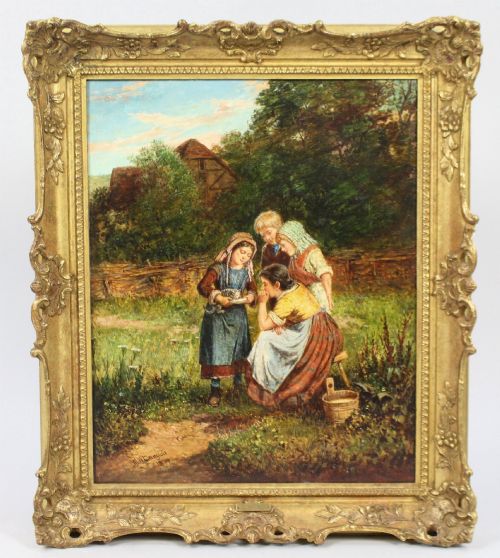
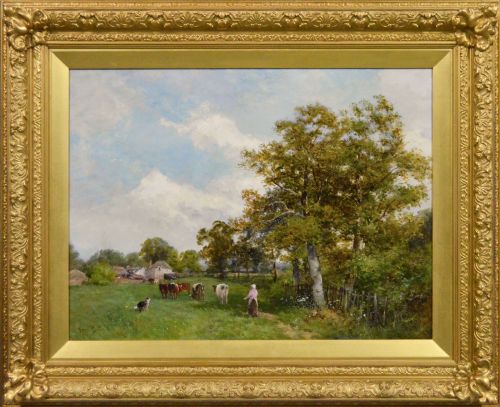
A victorian pastoral art painting portrays the nineteenth-century countryside, focusing on agricultural scenes, farm animals, and rural workers. These works reflect a romanticised view of agrarian life, dominated by depictions of sheep, cattle, and shepherdesses in British and European landscapes.
Buyers encounter oil on canvas and framed watercolours produced across the nineteenth and early twentieth centuries. The selection includes works by named British and continental artists as well as pieces originating from the British School.
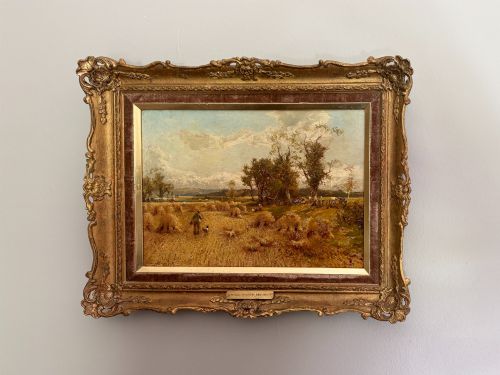
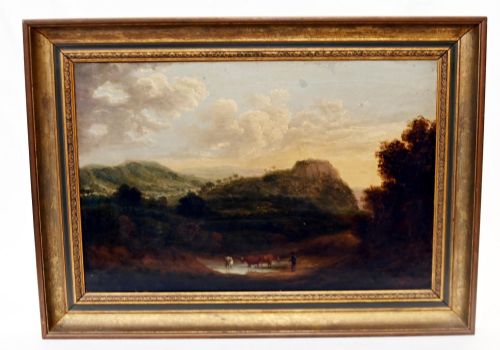
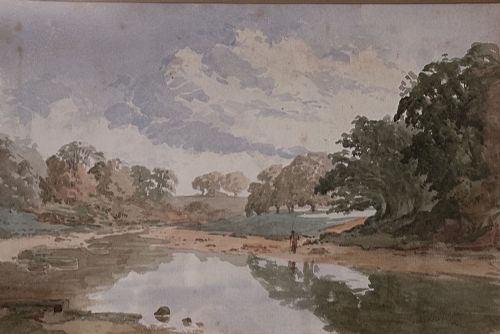
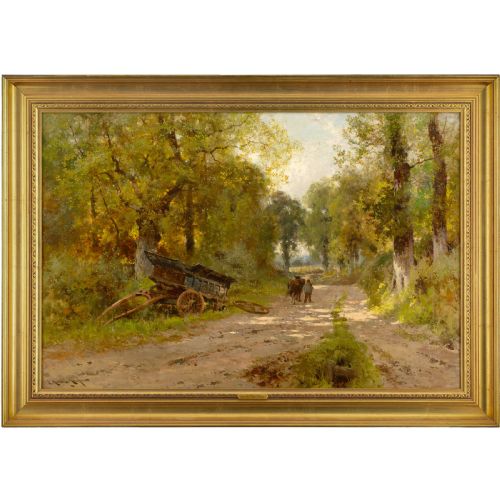
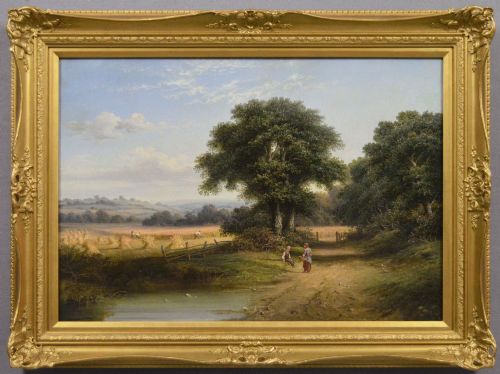
Common subjects range from highland cattle near lochs to milkmaids and harvesters by rivers. The format spans detailed oil paintings on canvas or board to delicate paper watercolours, frequently set within period gesso and giltwood frames.
How they were made
Artists utilised oil on canvas, wood panels, or watercolours on paper to create these rural scenes. Pigments were applied with varied brushwork, capturing the atmospheric light of morning and sunset across pastoral settings.
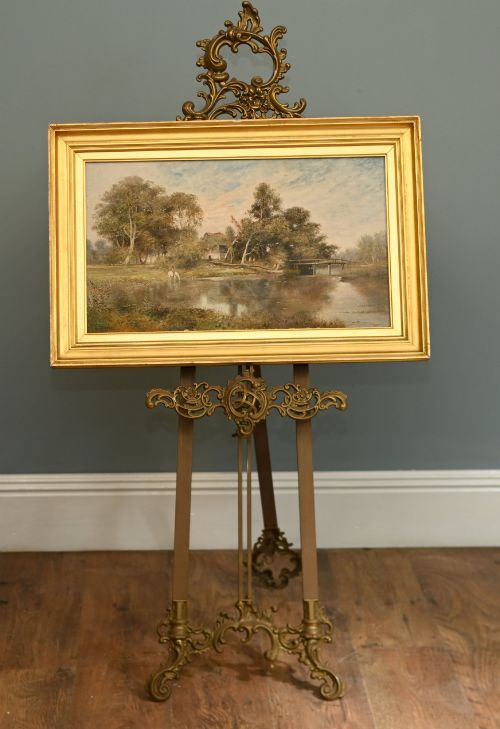
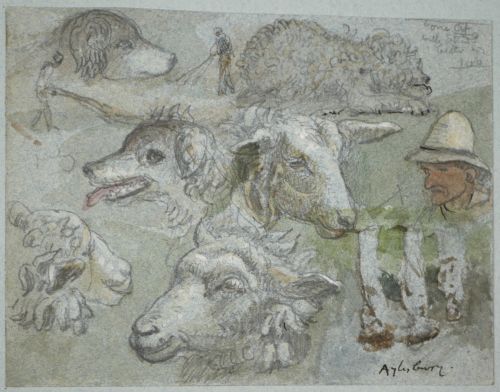
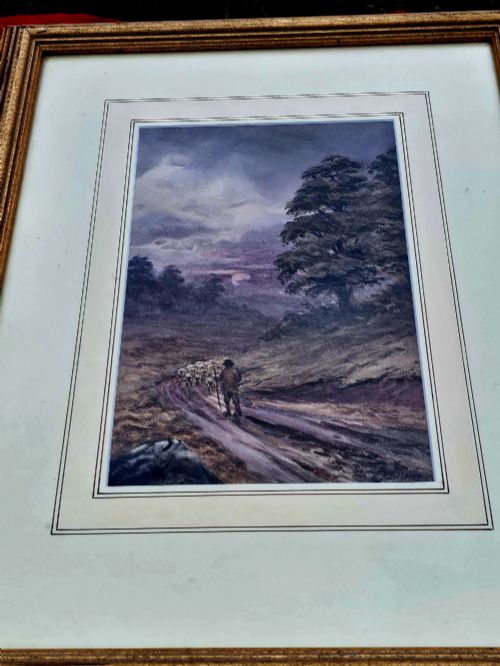
Frames play a structural role in presentation, constructed from wood and embellished with gesso and gilt finishes. Glass protects paper watercolours and drawings, preserving the delicate pigments from environmental exposure.
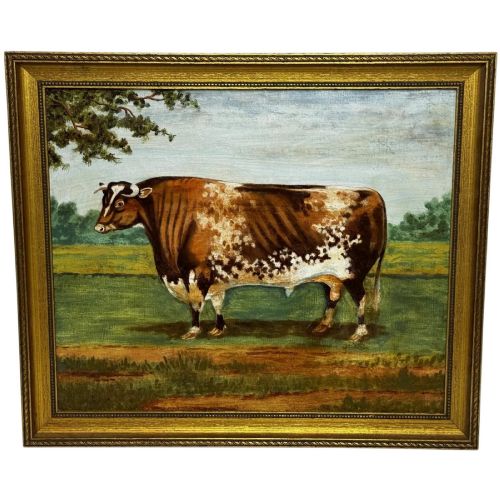
Cattle and sheep frequently gaze directly out of the canvas, acknowledging the viewer amidst their peaceful grazing.
What varies in quality
The degree of anatomical precision in animal subjects and the naturalism of the landscape set individual works apart. Superior pieces demonstrate confident handling of light, shadow, and atmospheric depth in depicting rural life.
The integrity of the original support and the quality of the surrounding giltwood frame influence the overall presentation. Works bearing clear signatures or attribution to established nineteenth-century painters command greater interest.
Eugène Verboeckhoven·James Smetham·John Horace Hooper·David Bates·Walter Heath Williams·Thomas Sidney Cooper·Frederick Walker·Richard Redgrave·Albert Rieger·William Watson Jnr·Douglas Cameron·Johann Friedrich Voltz·Robert Watson·Henry H Parker·Miles Birkett Foster·Charles Henry Slater·Henry Schouten·Charles Edward Wilson·Frederick Hines·Johannes de Haas·John Emms·A M Gauci·Philip Richard Morris·Cornelius Pearson·William Henry Mander
The Victorian Pastoral Art Painting Glossary
- Oil on Canvas
- Pigment mixed with drying oil applied to a stretched cloth support. This technique allowed artists to build rich textures and deep tones.
- Giltwood
- Wood carved and coated with gold leaf or a gold-coloured metallic finish. It defines the ornate frames typical of nineteenth-century picture presentation.
- Gesso
- A plaster-like mixture applied to wood frames as a base for gilding. It provides a smooth surface for intricate mouldings.
- Watercolour
- Pigments suspended in a water-soluble vehicle, applied to paper. It produces transparent washes of colour suited to delicate landscape studies.
- British School
- A classification for artists trained or working within Britain. It groups regional styles and shared academic traditions of the period.
Victorian Pastoral Art Painting: Frequently Asked Questions
What subjects appear in these pastoral paintings?
These works typically feature agricultural landscapes populated by livestock such as sheep, cattle, and bulls alongside shepherds, milkmaids, and farm labourers. Common settings include riversides, harvest fields, and highland valleys.
Scenes are framed by the natural topography of the British countryside and continental Europe, capturing everyday rural toil and quiet domestic moments in nature.
How do I care for an antique oil painting?
Keep paintings away from direct sunlight and dramatic shifts in temperature or humidity to protect the canvas and paint layers. Dust the surface gently with a soft, dry brush without applying pressure.
Avoid using water or chemical cleaners on the paint or the giltwood frame. Professional conservation is recommended for any structural repairs to the canvas or frame.
How can I tell a watercolour from an oil painting?
Watercolours are executed on paper, typically displayed under glass within a framed mount, showing translucent layers of pigment. Oil paintings use a heavier medium applied to canvas or wood boards, presenting a textured surface.
Oils do not require glass protection and often exhibit a distinct sheen from the dried oil medium, whereas watercolours have a flat, matte appearance.
Where were these pastoral scenes usually painted?
Artists worked across rural regions of Britain and Europe, finding inspiration in farming communities, river valleys, and coastal areas. Locations ranged from Welsh estuaries and Scottish highlands to Berkshire lanes and Sussex fields.
Many painters travelled directly to agricultural estates to sketch animals and farmworkers in their authentic working environments.