




Green Woodland Watercolour Painting
A green woodland watercolour painting brings the quiet atmosphere of forest paths and shaded groves directly into a room.
Green Woodland Watercolour Painting
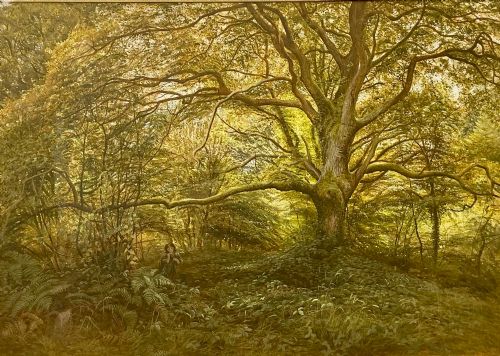
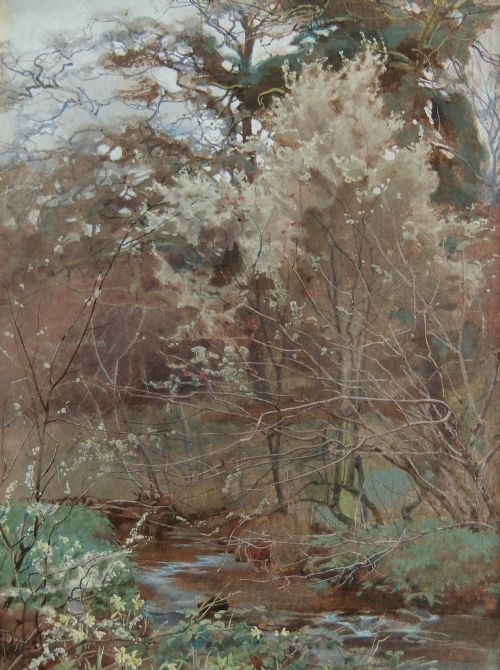
A green woodland watercolour painting represents a distinct tradition within landscape art, capturing trees, foliage, and rural scenes through translucent washes of pigment. These works range from late Victorian depictions to mid-twentieth-century examples, showing forests in various seasons and lights.
Most pieces on this page originate from the nineteenth and early twentieth centuries, reflecting changing attitudes towards nature and the British countryside. Artists recorded woodland paths, bluebell woods, and riverbanks with careful observation of natural light and shade.
The format of a green woodland watercolour painting is typically works on paper, framed behind glass to protect the delicate medium. Subjects include cattle watering beneath trees, blossom in spring, and figures picking berries or primroses along rural tracks.
How they were made
A green woodland watercolour painting relies upon watercolour pigment applied to paper, utilising the white of the substrate to create luminosity. Artists built up transparent washes for foliage and shadows, often combining fine brushwork with broader strokes to render trees and undergrowth.
Framing materials such as wood and gilt enhance the works while protecting the paper from environmental damage. Glazing with glass preserves the fugitive pigments of early twentieth-century and Victorian watercolours from fading in direct light.
Styles across the collection span Victorian realism, the Barbizon school, and British impressionism.
What varies in quality
The quality of a green woodland watercolour painting depends upon the artist's handling of light, depth, and botanical detail within the forest scene. Finer works demonstrate a confident command of watercolour pigment, creating atmospheric distance and convincing texture in bark and leaves.
Condition also influences the standing of a piece, particularly the stability of the paper and the retention of original colour intensity. Works by recognised Victorian and early twentieth-century painters typically show superior composition and draughtsmanship compared to anonymous studies.
Bonomi Edward Warren·William Hoggatt·Alfred Grey·Henri Joseph Harpignies·Rowland Henry Hill·Edmund George Warren·Alfred W Parsons·Harold Swanwick·William Lucas·Beatrice Parsons·Donald Watson
The Green Woodland Watercolour Painting Glossary
- Watercolour
- A painting method in which the paints are made of pigments suspended in a water-soluble vehicle. This medium allows for transparent washes that capture light effectively.
- Pigment
- The natural or synthetic coloured powder used to make watercolour paint. In older works, these materials determine the specific hues and longevity of the forest greens.
- Gilt
- A gold-coloured application used on frames to complement the artwork. This finish adds traditional decorative weight to the presentation of paper works.
- Barbizon School
- A mid-nineteenth-century art movement focused on realistic landscape painting. Artists associated with this style favoured direct observation of nature and woodland environments.
- Impressionism
- An art style characterised by relatively small, thin, yet visible brush strokes and an open composition. British interpretations often applied these principles to rural and woodland subjects.
Green Woodland Watercolour Painting: Frequently Asked Questions
How should I hang a watercolour painting?
Watercolour paintings require protection from direct sunlight to prevent the pigments from fading over time. Position them on interior walls away from bright windows.
Ensure the room maintains stable humidity levels to protect the paper and the wooden or gilt frame. Using conservation-grade backing materials during any reframing also helps preserve the work.
Are these paintings original works?
The pieces listed are original watercolour paintings on paper rather than printed reproductions. Each work represents a distinct hand-painted creation by the artist.
Signature marks, brushwork texture, and the unique application of watercolour pigment distinguish these individual creations from mass-produced imagery.
What periods do these watercolours cover?
The selection spans from the Victorian era through the early twentieth century and into the mid-twentieth century. This timeline reflects shifting artistic approaches to British landscape painting.
Victorian works often share space with later pieces from the nineteen-tens and nineteen-twenties, showing the enduring appeal of woodland subjects.
How do I identify a Victorian woodland watercolour?
Victorian watercolours typically exhibit meticulous detail in the rendering of foliage, trees, and rural figures. Signatures, dates, and framing styles often offer additional clues to the period.
The subject matter often reflects nineteenth-century romanticism towards the countryside, combined with careful observation of natural light.