



Victorian Paraffin Lamp Base
These Victorian paraffin lamp base examples are sturdy domestic lighting vessels of brass, glass, and ceramic designed to burn lamp oil safely before rural electrification.
Victorian Paraffin Lamp Base
A victorian paraffin lamp base sits on a table or surface as the heavy, stable foundation for an interior fuel reservoir and burner assembly. These items appear across the nineteenth century, emerging from simple mid-century forms into more elaborate late-century decorative objects.
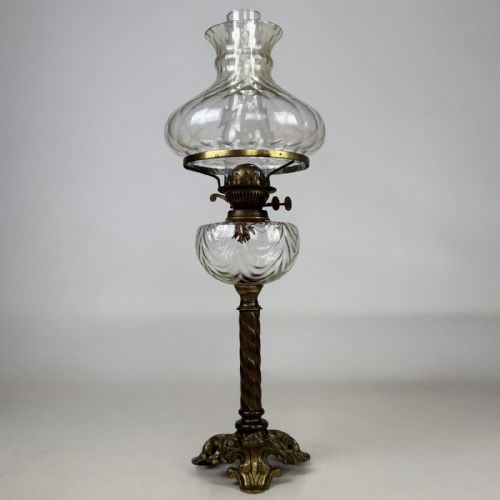
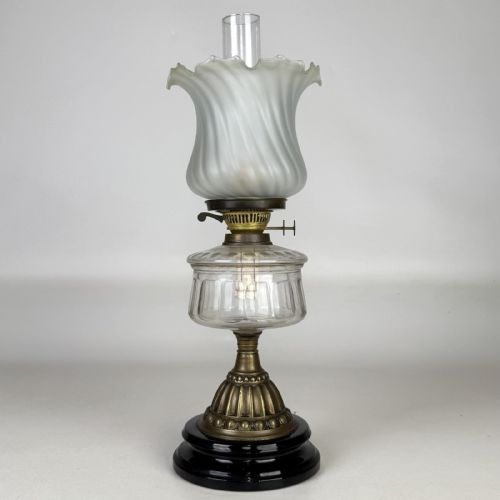
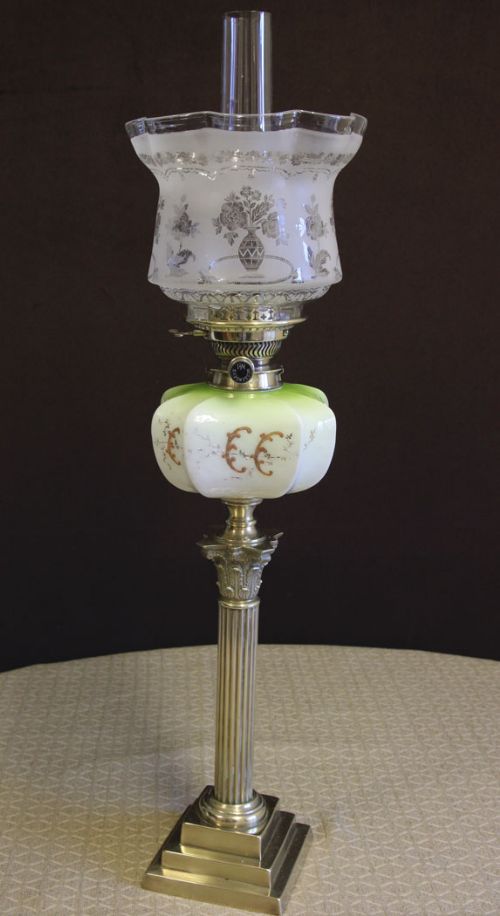
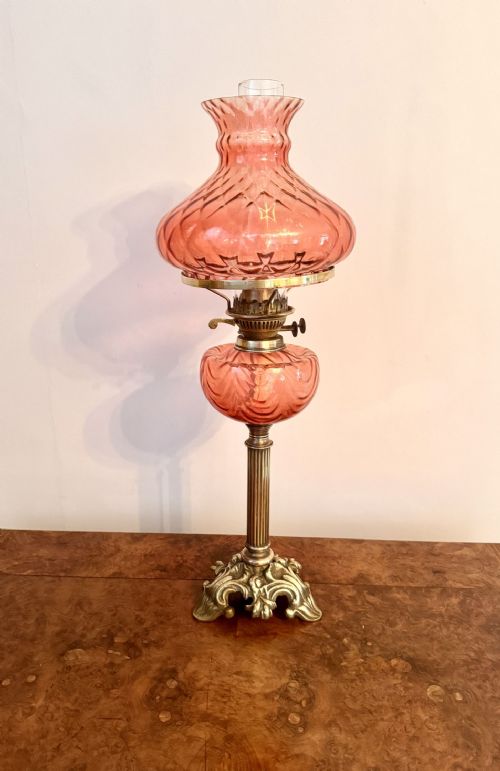
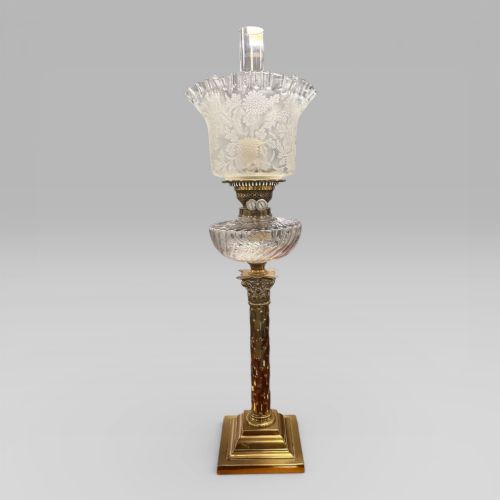
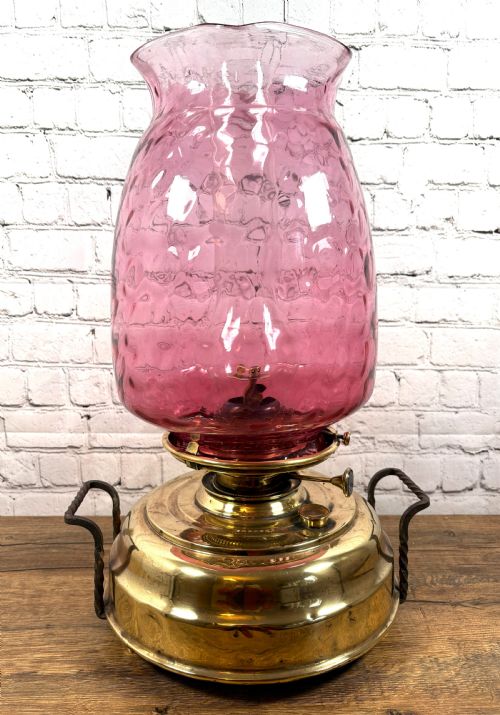
The versions most commonly met on this page combine polished brass columns or cast metal pedestals with glass or ceramic vessels. Buyers encounter everything from plain domestic cottage table lamps to ornate pulpit heaters and tall reeded brass columns.
Makers designed these oil lamps to hold fuel securely while complementing parlour or drawing room interiors. Many surviving examples retain their original matching fonts and bases, though some later pieces show transitional styles such as early art nouveau enamel work.
Materials and construction
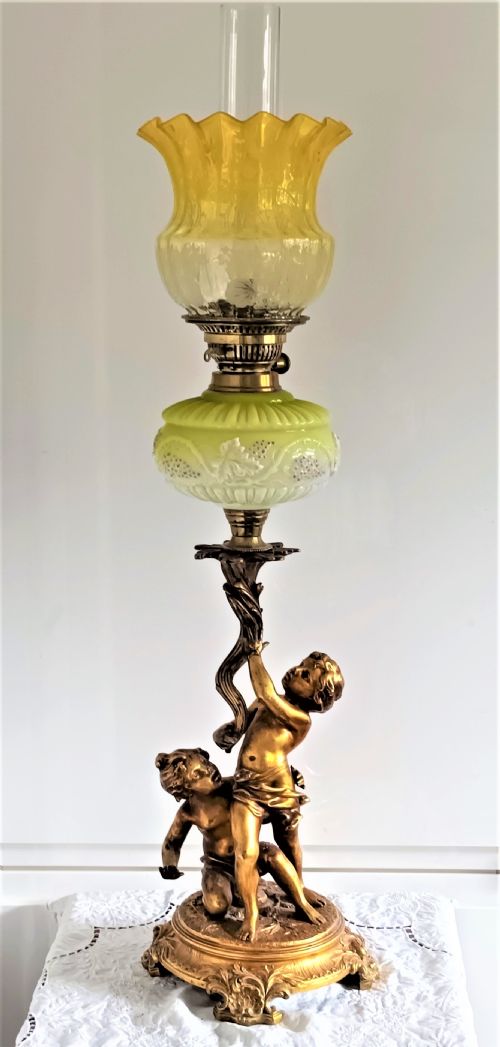
Metalworking formed the structural backbone of these pieces, utilising heavy cast brass, bronze, and iron to ensure stability and prevent tipping. Artisans shaped columns through turning and casting, occasionally applying silver plating or gilding to the exterior surfaces.
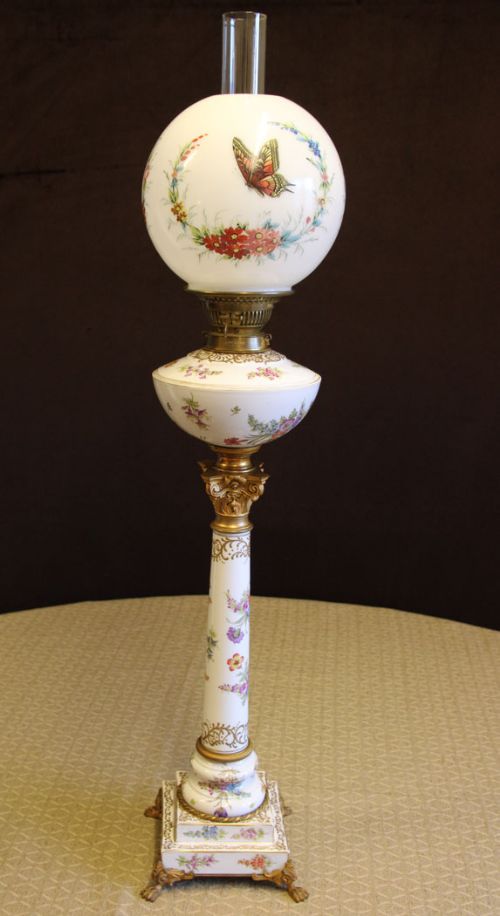
Glassmaking provided colourful reservoirs and decorative shades, incorporating milk glass, satin glass, and rich cranberry glass into the vessel bodies. Ceramic and porcelain components added opaque colour and pattern, frequently mounted directly onto stepped black glass or metal plinths.
Victorian Paraffin Lamp Base Retail Price Guide 2026
Typical asking prices for victorian paraffin lamp base among the pieces listed under this phrase on Sellingantiques today, from the lower quarter to the upper quarter. They describe what is for sale here now, not the wider market.
Listings feature brass, glass, and ceramic materials spanning the Victorian era, alongside transitional pieces showing later nineteenth-century art nouveau styles.
Distinctions in quality
The standard of a base depends upon the weight and thickness of its metal casting, with superior examples offering substantial heft and secure joins. Finer pieces display crisp chasing on brass columns and carefully balanced proportions between the reservoir and the foot.
Material selection dictates the upper tier of the range, particularly where makers utilised cased cranberry glass, satin glass, or hand-painted porcelain reservoirs. Poorer quality pieces rely on lighter stamped sheet metals and simpler, unadorned glass fonts.
The Victorian Paraffin Lamp Base Glossary
- Paraffin lamp
- A domestic lighting fixture designed to burn paraffin or kerosene as fuel. It relies on a flat wick raised by a small metal mechanism inside a burner.
- Peg lamp
- A small oil lamp designed with a lower spigot or peg that fits directly into the socket of a candlestick or dedicated base.
- Reeded column
- A vertical cylindrical shaft decorated with parallel rounded ridges running lengthwise. This classical architectural motif appeared frequently on nineteenth-century brass lighting.
- Satin glass
- Art glass treated with an acid dip to produce a velvety, matte finish on the outer surface. It was popular for Victorian luxury items.
Victorian Paraffin Lamp Base: Frequently Asked Questions
What is a Victorian paraffin lamp base?
It is the lower structural support and fuel reservoir holder for a nineteenth-century interior oil lamp. These pieces kept the fuel stable and safe during domestic use.
They combine functional weight with the decorative tastes of the Victorian period, utilising brass, glass, and ceramic materials in various column and pedestal forms.
How were these lamp bases used?
They stood on tables, sideboards, and pulpits to provide indoor illumination before homes were wired for electricity. Users filled the reservoir with paraffin and adjusted the wick through a burner.
Many examples were later adapted to accept electrical fittings while retaining their original nineteenth-century ceramic or metal foundations.
How do I date a lamp base?
Dating relies on identifying the materials, manufacturing techniques, and stylistic influences present in the construction. Mid-century examples often feature simpler brass or cast iron forms, while later pieces introduce cranberry glass or art nouveau enamelling.
Changes in proportion and the evolution of the burner fittings also help narrow down the decade of production.
Can I convert an oil lamp to electricity?
Many lamp bases on the market have already been converted to electrical table lamps by running a cord through the central column. This allows historic vessels to serve modern lighting needs safely.
Converters typically replace the old burner mechanism with a modern lamp holder while preserving the original brass, glass, or ceramic body intact.