



Victorian Painted Wooden Rocker
These Victorian painted wooden rocker examples bring authentic 19th-century craftsmanship into a room, offering both traditional seating and classic equine folk art.
Victorian Painted Wooden Rocker
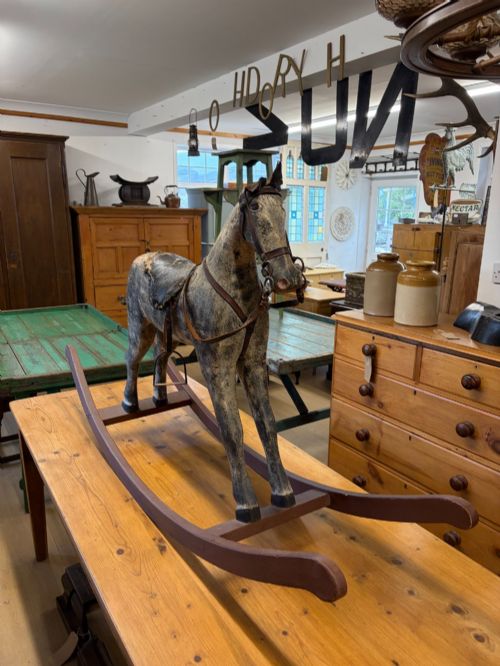
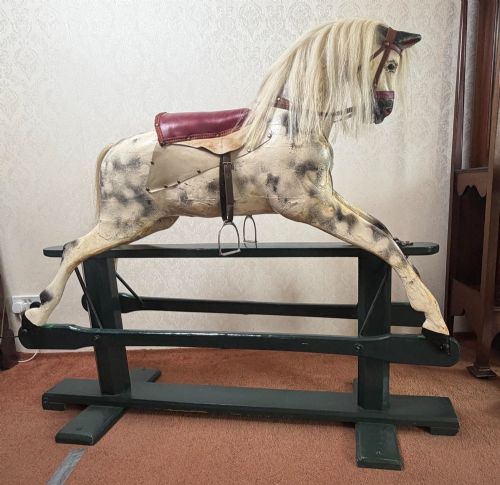
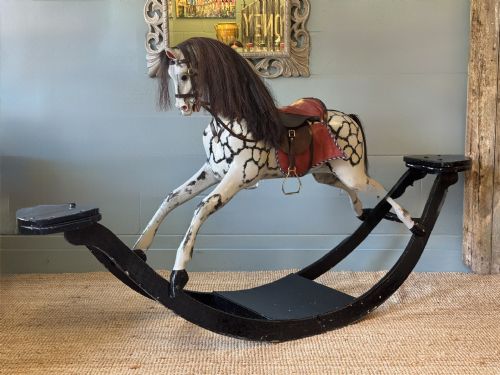
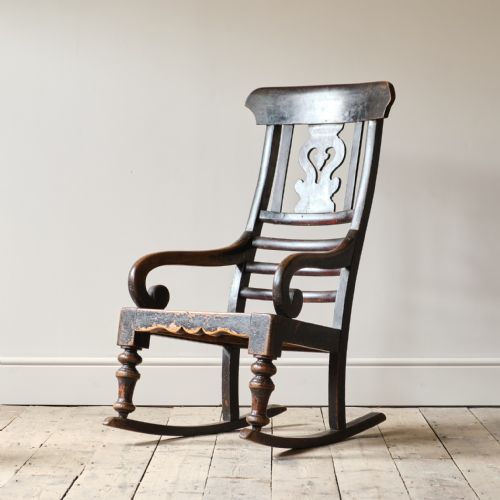
When you search for a victorian painted wooden rocker, you encounter nineteenth-century seating and children's toys shaped from timber. The selection spans traditional rocking chairs, Windsor forms, and hand-carved rocking horses mounted on original curved wooden rockers.
The objects stem from the nineteenth century, including specific dates around eighteen ninety and nineteen hundred, reflecting Victorian, Edwardian, and rustic country styles. Folk art expressions appear frequently, showing simple regional interpretation alongside standard workshop production.
You are most likely to meet wooden rocking horses retaining traces of original paint or ebonised surfaces. Alongside these equines, occasional seating forms such as rocking Windsor chairs appear to complete the category.
How they were made
Makers shaped these pieces primarily from wood, utilising pine alongside other timbers for structural strength and carved detail. Artisans constructed the larger items to withstand vigorous motion, securing bodies to heavy curved wooden rockers.
Makers applied paint, horsehair, leather, and metal components to finish both chairs and horses. Many surviving examples retain original painted surfaces, while others show ebonised treatments paired with iron fixings and glass elements.
Victorian Painted Wooden Rocker Retail Price Guide 2026
Typical asking prices for victorian painted wooden rocker among the pieces listed under this phrase on Sellingantiques today, from the lower quarter to the upper quarter. They describe what is for sale here now, not the wider market.
Some nineteenth-century rocking horses preserve their original glass eyes intact.
What varies in quality
The standard of carving and the preservation of original paint separate ordinary items from superior examples. Pieces retaining their original curved wooden rockers and untouched painted surfaces demonstrate greater integrity.
Distinction also rests on construction complexity, ranging from rustic country interpretations to sophisticated output by known makers such as G and J Lines of London. The survival of secondary materials like horsehair and leather influences overall character.
G and J Lines of London
The Victorian Painted Wooden Rocker Glossary
- Ebonised
- Wood finished to resemble ebony through staining or painting dark black. This treatment was common for Victorian chairs.
- Windsor chair
- A wooden chair built with a solid saddle-shaped seat into which the back-legs and spindles are plugged. The rocking variant incorporates curved wooden rails beneath.
- Original rocker
- The curved wooden bases supplied with the piece from its creation. These are crucial for historical authenticity.
- Folk art
- Utilitarian objects created by traditional artisans rather than academic sculptors. These pieces display charming regional quirks.
Victorian Painted Wooden Rocker: Frequently Asked Questions
What is a victorian painted wooden rocker?
It is a nineteenth-century wooden seating item or rocking horse finished with paint.
These pieces capture both utilitarian domestic seating and children's playthings from the period.
How were these wooden rockers constructed?
Artisans built them using wood, iron, and metal fixings mounted on curved wooden bases.
Additional materials like leather, horsehair, and glass frequently completed the construction of rocking horses.
Are these pieces from the Victorian era?
The listings span the nineteenth century, including specific dates around eighteen ninety and nineteen hundred.
Styles encompass Victorian, Edwardian, rustic country, and folk art traditions.
How do I care for original paint?
Keep the wood away from direct sunlight and excessive moisture to protect the surface.
Avoid harsh chemical cleaners that might strip away nineteenth-century painted finishes.