


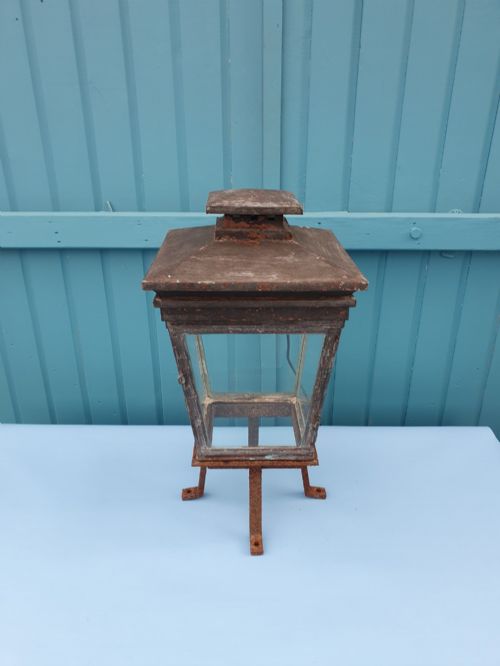
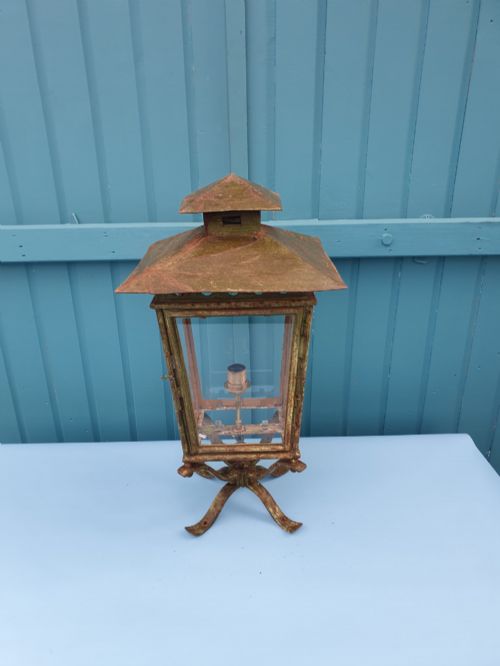


Victorian Outdoor Lanterns
Victorian outdoor lanterns are robust architectural light fittings built from copper, iron and glass to illuminate paths, porches and gates with period character.
Victorian Outdoor Lanterns
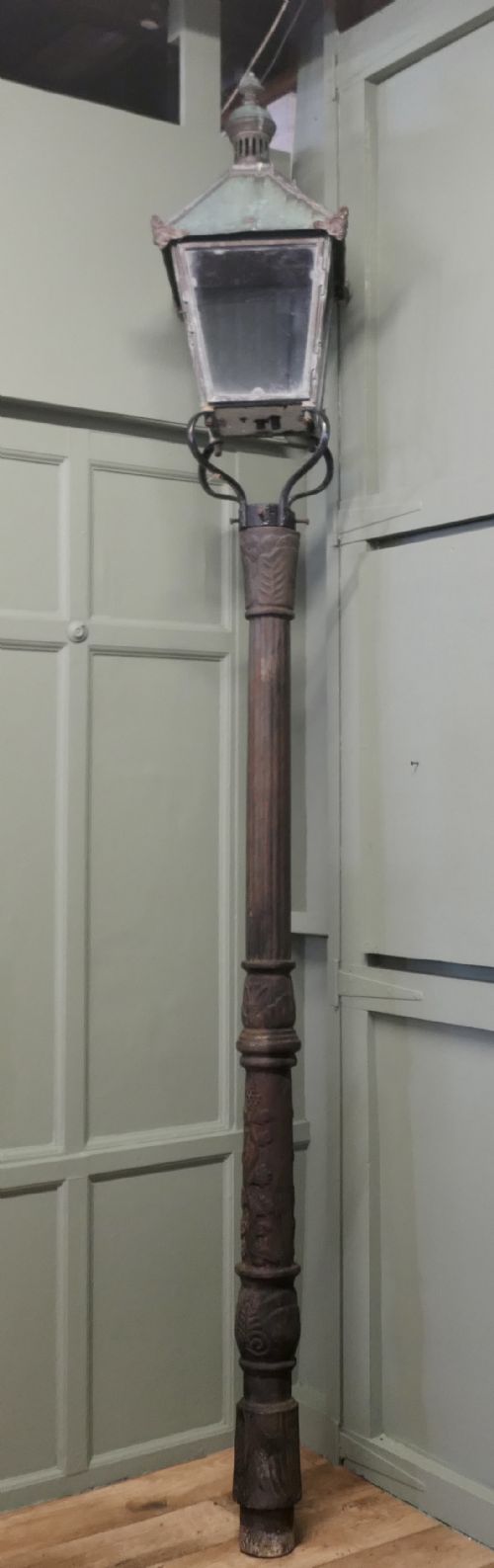
Victorian outdoor lanterns encompass street lighting, lamp posts, wall lights and hanging porch fixtures designed for exterior use. The items on this page span the Victorian era, the nineteenth century and into the early decades of the twentieth century, including styles such as Gothic Revival and neo-classical.
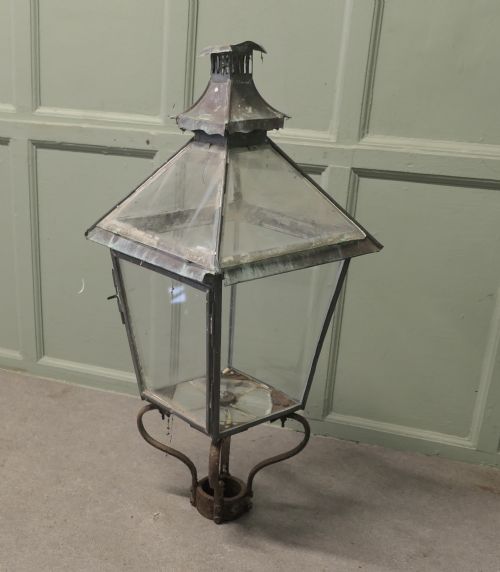
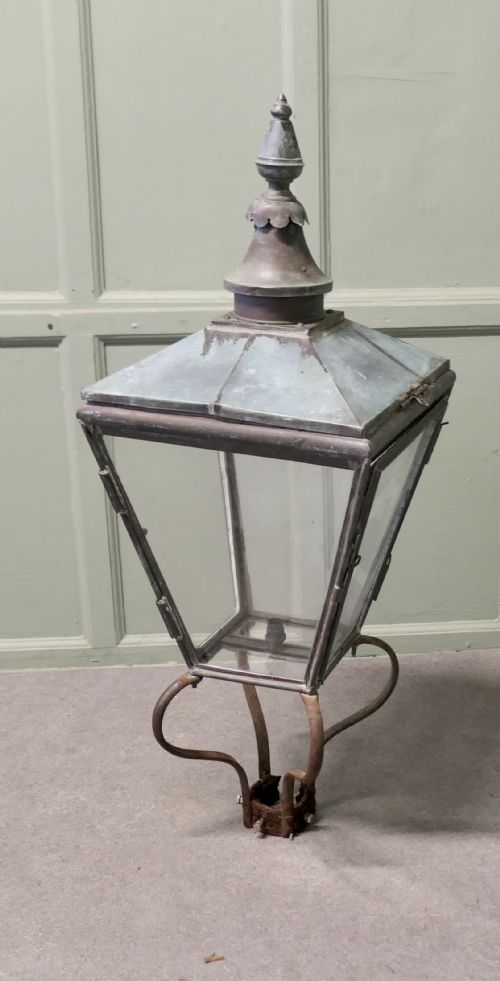
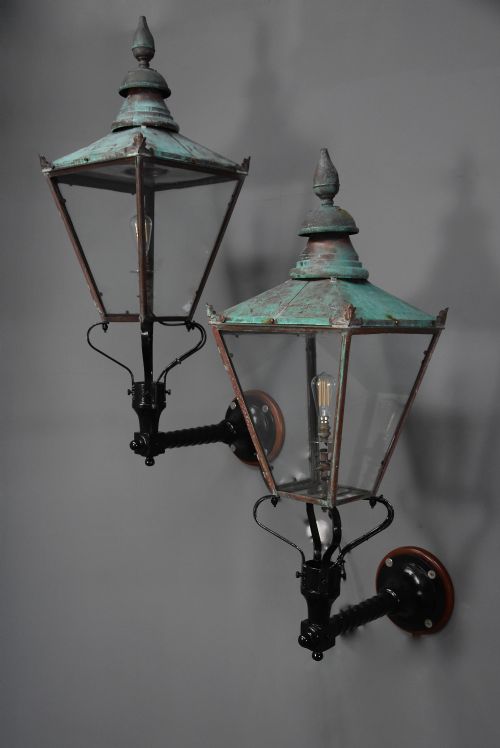
Buyers encounter copper street lanterns, cast iron lamp posts and wrought iron wall brackets, alongside conversions from original gas fittings. Forms range from large copper street lights to compact porch fixtures and coach-house wall lanterns.
The selection reflects both municipal street lighting and domestic exterior illumination from the nineteenth and early twentieth centuries. Many pieces retain their original patinated copper surfaces or painted metal finishes, paired with glass panes.
How they were made
Makers utilised heavy-duty metals capable of withstanding external weather conditions, predominantly copper, cast iron and wrought iron. Structural elements often combine sheet copper panels with iron supports and brackets.
Glass panels are integrated into frames to enclose the light source, featuring clear or frosted types. Surfaces frequently receive protective or decorative treatments, including green paint, black and gold finishes, or verdigris patina on copper.
Victorian Outdoor Lanterns Retail Price Guide 2026
Typical asking prices for victorian outdoor lanterns among the pieces listed under this phrase on Sellingantiques today, from the lower quarter to the upper quarter. They describe what is for sale here now, not the wider market.
Some porch lights feature tiny shamrock cutouts in the metalwork, bringing a touch of botanical luck to nineteenth-century arrivals.
What varies in quality
The distinction between standard utility lighting and superior examples lies in the weight of the metalwork and the sophistication of decorative detailing. Elaborate brackets, such as spiral twist supports, and cast iron bases with distinct moulding elevate certain pieces above simple functional designs.
Originality of components and the integrity of the patination significantly influence the standing of an item. Pieces retaining their original gas conversion elements or specific regional foundry markings demonstrate higher collectible interest.
A Foster & Pullen Bradford·Revo Tipton
The Victorian Outdoor Lanterns Glossary
- Coach-house wall lantern
- An exterior light fixture designed to mount beside carriage house doors. These fittings typically project outward to illuminate wider areas for arriving vehicles and visitors.
- Gas conversion
- The modification of a light fitting originally designed for gas supply to operate with electricity. This process preserves the historical exterior casing while updating the internal wiring for modern use.
- Verdigris
- A green patina formed naturally on copper or brass through atmospheric weathering over time. Collectors often value this stable surface layer for its authentic aged appearance.
- Gothic Revival
- An architectural and design movement drawing inspiration from medieval forms. In lighting, this translates to pointed arches, quatrefoil motifs and ecclesiastical structural lines.
- Swan neck lamp post
- A pole-mounted light fixture featuring a curved upper arm resembling a swan's neck. This profile holds the hanging lantern clear of the vertical post.
Victorian Outdoor Lanterns: Frequently Asked Questions
How do I mount a wall lantern?
Wall lanterns require secure fixing to exterior masonry or timber using appropriaterawl plugs and screws suited to the weight of the iron or copper bracket. Ensure the electrical supply is routed safely through the mounting surface before final installation.
Professional installation by a qualified electrician is recommended for all exterior heritage lighting to maintain weatherproofing and safety standards.
Were these always electric?
Most surviving examples from the nineteenth century originally operated on gas before being converted for modern electrical use. You will often see evidence of burner components or gas supply inlets inside the housing.
Conversions allow historical metalwork to function safely in contemporary gardens and porches while retaining their original exterior appearance.
Can I leave copper outdoors?
Copper is naturally resilient against corrosion and develops a protective surface layer when exposed to the elements. This weathering process turns the bright metal into a dark brown or green verdigris finish over time.
Regular cleaning is not required unless you wish to halt the natural oxidation process and maintain a bright metallic sheen.
How do I date a street lamp?
Dating relies on examining the construction methods, the materials used, and any manufacturer stamps or foundry marks stamped onto the metal. Cast iron components and specific bracket styles often point to particular decades between the Victorian era and the nineteen-thirties.
Comparing the design motifs, such as neo-classical or Gothic Revival details, also helps narrow down the period of manufacture.