
Victorian Ottoman Footstool
A victorian ottoman footstool provides a solid base for tired feet, combining generous padding with timber frames built to endure.
Victorian Ottoman Footstool
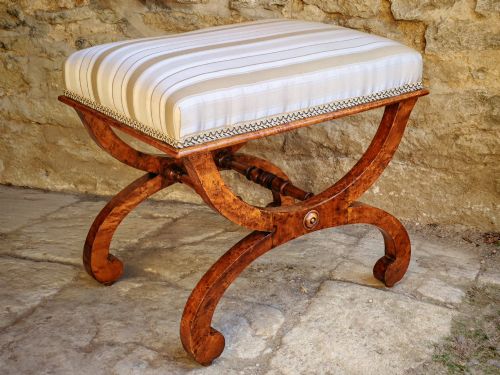
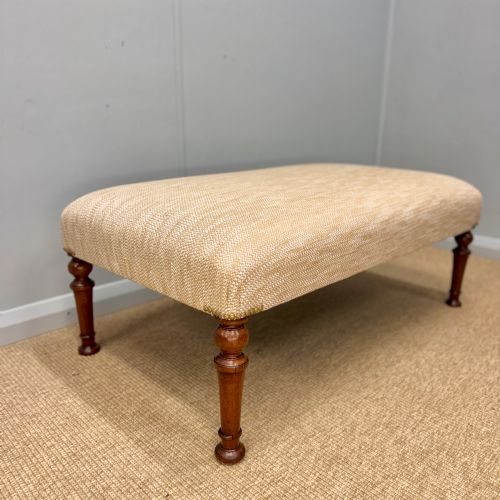
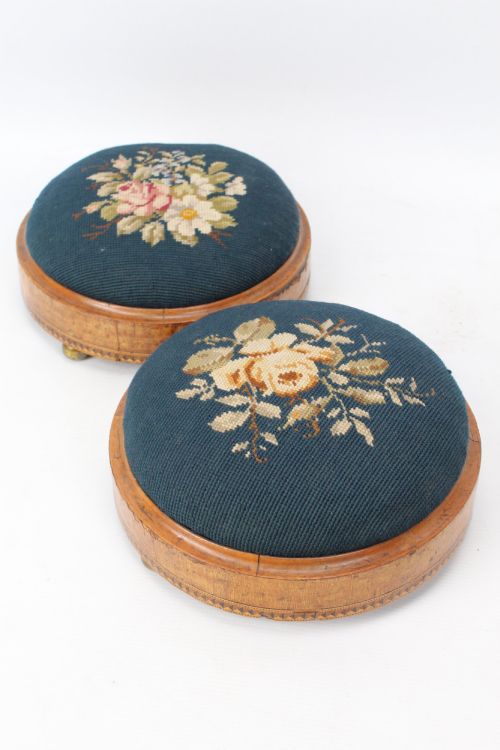
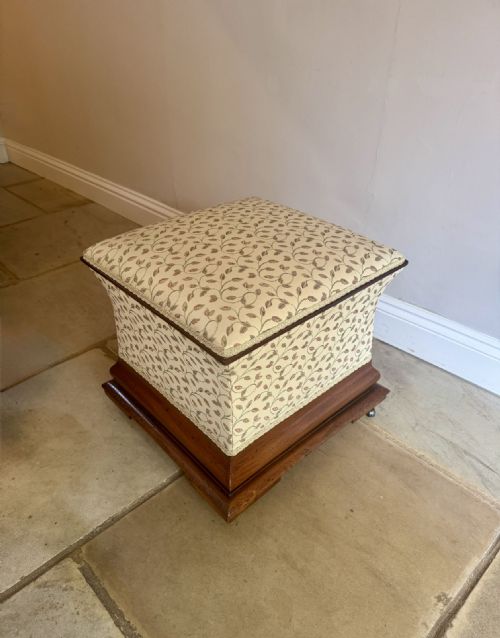
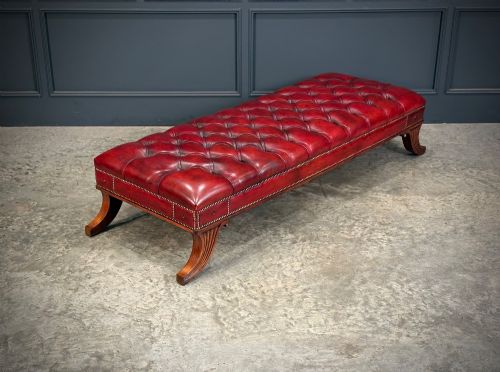
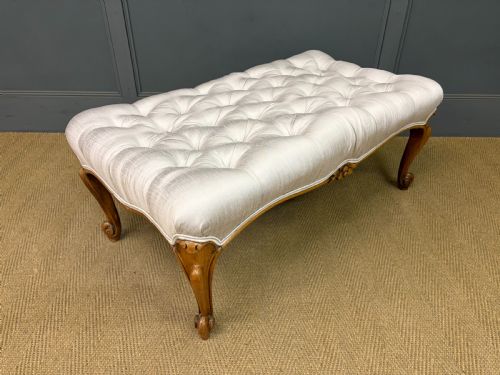
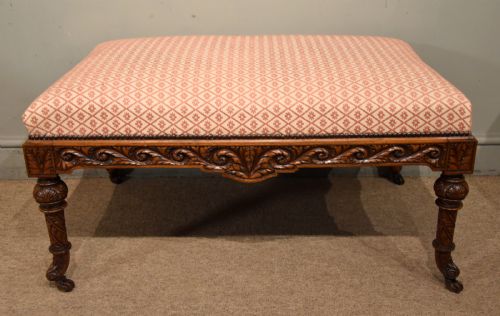
When you search for a victorian ottoman footstool, you encounter low seating forms designed primarily to support the feet or serve as impromptu low tables. These pieces span long buttoned benches, circular footstools, and square box seats intended for domestic comfort.
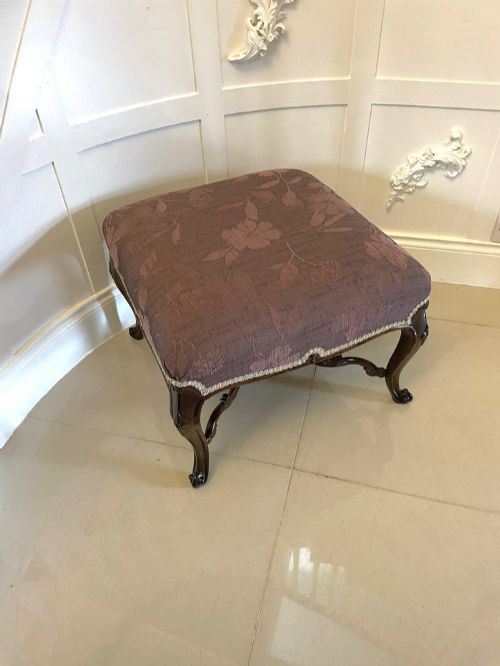
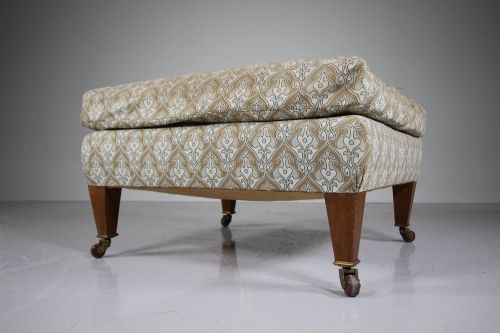
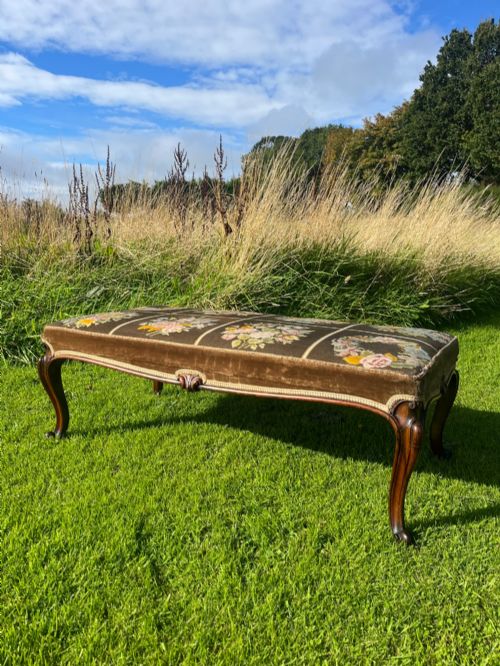
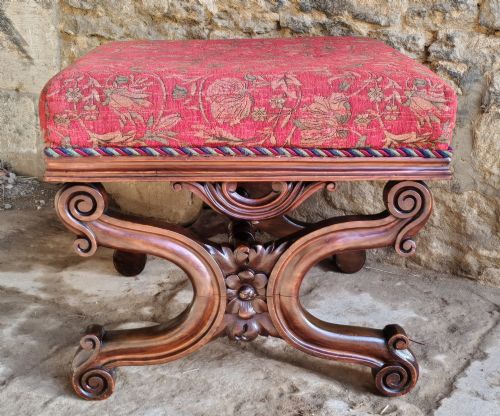
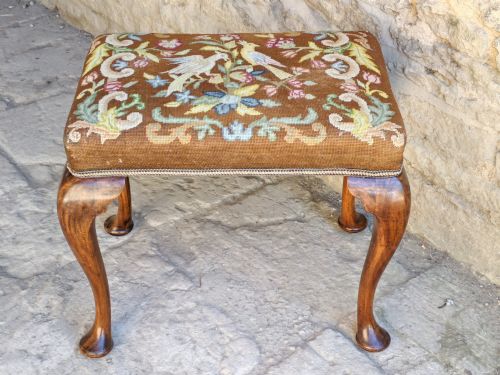
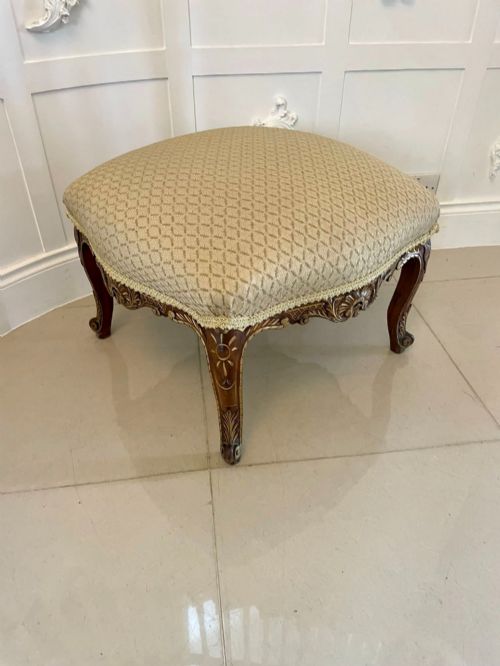
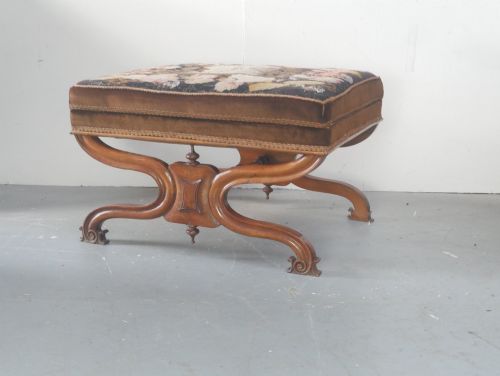
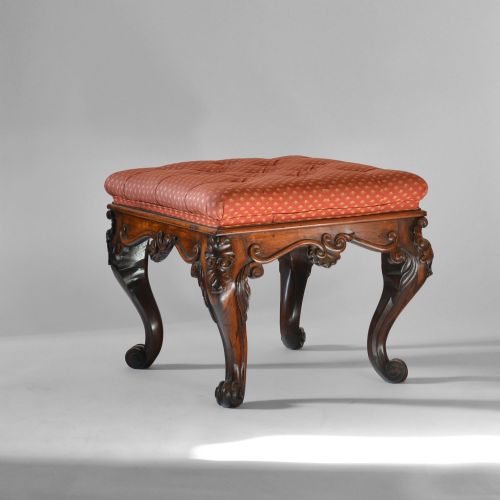
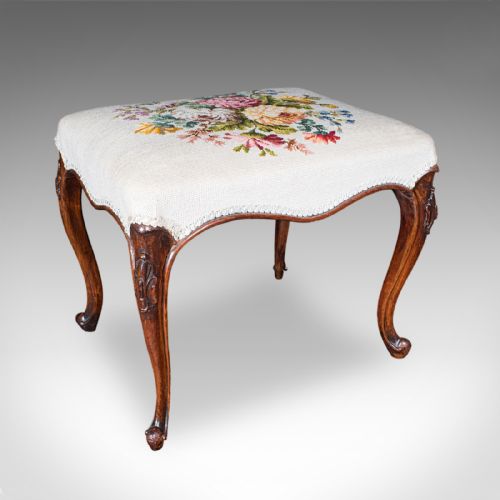
The versions most common on this page date from the nineteenth century, often framed in walnut, mahogany, or rosewood. They frequently display carved cabriole legs, occasionally featuring brass castors for mobility across heavy carpets.
Many examples arrive with textile upholstery, ranging from newly applied fabric to period needlepoint, tapestry, and red leather. Their dimensions vary from small intimate footstools to substantial long stools and sewing box combinations.
How they were made
Makers constructed the structural frames of a victorian ottoman footstool using dense hardwoods like walnut, mahogany, oak, and rosewood. These timbers were often shaped with carved details, spiral turnings, or gilding.
Upholstery formed a central part of the construction, utilising heavy textiles, velvet, needlepoint, and buttoned leather over layered padding. Internal compartments occasionally incorporated sewing box fittings or hinged box seats for storage.
One exceptional listing includes a stained-beech metamorphic gout stool designed to soothe aching feet after heavy dining.
What varies in quality
The refinement of the timber carving sets individual pieces apart, distinguishing sharply handled cabriole legs and crisp mouldings from plain or softened turnings. Dense hardwoods such as burr maple, rosewood, and figured walnut indicate a higher tier of production.
The integrity of the frame construction and the quality of the upholstery materials determine the overall execution. Pieces retaining original brass castors and deeply buttoned leather or hand-worked tapestry represent the upper end of the range.
Howard and Sons
The Victorian Ottoman Footstool Glossary
- Cabriole leg
- A furniture leg that curves outward and then tapers inward, mimicking an animal's leg. This shape appears frequently on nineteenth-century walnut and mahogany frames.
- Ottoman
- A low upholstered seat or footstool without a back or arms. Some variants include a hinged top providing interior storage.
- Buttoned
- An upholstery technique where depressions are created by pulling twine or thread through the padding and securing it with buttons. This creates a diamond pattern across leather or fabric surfaces.
- Castor
- A small wheel mounted in a swivel housing attached to the bottom of a furniture leg. They facilitate movement across floors.
Victorian Ottoman Footstool: Frequently Asked Questions
How were these footstools originally used?
These pieces served multiple domestic functions in nineteenth-century drawing rooms and parlours. They provided a comfortable rest for feet while sitting in armchairs or supported pianists during long musical performances.
Some variants incorporated hinged lids to store sewing supplies, functioning as dual-purpose work tables beside firesides.
Are these stools suitable for daily use?
The sturdy hardwood frames of these nineteenth-century pieces remain remarkably durable for modern living. Many support heavy daily use as casual seating or improvised coffee tables.
Buyers frequently place them in living rooms or studies, pairing them with contemporary or antique armchairs alike.
How do I identify a Victorian piece?
Nineteenth-century construction typically relies on dense timbers like walnut, mahogany, and rosewood, often shaped into revival styles such as Rococo or Queen Anne. Hand-carved details and traditional joinery distinguish these older frames from modern reproductions.
Upholstery styles, including buttoned leather and period tapestry work, further anchor these items to the Victorian era.