


Victorian Ornithological Prints
Victorian ornithological prints are detailed studies of birds from the nineteenth century, prized by collectors for their scientific accuracy and decorative appeal.
Victorian Ornithological Prints
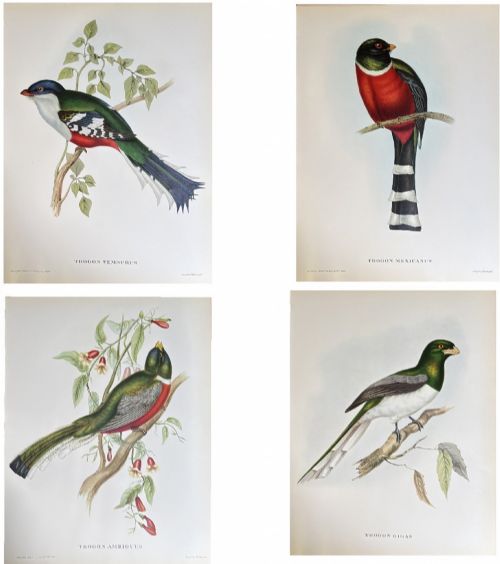
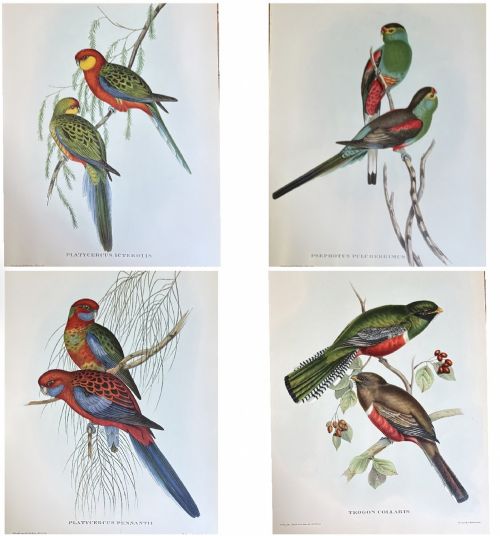
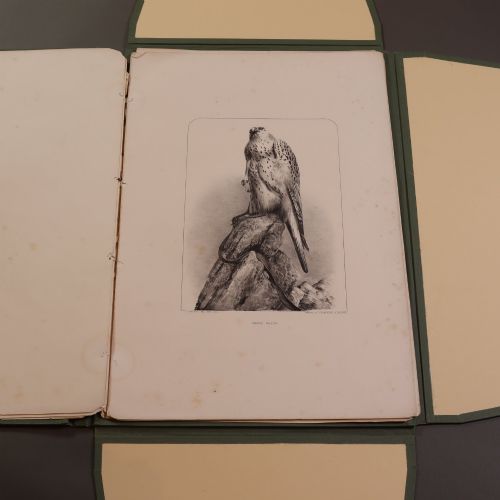
Victorian ornithological prints encompass framed engravings, hand-coloured lithographs, and delicate watercolours depicting avian subjects. These pieces stem predominantly from the nineteenth century and the Victorian era, alongside related nineteenth-century natural history works.
Buyers will encounter single plates as well as coordinated sets of prints, including sets of tropical birds and water fowl. Formats range from unframed paper sheets to pieces set in ebonised frames with deep giltwood mounts.
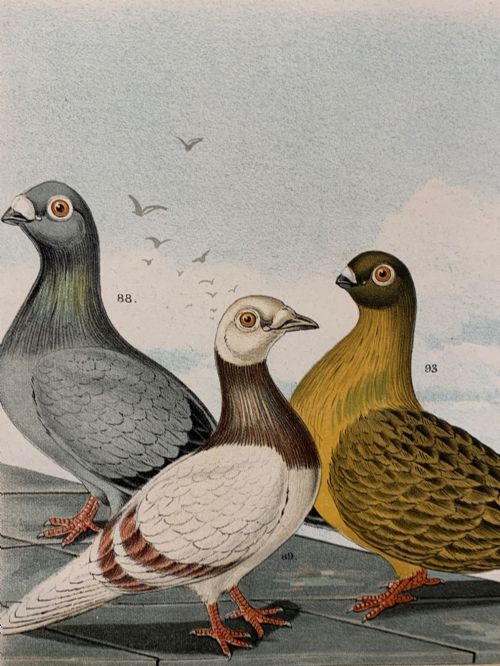
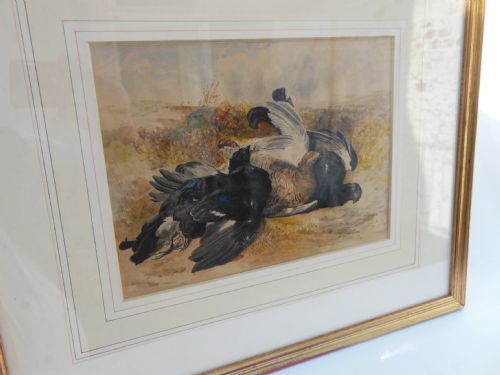
Originating as scientific documentation and illustrated natural history studies, these works showcase specific species such as pigeons, the western tragopan, the lapwing, the blue tit, ducks, and black game.
How They Were Made
Production relied upon paper as the primary support, marked by ink, lithography, and hand-applied watercolour paint. Many examples incorporate delicate hand-colouring to enhance the natural markings of the birds depicted.
Framing materials commonly include wood, glass, and gilt or gold leaf applied to mounts and surrounds. These protective housings preserve the paper and watercolours from environmental damage.
Edward Lear is represented here not for his nonsense verse, but for his serious ornithological engravings of birds.
What Varies in Quality
Quality rests upon the precision of the draughtsmanship and the crispness of the underlying engraving or lithography. Works by named natural history illustrators show superior anatomical accuracy and composition.
The vibrancy and preservation of the original ink and watercolour pigments significantly affect the visual impact of each plate. Fading or discolouration alters the balance between scientific record and decorative art.
John Hancock·Arthur Wardle·William Swainson·Edward Lear·Rev B. Morris
The Victorian Ornithological Prints Glossary
- Lithograph
- A print produced by drawing on limestone or a metal plate with a greasy medium so that ink adheres only to the drawn lines. This technique allowed for faithful reproductions of detailed bird illustrations in multiple colours.
- Engraving
- An intaglio printing method where an artist cuts lines directly into a metal plate with a sharp tool. The resulting impressions capture fine feather details with exceptional clarity.
- Watercolour
- A paint consisting of pigment suspended in a water-soluble binder, used extensively for hand-colouring printed plates or creating original bird studies. It provides translucent washes that mimic natural plumage.
- Giltwood
- Wood carved and coated with a thin layer of gold leaf or gilt. This finish frequently appears on nineteenth-century picture frames and deep mounts.
- Ebonised
- Wood treated with a finish to imitate ebony, producing a dark, smooth surface. It forms a stark contrast against gilt mounts and colourful bird plates.
Victorian Ornithological Prints: Frequently Asked Questions
How are these prints dated?
Dating relies on the paper type, printing technique, and stylistic markers characteristic of the nineteenth century. Inscribed dates and attribution to known illustrators also help establish the period of production.
Watermarks in the paper stock provide additional confirmation of the era in which the print was manufactured.
Are these prints original or reproductions?
The pieces listed are period works originating from the nineteenth century, featuring authentic engravings, lithographs, and hand-applied watercolours. Close examination under magnification reveals the characteristic ink impression of vintage printing processes.
Modern facsimile reproductions lack the distinct plate marks and hand-finished pigment application found on these historical examples.
How should I frame these prints?
Conservation framing using acid-free mounts protects the paper from degradation while displaying the artwork correctly. Keeping the paper away from direct sunlight prevents the watercolour pigments and ink from fading over time.
Glazing with UV-filtering glass provides an extra layer of defence for delicate nineteenth-century watercolours and hand-coloured plates.
Can I buy them in sets?
Sets of varying sizes frequently appear, including series of four or six bird prints and tropical bird collections. These matched groups were often published together as part of larger natural history volumes.
Displaying a coordinated set offers a cohesive way to showcase nineteenth-century avian illustration on a wall.