






Victorian Ornamental Porcelain
Victorian ornamental porcelain brings together mantel clocks, hand-painted vases and cabinet dishes made to decorate nineteenth-century interiors.
Victorian Ornamental Porcelain
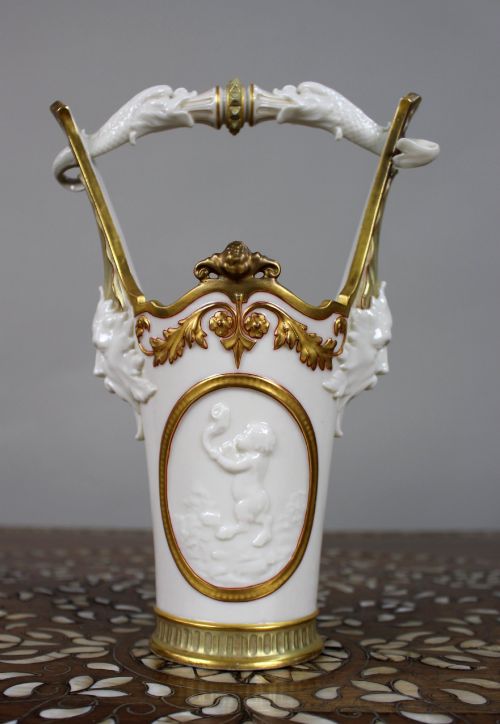
Victorian ornamental porcelain encompasses a varied group of decorative objects designed for display rather than utility. Mantel clocks, cabinet dishes, ewers and dessert services dominate the selection, often combining ceramic bodies with metal mounts. These items originate from English potteries and continental factories alike.
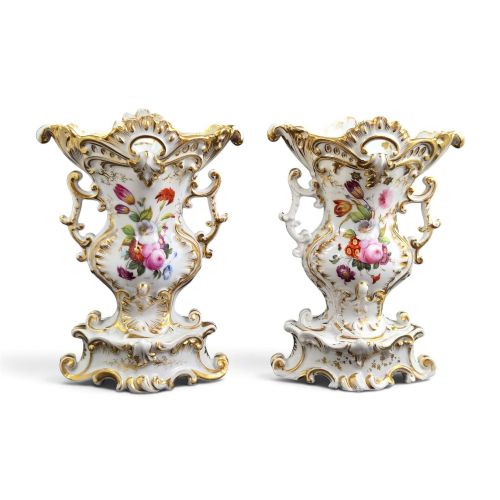
The objects span several decades of the nineteenth century, extending into early twentieth-century production while retaining distinct Victorian character. Domestic interiors accommodated these pieces on mantelpieces, pedestals and side tables. Pairs of vases and matching ewers frequently served as balanced garnitures.
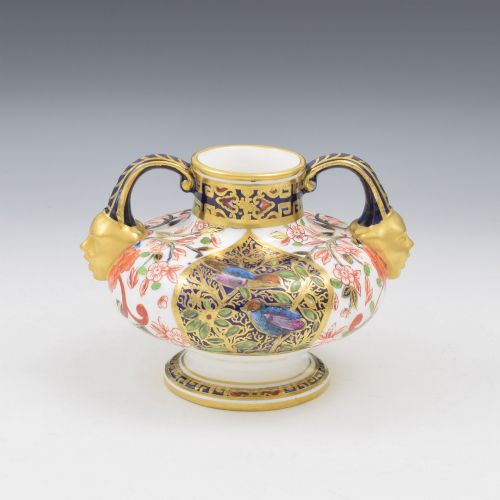
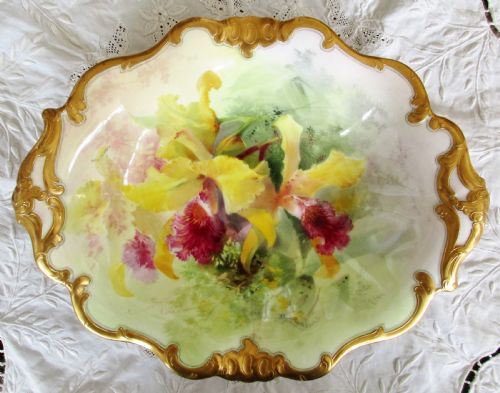
Makers ranged from major English manufactories such as Royal Worcester and Royal Crown Derby to French workshops and continental porcelain houses. Decoration frequently involved hand-painted floral sprays, birds and classical figures applied to glazed white clay bodies. Collectors encounter both utilitarian forms elevated to display status and purely ornamental creations.
How they were made
Potters shaped these objects from fine porcelain clay before firing and glazing them to create smooth white surfaces suitable for detailed painting. Artisans applied polychrome enamel colours and raised gold decoration by hand. Many pieces incorporate gilt bronze, ormolu, brass or enamel mounts fastened to the ceramic bodies.
Clock movements and metal mounts required specialist metalworking techniques alongside ceramic manufacture, resulting in complex composite objects. Firing temperatures determined the vitreous quality of the porcelain and the durability of the applied gilding. Painters signed specific floral and figural panels, recording individual artistic contributions.
Victorian Ornamental Porcelain Retail Price Guide 2026
Typical asking prices for victorian ornamental porcelain among the pieces listed under this phrase on Sellingantiques today, from the lower quarter to the upper quarter. They describe what is for sale here now, not the wider market.
Materials recorded across the inventory include porcelain, enamel, gold leaf, gilding, gilt bronze, brass and ormolu.
What varies in quality
Quality rests upon the execution of the hand-painted decoration and the precision of the gilding. Fine examples display delicate brushwork in floral sprays and figural scenes, whereas lesser pieces rely on simpler transfer-printed outlines with minimal hand enhancement. The complexity and weight of the gilt bronze or ormolu mounts also separate standard production from exceptional pieces.
The reputation of the maker and the presence of artist signatures influence the standing of an individual object. Intricate raised gold work and elaborate moulding mark out superior examples from simpler factory output. The harmony between the porcelain body and its metal fittings determines the overall aesthetic success of composite items.
Jean-Baptiste Delettrez·Jacob Petit·Royal Crown Derby·Royal Worcester·Royal Doulton·Hadley and Sons·Meissen
The Victorian Ornamental Porcelain Glossary
- Ewer
- A large jug with a wide spout and elaborate handle, frequently produced as a decorative ornamental piece rather than for pouring water. Ewers often formed matching pairs to flank a centrepiece on a mantel shelf.
- Ormolu
- Gilt bronze mounts applied to clocks, vases and decorative vessels to enhance their visual richness. This technique involved coating metal components with a gold amalgam.
- Gilding
- The application of gold leaf or powdered gold to ceramic surfaces and metal mounts. Gilding highlights rims, handles and raised motifs.
- Jardiniere
- A large ornamental pot or bowl designed to hold plants or floral arrangements within a room. These vessels frequently feature hand-painted botanical decoration.
- Comport
- A shallow dish raised on a stem, used as part of a dessert service for displaying fruit or sweetmeats. Comports sat centrally among matching plates on dining tables.
Victorian Ornamental Porcelain: Frequently Asked Questions
How were ornamental clocks used?
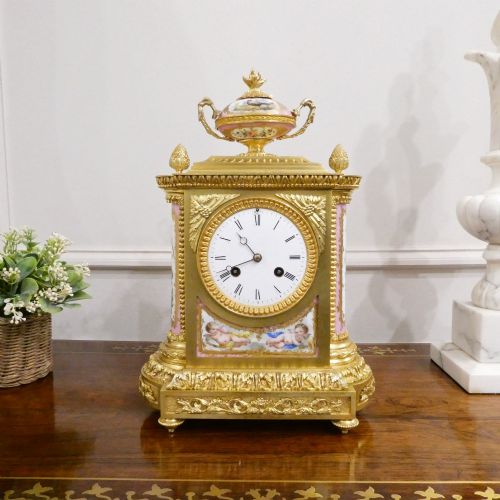
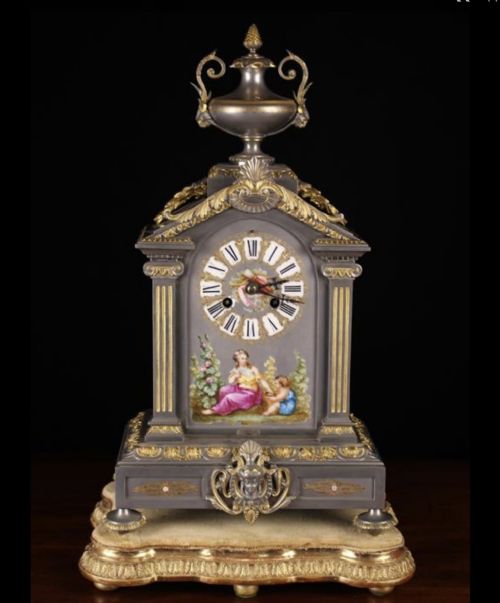
These eight-day mantel clocks served as both timepieces and central decorative ornaments for domestic reception rooms. They occupied prominent positions on mantelpieces, often accompanied by matching side vases or candelabra.
The metal and porcelain cases reflected the prevailing revival styles of the period, tying together the decorative scheme of the room.
Where should I display these pieces?
Display these decorative objects on sturdy mantelpieces, cabinets or dedicated display pedestals where their painted details remain visible. Pairs of vases and ewers look best arranged symmetrically to frame a central clock or mirror.
Keep them away from direct sunlight to preserve the vibrant enamel colours and delicate gilding.
How do I identify a dessert service?
A dessert service typically comprises a raised comport accompanied by six or more matching plates designed for serving fruit. The pieces share identical hand-painted motifs and gilt borders.
Makers often marked the undersides with specific date codes or factory ciphers to indicate the year of manufacture.
What is blush ivory porcelain?
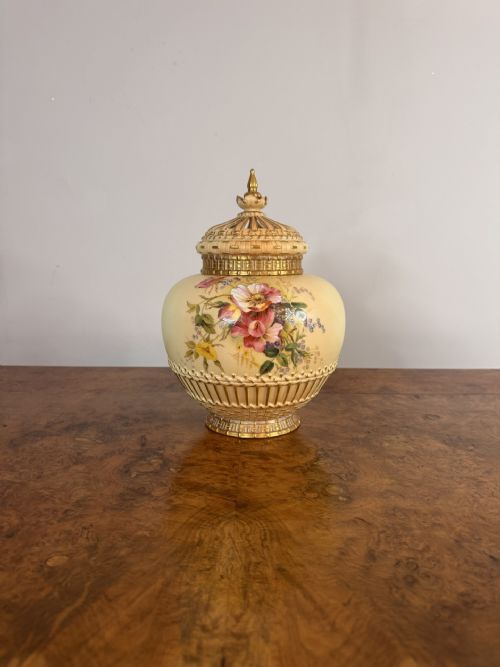
Blush ivory refers to a soft, matte cream-coloured ceramic body developed by Royal Worcester during the late nineteenth century. It provided a neutral background for delicate hand-painted floral sprays and raised gold details.
This finish became extremely popular for cabinet vases, ewers and decorative shell dishes.