

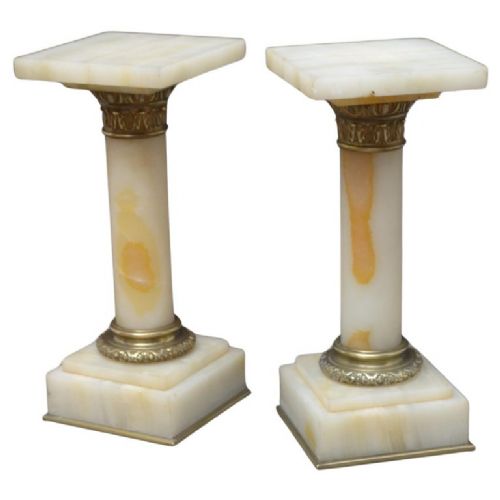


Victorian Onyx Column
These Victorian onyx column pieces combine natural banded stone with classic architectural forms, offering striking display stands and lighting for traditional interiors.
Victorian Onyx Column
A victorian onyx column brings together the banded mineral warmth of natural stone and classical architectural proportions, appearing in forms from tall display plinths to fitted table lamps. Buyers seeking this phrase encounter sturdy pedestals, torchere columns, and slender plant stands alongside oil and table lamps.
The material palette of these pieces draws heavily on the nineteenth century, blending richly patterned stone with cast metal mounts. Most examples on this page date from the Victorian era through the early twentieth century, reflecting a sustained architectural revival.
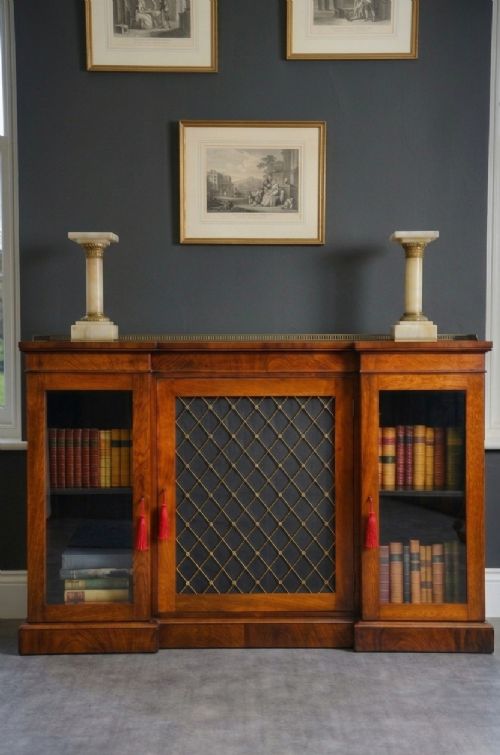
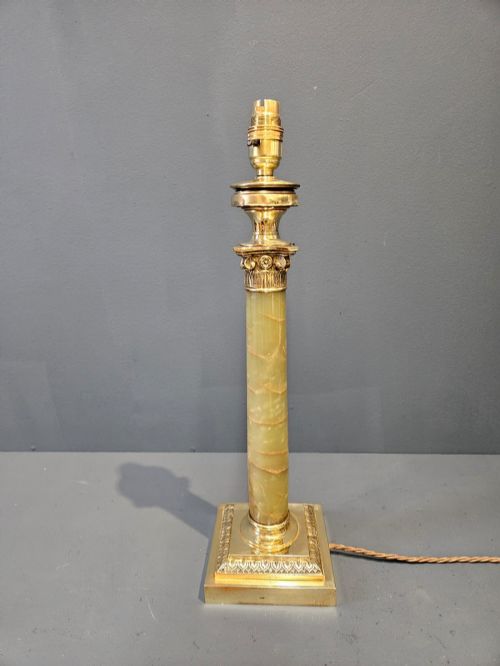
Structural variations range from monumental display pedestals designed for sculpture to low pairs intended for supporting decorative objects. Tall torchere columns frequently incorporate stepped bases and slender shafts, while lamp adaptations integrate wired burners or Corinthian capitals.
Materials and construction
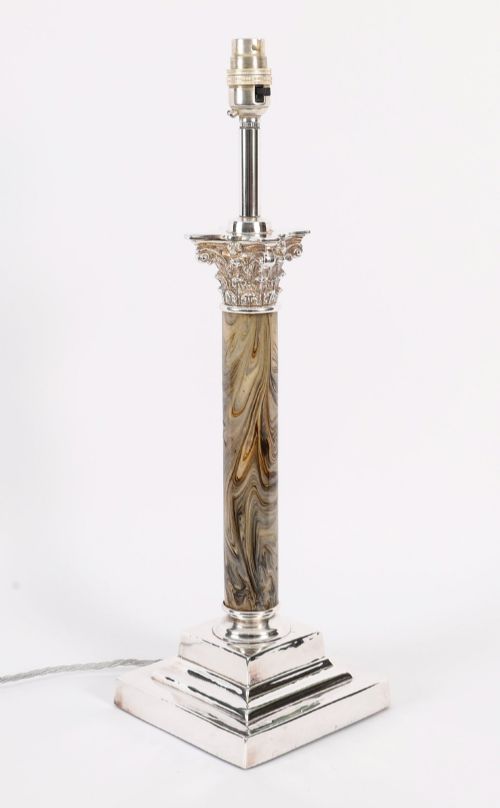
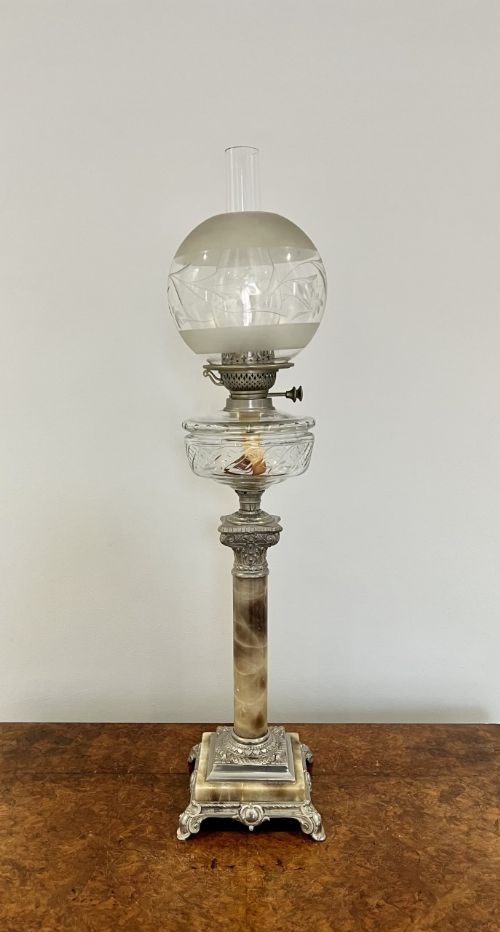
Makers constructed these columns using turned and polished sections of natural onyx, frequently paired with brass, ormolu, and gilt bronze. Metal collars, bases, and Corinthian capitals provide structural support and ornamental contrast to the translucent stone.
The assembly often involves threaded metal rods running through the centre of the stone segments to secure the heavier base and capital components together. Surface finishing relies on high-polish techniques that emphasise the natural banding and variation inherent in the mineral.
Victorian Onyx Column Retail Price Guide 2026
Typical asking prices for victorian onyx column among the pieces listed under this phrase on Sellingantiques today, from the lower quarter to the upper quarter. They describe what is for sale here now, not the wider market.
Materials recorded across these items feature onyx, brass, ormolu, marble, gilt bronze, silver plate, and bronze.
Quality and craftsmanship
Superior examples display precise turning in the stone and crisp detailing in the metal mounts, such as cast ormolu collars or silver-plated Corinthian capitals. The visual richness of the onyx grain and the stability of the overall construction distinguish finer pieces from standard production.
Proportion and scale play significant roles in the desirability of these columns, with unusually low pairs or finely proportioned torchere shafts commanding attention. The integration of high-grade bronze or brass fittings rather than plain base metal indicates superior workshop output.
The Victorian Onyx Column Glossary
- Onyx
- A fine-grained variety of banded chalcedony or calcite used for decorative columns and pedestals. Its natural translucent layers provide distinctive surface patterns.
- Ormolu
- Gilt bronze ornamentation applied to furniture and decorative objects. It adds metallic contrast to stone columns and lamp bases.
- Corinthian
- A classical architectural order featuring ornate capitals decorated with acanthus leaves. This motif frequently caps table lamp columns.
- Torchere
- A tall stand or pedestal originally designed to hold a torch or light. In later periods, it serves as an elevated display surface for sculptures or plants.
- Plinth
- The heavy base supporting a column or pedestal. It provides stability and visual grounding for the vertical shaft above.
Victorian Onyx Column: Frequently Asked Questions
What were onyx columns used for?
These pieces served primarily as decorative display stands for sculptures, vases, or plants in nineteenth-century interiors. Many versions were also adapted as table lamps or oil lamps to illuminate formal rooms.
The sturdy stone and metal construction allowed them to bear significant weight safely while adding an architectural element to domestic spaces.
How do I date a Victorian onyx column?
Dating relies on examining the combination of materials, fastening methods, and stylistic revival cues present in the piece. Elements such as ormolu mounts, silver plating, and cast brass details help align items with Victorian, Edwardian, or early twentieth-century production standards.
Changes in metalworking techniques and wiring adaptations also provide clues to whether a piece originates from the nineteenth century or a later revival period.
Are these columns suitable for modern homes?
Their vertical proportions make them well-suited as plant stands, lamp bases, or standalone display plinths in contemporary rooms. The neutral tones of the banded stone complement both traditional and minimalist interiors.
Placing them in corners or on side tables allows the natural stone patterns to stand out without dominating the surrounding furniture layout.
How should I clean onyx and brass?
Careful dusting with a soft, dry cloth preserves the polished surface of the stone without scratching the mineral layers. Metal mounts require gentle cleaning appropriate for brass or ormolu to avoid removing patination.
Harsh chemical cleaners or excess moisture should be avoided, particularly around joints where stone meets metal.