



Victorian Old Cut Earrings
Victorian old cut earrings bring candlelight sparkle to the ear with hand-faceted stones set in gold and silver.
Victorian Old Cut Earrings
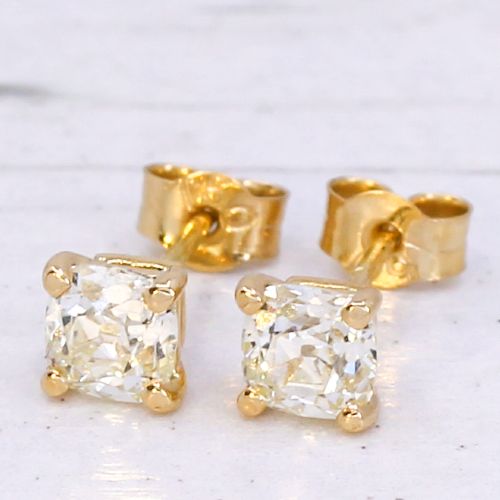
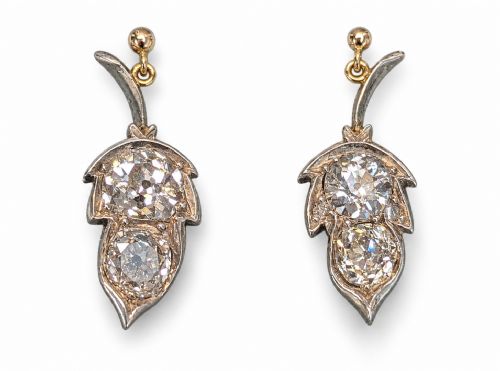
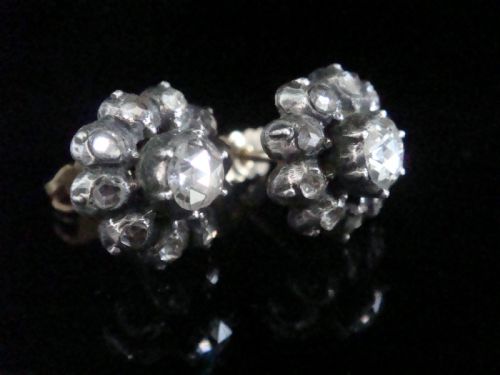
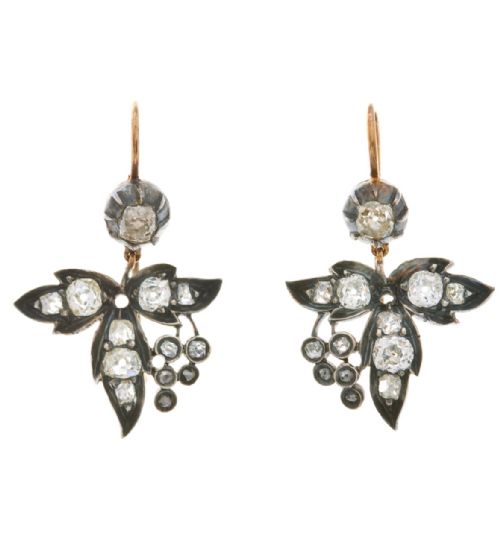
Victorian old cut earrings encompass drop, cluster, stud and dangle forms shaped by hand during the nineteenth century and adjacent eras. These pieces typically combine genuine diamonds or other gems with precious metals, showing the distinctive facets of early cutting techniques.
Makers set these stones to catch the low, warm flicker of gaslight or candlelight rather than modern electric illumination. Collectors choose them for their individual character, as no two hand-cut stones share identical proportions.
How they were made
Goldsmiths constructed these jewels using a combination of yellow gold and silver, often backing silver settings with gold to protect clothing from tarnishing. Stones were shaped by hand into old mine, old European or rose cuts, resulting in irregular facet patterns rather than mathematically uniform modern cuts.
Cluster and drop frameworks relied on meticulous hand-soldering and bezel or foil-backed settings to secure diamonds, pearls and coloured gemstones. Artisans incorporated intricate details like black enamel work, tiny bead wire, and specialised screw-back or dormeuses mechanisms.
Victorian Old Cut Earrings Retail Price Guide 2026
Typical asking prices for victorian old cut earrings among the pieces listed under this phrase on Sellingantiques today, from the lower quarter to the upper quarter. They describe what is for sale here now, not the wider market.
Some Victorian earrings doubled as sleeping jewels, designed so wearers could doze off without taking them out.
What varies in quality
The standard of lapidary work dictates the visual draw of the stones, with symmetrical hand-faceted old cuts holding more brilliance than hastily shaped rose cuts. Metalwork finesse also distinguishes superior items, where delicate floral motifs, pristine enamel and secure settings show higher craftsmanship.
Originality of components shifts the standing of a piece, as intact matched stone pairings and undamaged antique backings retain greater integrity. The harmony between the gem size and the proportional weight of the gold or silver mount separates standard workshop output from exceptional examples.
The Victorian Old Cut Earrings Glossary
- Old cut
- A generic term for diamond cutting styles predating modern brilliant cuts, characterised by high crowns, small tables and deep pavilions. These facets were polished by hand to maximise sparkle under historical lighting.
- Rose cut
- A vintage diamond or gemstone cut featuring a flat base and a domed crown covered in triangular facets resembling an opening rosebud. It yields a soft, translucent gleam rather than fiery brilliance.
- Dormeuses
- French sleeping earrings fitted with secure hinged backs that allowed the wearer to keep them on overnight without discomfort. They frequently feature dangling drops or close-set clusters.
- Briolette
- A drop-shaped gemstone cut entirely with triangular facets all around its body. This form allows light to enter from multiple angles when suspended from a hook.
- Bezel setting
- A collar of metal that wraps around the outer perimeter of a gemstone to hold it securely in place. This technique was widely utilised before the invention of modern prong settings.
Victorian Old Cut Earrings: Frequently Asked Questions
Can I wear victorian old cut earrings every day?
These historical pieces tolerate regular wear provided you handle them with care and remove them during vigorous activities. Their delicate settings and antique gold components benefit from gentle treatment and proper storage.
Inspect the mountings periodically to ensure the stones remain secure within their bezels or claws. Professional cleaning by a specialist helps preserve the integrity of the silver and gold work without damaging softer gems or natural pearls.
How do I distinguish old cut diamonds from modern ones?
Old cut diamonds feature smaller tables, higher crowns and noticeably larger open culets visible at the base of the stone. Their hand-polished facets create a softer, more intimate glow compared to the precise geometric return of modern brilliant cuts.
Under magnification, the asymmetry of the hand-cutting process becomes apparent. Each stone adapts to its original crystal shape rather than following strict mathematical proportions.
What is silver-topped gold in antique jewellery?
Silver-topped gold is a historic construction method where a thin layer of silver is soldered over yellow gold on the front face of the jewellery. This allowed artisans to set diamonds against a white metal background, which enhanced the perceived whiteness of the stones.
The gold backing provided structural strength and prevented the silver from coming into direct contact with the wearer's skin or clothing. This technique appears frequently in nineteenth-century cluster and drop designs.
How do I date these earrings accurately?
Dating relies on stylistic clues, metal types, cutting styles and mechanical fasteners like wire hooks or early screw mechanisms. The presence of 9ct, 15ct or 18ct gold alloys alongside specific gemstone combinations helps narrow the manufacturing period.
Consulting hallmarks, where present, and comparing construction methods with documented nineteenth-century examples provides further confirmation. Regional fabrication traits, particularly from French workshops, also offer clear chronological markers.