



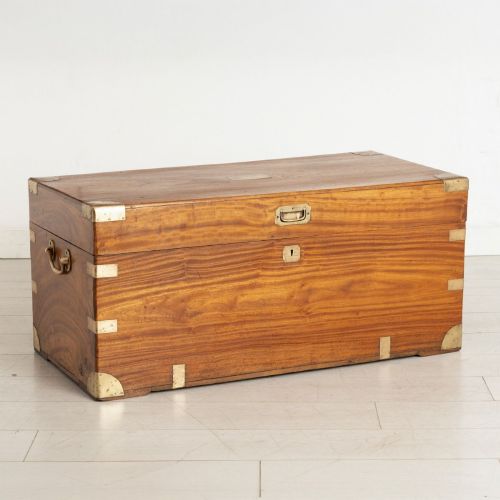
Victorian Officer Chest
A victorian officer chest is a modular, brass-bound piece built for travel, offering robust storage with enduring utility.
Victorian Officer Chest
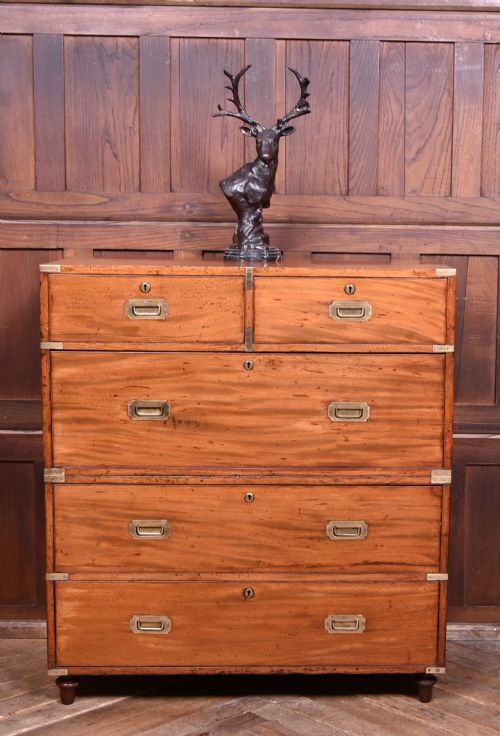
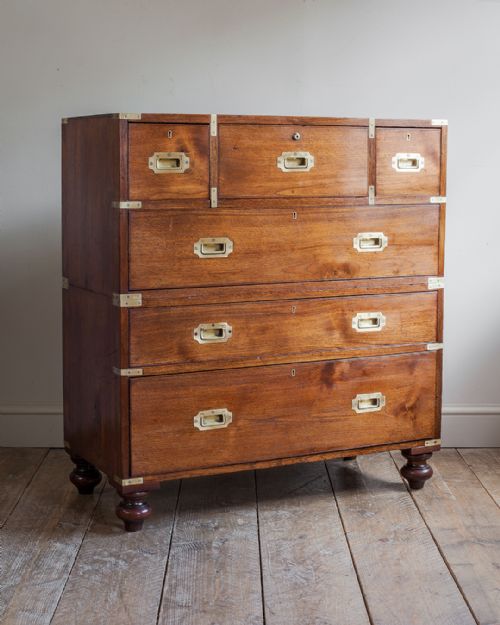
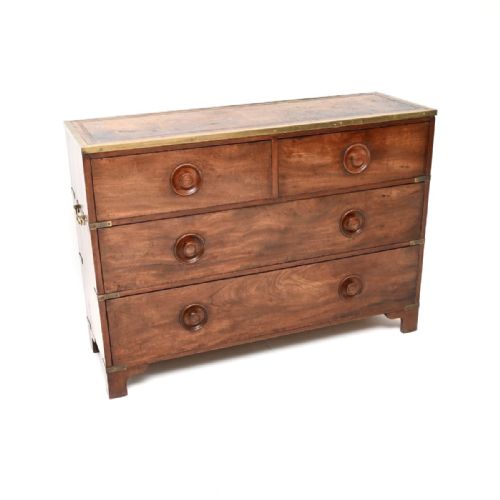
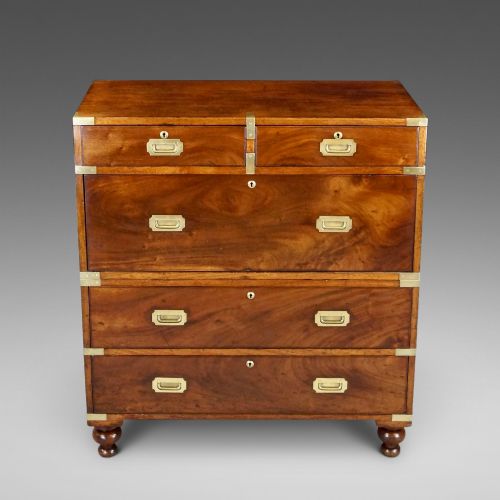
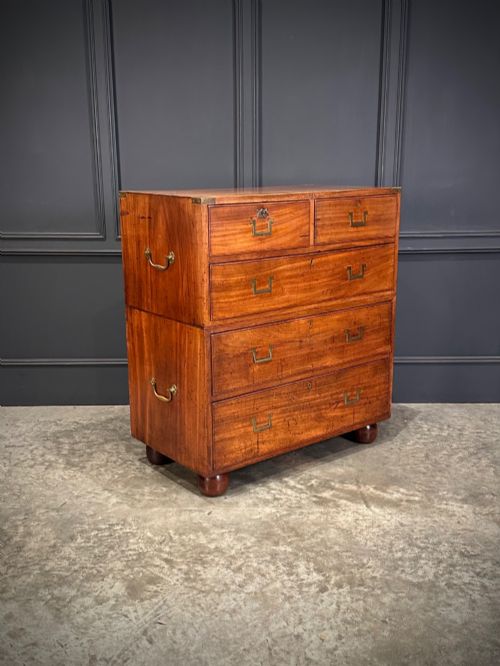
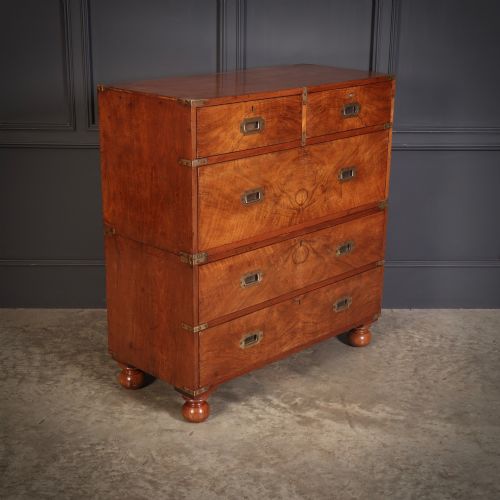
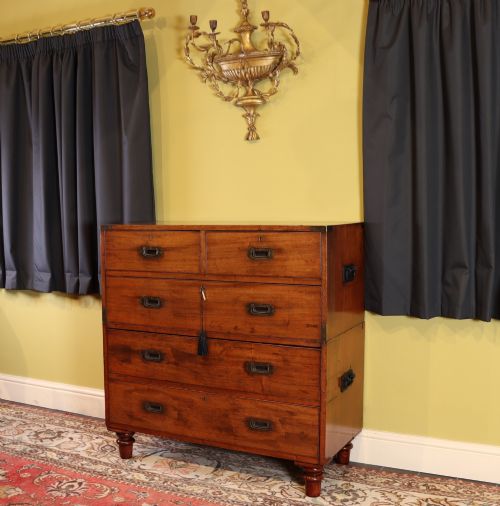
A victorian officer chest is primarily a two-part chest of drawers designed for military campaigns and colonial life during the nineteenth century. These sturdy wooden boxes dismantle into separate sections for easy transport on ships and carts. Most examples found on this page date from the mid to late nineteenth century, spanning mahogany, teak, and camphor wood variants.
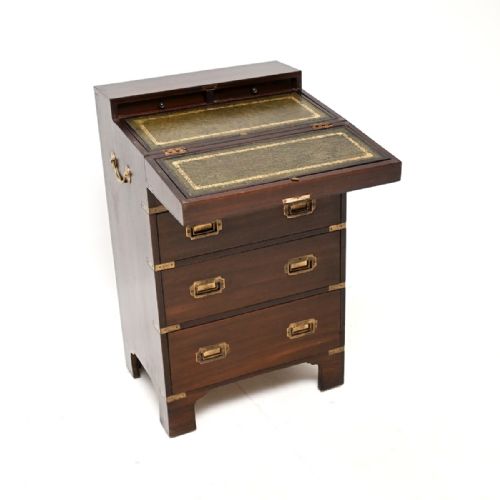
The form typically divides into an upper and lower cabinet, fitted with recessed brass carrying handles and reinforced corners to withstand rough handling. Drawer configurations range from standard chest layouts to secretaire variants containing fitted writing desks with small pigeonholes. Buyers frequently encounter pieces displaying the classic brass banding characteristic of Victorian military campaign style.
How they were made
Cabinetmakers constructed these chests from dense timbers like mahogany, teak, and camphor wood, often joining them in two separate stacking sections. Brass corners, binding, and flush-fitting inset drawer pulls protected the edges from impact during transit. Iron hardware and leather straps also reinforced the structure for rigorous journeys.
Drawer interiors utilised secondary woods, fitted with secret compartments and drop-front writing surfaces in secretaire models. The surfaces received hand-finished polishes or oil treatments to protect the grain against tropical climates and sea air.
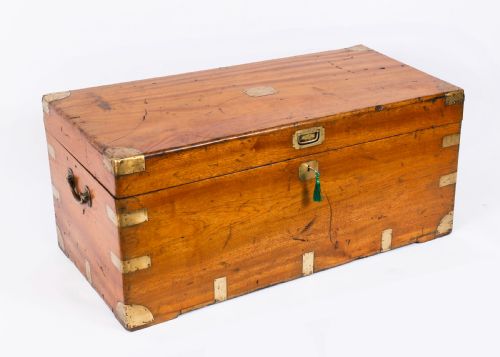
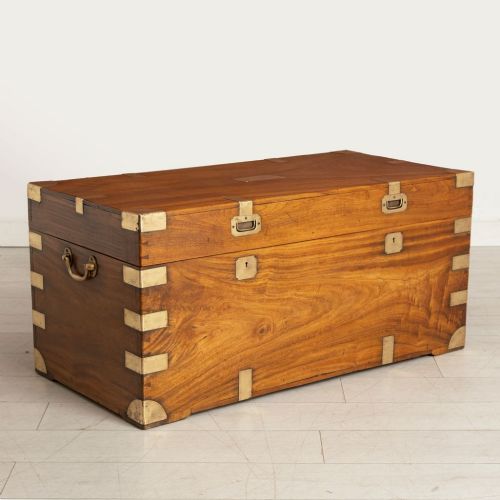
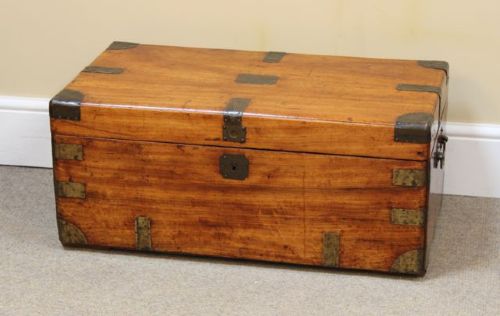
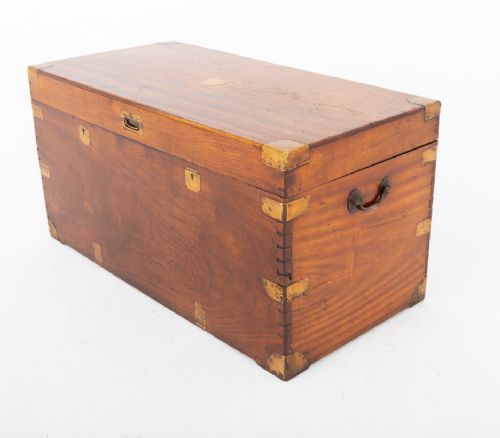
Object forms span standard chests of drawers, secretaire writing units, desktop storage boxes, and camphor trunks.
What varies in quality
Quality rests upon the selection of timber, such as highly figured flame mahogany or dense burr walnut, matched with substantial brass hardware rather than thin plating. Superior examples retain their original recessed handles, lock escutcheons, and functioning keys without later replacements.
Joinery execution distinguishes field-service pieces from later reproductions, seen in the precision of the brass binding and the seamless alignment of the two stacked sections. Maker attribution through stamped drawer edges or brass registry plaques elevates a piece significantly.
S. W. Silver & Co. London & Liverpool·Ross & Co.·Army & Navy·Arthur Foley & Son of Salisbury
The Victorian Officer Chest Glossary
- Campaign chest
- A modular set of drawers built in two or more stacking sections for military transport. These units feature recessed hardware to prevent snagging during transit.
- Secretaire chest
- A chest of drawers featuring a drop-front upper drawer that opens to reveal a fitted writing surface and small pigeonholes. This serves dual functions as a desk and storage unit.
- Brass binding
- Flat strips of brass screwed along the edges and corners of a trunk or chest to absorb impact. It forms a defining visual trait of military campaign furniture.
- Camphor wood
- An aromatic timber utilised for campaign chests due to its natural insect-repellent properties. It protected uniforms and paper documents in damp colonial climates.
- Two-part chest
- A cabinet constructed as two distinct rectangular boxes that stack together and fasten with side brackets. This division facilitated loading onto pack animals and wagons.
Victorian Officer Chest: Frequently Asked Questions
What is a victorian officer chest?
A victorian officer chest is a modular wooden storage unit built in sections for military transport during the nineteenth century. These pieces feature reinforced brass corners and flush handles designed to endure rough travel.
Officers utilised them on campaign, aboard ships, and in colonial postings for clothing and documents. The design prioritised durability, dismantling into smaller parts for easy loading onto carts.
How were these chests used?
British military officers used them to transport uniforms, personal items, and writing materials across the empire. The sturdy construction protected contents from moisture, dust, and heavy handling.
Many examples include secretaire drawers that fold down to create a desk space for writing reports in the field. After service, officers brought them home for domestic use.
How do you date a campaign chest?
Dating relies on timber choice, construction methods, and hardware styles found across the nineteenth century. Mid-century examples often feature solid mahogany or teak with heavy brass binding.
Later Victorian pieces from the 1880s and 1890s sometimes incorporate maker stamps on the drawer edges. Archive records and historical regiments linked to specific pieces help narrow down the decade of manufacture.
How do you live with a campaign chest?
These chests function well as bedside tables, living room sideboards, or traditional drawer units in a bedroom. Their compact proportions and flat tops offer practical surface space.
Maintaining the wood involves standard furniture wax and avoiding placement near direct heat sources. The robust construction suits modern daily use while providing deep drawer storage.