



Victorian Oak Writing Bureau
A victorian oak writing bureau brings solid timber construction and practical writing space into a study.
Victorian Oak Writing Bureau
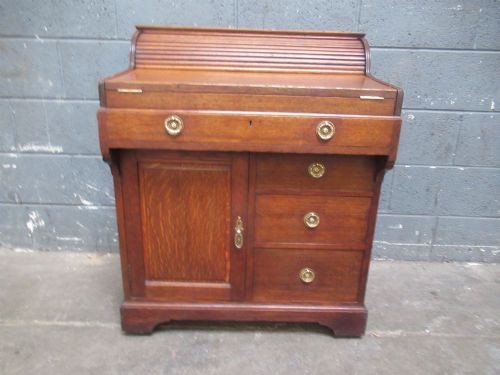
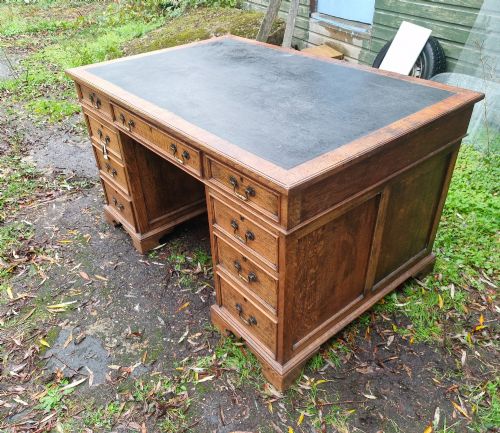
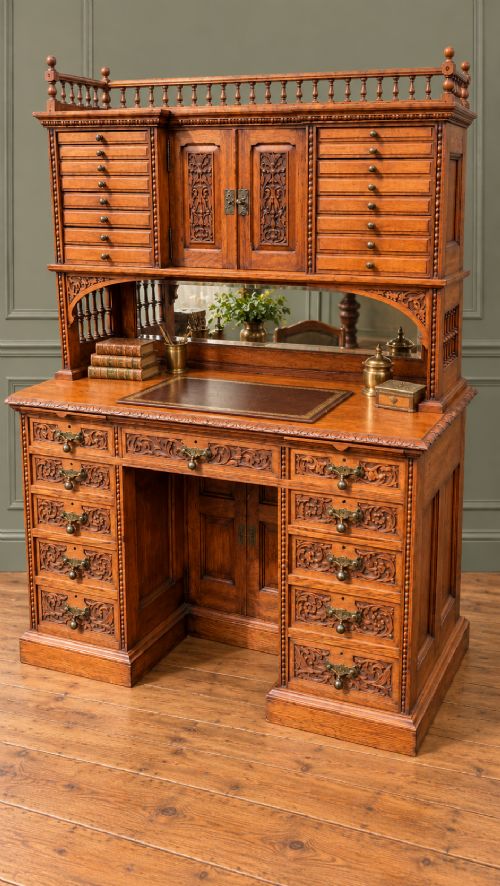
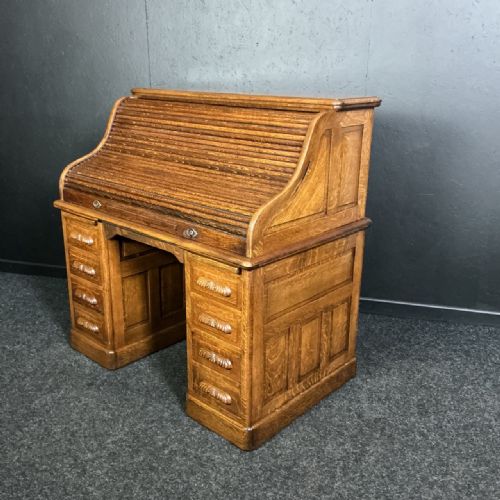
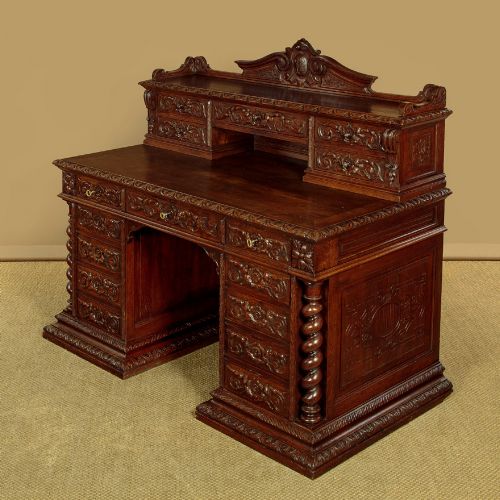
A victorian oak writing bureau combines a sloping fall-front lid with internal pigeonholes and drawers for correspondence. Buyers meeting these pieces on this page encounter robust forms spanning the nineteenth century, including fall-front bureaux, pedestal desks, and bureau bookcases.
The material palette centres on sturdy oak, often accompanied by burr walnut, pollard oak, and brass hardware. These woods provide the durable foundation expected from pieces produced during the Victorian period and adjacent Edwardian eras.
Design influences range from plain utilitarian formats to heavily carved Green Man motifs, Gothic taste, and Aesthetic Movement expressions. Pieces originate from workshops across Britain, utilising local hardwoods for domestic and institutional use.
Materials and construction methods
Cabinet makers utilised solid oak and specialised veneers like pollard oak and burr walnut over secondary softwood frames. Timber was selected for grain pattern and strength, particularly for load-bearing desk lids and pedestal structures.
Joinery techniques relied on dovetailed drawer construction and mortise and tenon joints to ensure long-term stability. Surfaces were frequently hand-carved with foliage or architectural details, then finished with polish or wax to protect the wood.
Victorian Oak Writing Bureau Retail Price Guide 2026
Typical asking prices for victorian oak writing bureau among the pieces listed under this phrase on Sellingantiques today, from the lower quarter to the upper quarter. They describe what is for sale here now, not the wider market.
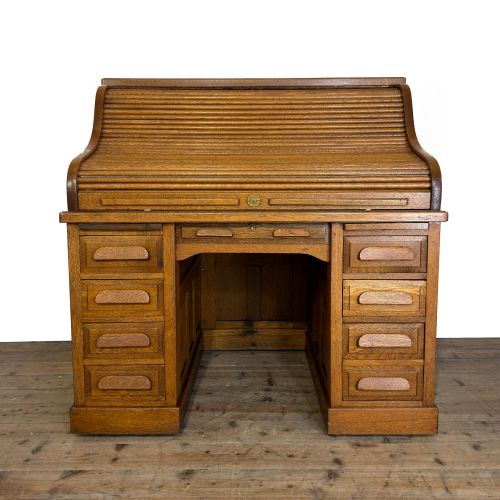
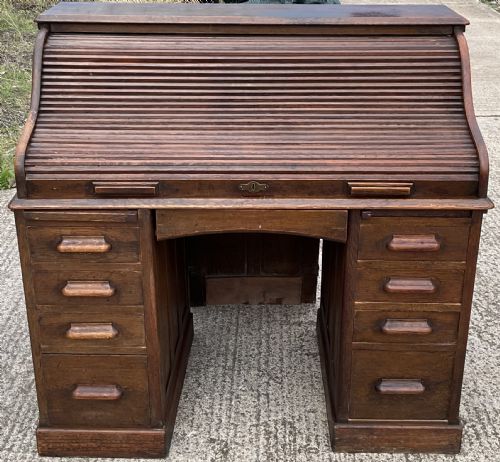
Form variations include pedestal desks, tambour roll tops, Davenport desks, and bureau bookcases.
Separating ordinary from exceptional work
Quality rests upon the selection of timber figures, such as burr or pollard oak markings, and the crispness of hand-carved ornamentation. Superior examples display refined proportions, integrated bookcases, and secondary woods chosen with equal care.
Internal engineering separates standard production items from workshop masterpieces. Smooth action in tambour tops, tightly fitted pigeonhole compartments, and original brass fittings indicate higher levels of original craftsmanship.
Blyth & Son London·Morris & Co·Harris Lebus·Liberty of London·Edwards & Roberts·Thomas Turner·Gillows of Lancaster·George W Jack
The Victorian Oak Writing Bureau Glossary
- Bureau
- A desk featuring a sloping hinged lid that drops down to form a writing surface, concealing internal compartments. It represents the primary form sought by collectors of this phrase.
- Fall-front
- The vertical or angled writing flap on a bureau that drops forward to horizontal when unlocked. This panel supports the writer's hands during correspondence.
- Pollard oak
- Oak timber taken from trees that have been pollarded, producing a dense cluster of branches and a highly decorative, mottled grain pattern. Cabinet makers used it selectively for drawer fronts and feature panels.
- Secretaire bookcase
- A tall piece combining a shelved upper section with a lower writing cabinet. It offers dual utility for storage and study.
- Tambour
- A flexible shutter made from narrow strips of wood glued to canvas, allowing a roll top desk to open and close smoothly. This mechanism requires precise woodworking to operate correctly.
Victorian Oak Writing Bureau: Frequently Asked Questions
How do I use a bureau desk?
Lower the hinged fall-front lid to reveal the internal writing surface and pigeonholes for paper storage. Many examples include drawers beneath the writing flap for organising documents.
Close the lid and secure the lock when the desk is not in use to keep writing materials concealed and tidy.
What is a Green Man carving?
A Green Man carving depicts a human face surrounded by or sprouting from foliage, vines, or branches. This decorative motif appears frequently on Victorian carved oak furniture.
Cabinet makers used the imagery to symbolize rebirth and connection to nature, adding sculptural depth to desk panels and drawer fronts.
Are these desks suitable for laptops?
Most antique writing desks accommodate modern laptops when the fall-front lid or writing table is lowered. Measure the internal writing depth carefully to ensure adequate space for electronic devices.
Internal stationary compartments and pigeonholes remain useful for storing charging cables and small office supplies.
How do I tell Victorian from Edwardian pieces?
Victorian pieces generally date from the mid to late nineteenth century and often feature heavier proportions, dark finishes, and elaborate hand-carvings. Edwardian items tend to display lighter framing and simpler decorative schemes.
Examine the secondary woods, construction hardware, and style markers such as Aesthetic Movement influences to determine the period of origin.