





Victorian Oak Weather Station
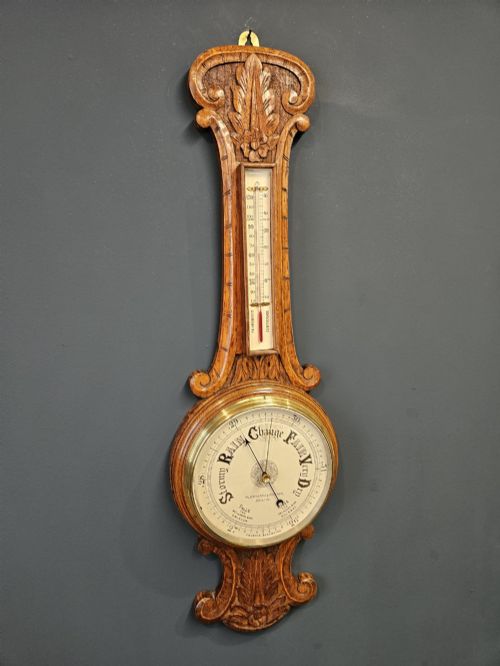
A victorian oak weather station brings together timber and instrumentation to record atmospheric change with domestic elegance.
Victorian Oak Weather Station
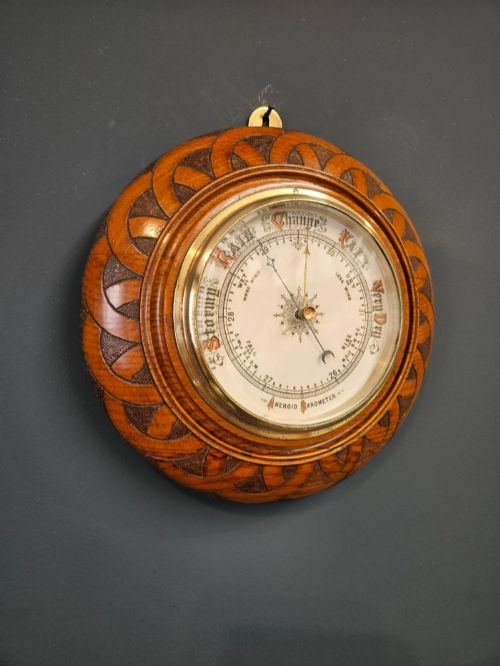
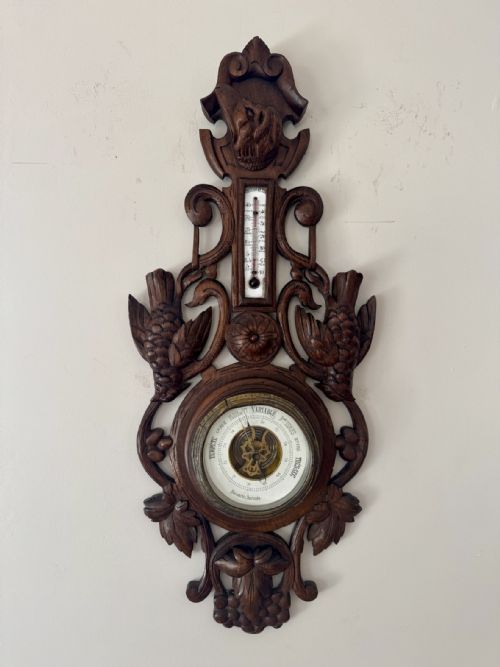
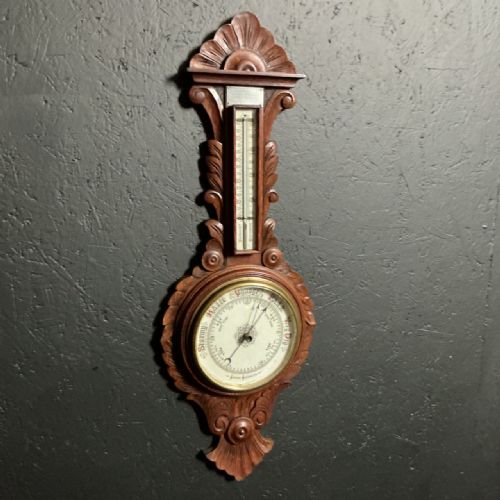
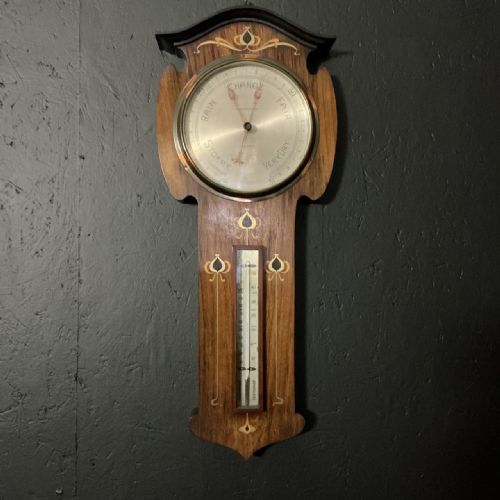
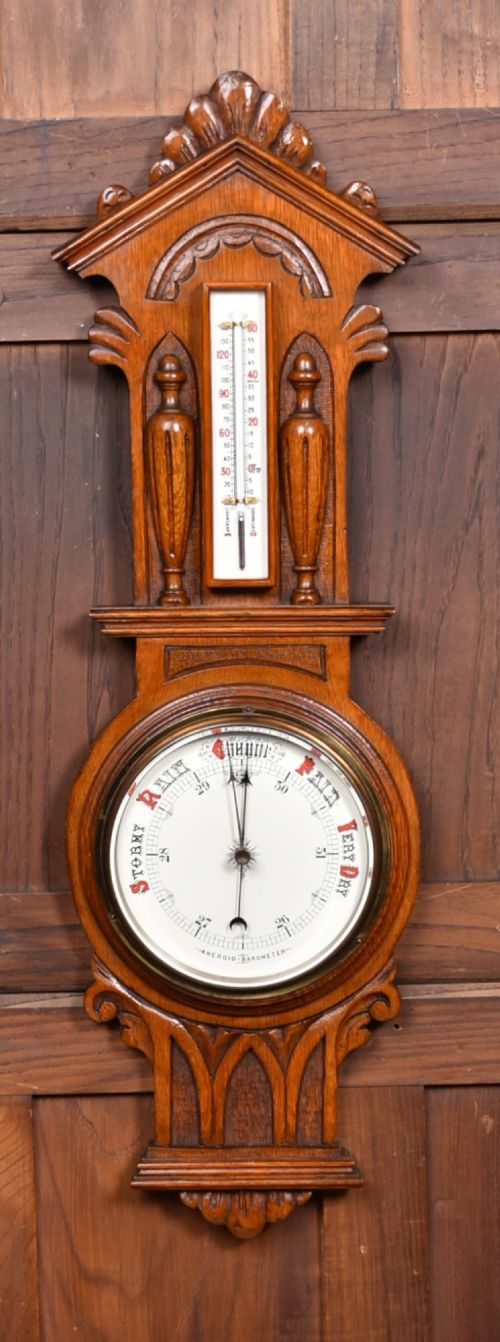
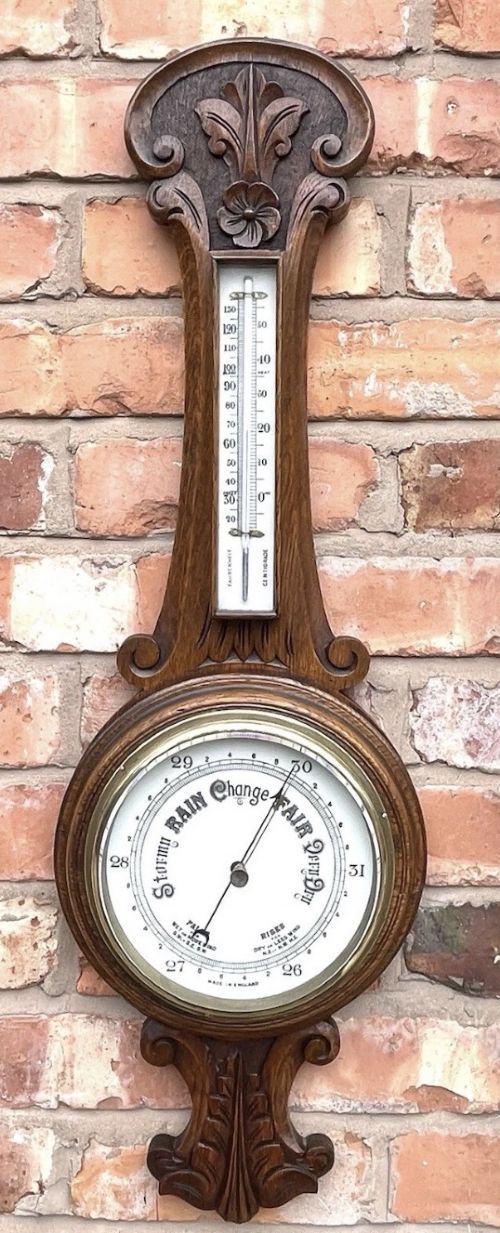
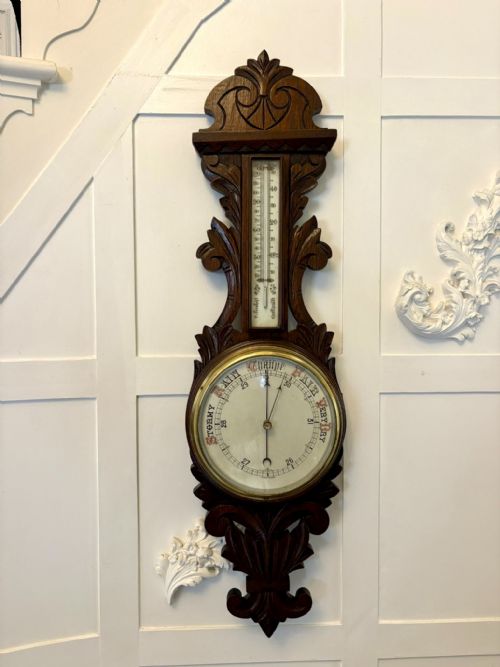
A victorian oak weather station combines timber casing with dials and mercury tubes to measure pressure, temperature, and atmospheric shifts. These instruments appear most frequently in wall-hanging banjo configurations or desk-mounted combinations alongside clocks.
The materials span sturdy carved oak, walnut, and brass fittings, occasionally housing ceramic or porcelain thermometer scales. Makers adopted various regional styles, ranging from robust Gothic Revival to elaborate Black Forest carvings and clean Edwardian circular frames.
Most examples date from the latter half of the nineteenth century into the early twentieth century. Buyers encounter stick barometers, aneroid wall instruments, and multi-dial desk sets that served practical domestic and agricultural purposes.
Assessing quality in weather instruments
The definition and depth of the wood carving dictate the visual standard of the instrument case. Crisp leaf motifs and well-proportioned architectural framing distinguish superior pieces from plain production models.
Precision in the mechanical movement and the legibility of the engraved or printed dial separate standard items from notable works. Signed instruments by established instrument makers often display finer calibration and higher grade brass fittings.
Victorian Oak Weather Station Retail Price Guide 2026
Typical asking prices for victorian oak weather station among the pieces listed under this phrase on Sellingantiques today, from the lower quarter to the upper quarter. They describe what is for sale here now, not the wider market.
Some Victorian households relied on a caduceus-shaped barometer to whisper weather warnings from the wall.
W Watson & Sons·J Hughes London·Negretti & Zambra·Maple & Co·James Pitkin London
The Victorian Oak Weather Station Glossary
- Aneroid barometer
- An instrument that measures atmospheric pressure through the expansion and contraction of a sealed metal capsule without using liquid mercury.
- Banjo barometer
- A wall-mounted weather instrument housed in a case shaped like a traditional stringed instrument, usually incorporating a thermometer and humidity dial.
- Stick barometer
- A tall, vertical barometer containing an exposed glass tube filled with mercury to measure atmospheric pressure against a scale.
- Barograph
- A recording barometer that draws a continuous line of atmospheric pressure onto a rotating drum of graph paper over a week.
- Bezel
- The metal or wooden ring that holds the protective glass face in position over the dial of the barometer or clock.
Victorian Oak Weather Station: Frequently Asked Questions
How do I read an aneroid barometer?
Read the main dial by observing the position of the pointer relative to standard pressure markings like storm, rain, change, fair, and very dry. Tapping the glass gently before reading helps settle the mechanism to show the true current pressure.
Many instruments include a secondary movable pointer that you manually set over the current hand to track whether pressure rises or falls over the course of the day.
Were these instruments used outdoors?
These weather stations were designed strictly for interior domestic use in hallways, libraries, and parlours. Exposure to damp outdoor conditions and direct sunlight would warp the oak timber and damage the internal paper dials.
Indoor placement protected the sensitive brass movements and mercury tubes from sudden temperature shocks and moisture that disrupt mechanical calibration.
How should I care for an oak case?
Maintain the timber by keeping the instrument away from direct heat sources and radiators to prevent the oak from drying out and splitting. Occasional application of a suitable wax polish preserves the sheen of the wood.
Avoid using liquid cleaners or harsh chemicals near the brass bezels and glass faces to protect the original nineteenth-century surfaces.
How do I distinguish Victorian from Edwardian pieces?
Victorian examples frequently feature heavier carved decoration, darker oak finishes, and elaborate architectural or Black Forest motifs. The craftsmanship often emphasises robust presence and deep relief carving.
Edwardian pieces tend toward simpler circular frames, lighter oak tones, and restrained design aesthetics that reflect the shifting interior tastes of the early twentieth century.