

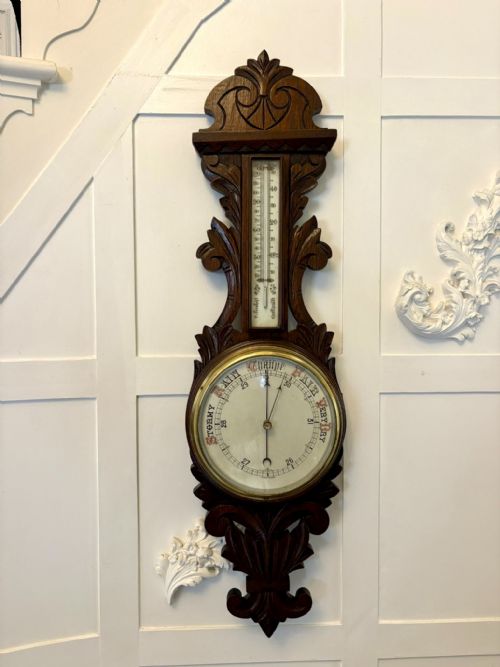


Victorian Oak Weather Glass
A victorian oak weather glass brings scientific utility and robust domestic charm into a room.
Victorian Oak Weather Glass
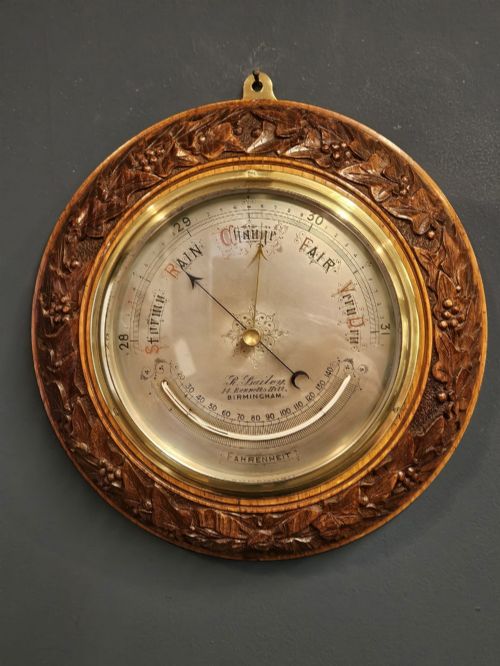
A victorian oak weather glass combines barometers, thermometers and barographs housed in timber cases. These instruments record atmospheric pressure changes to help predict local weather conditions.
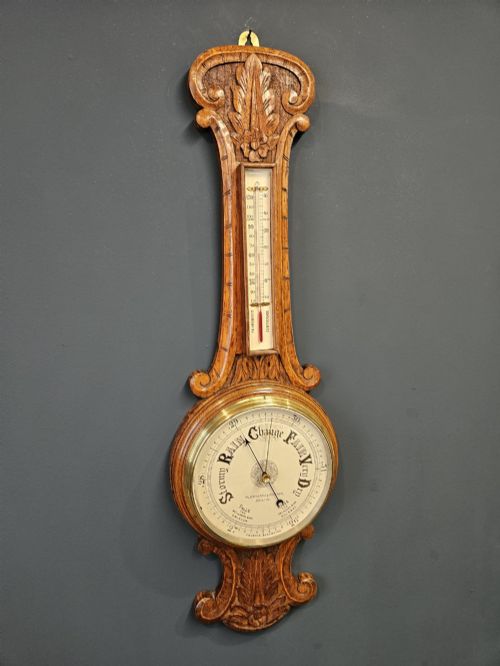
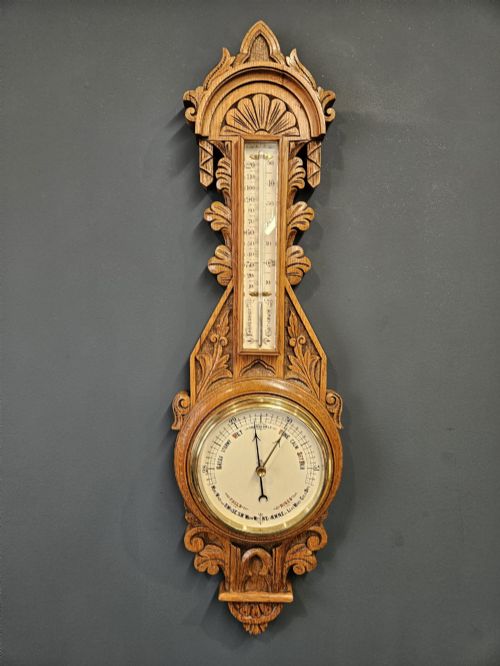
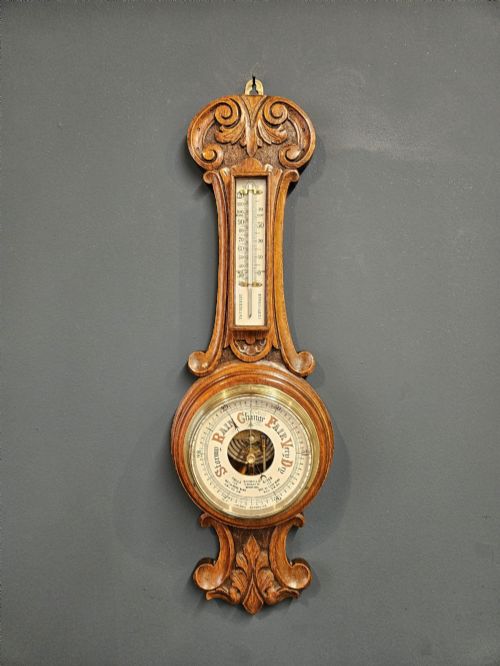
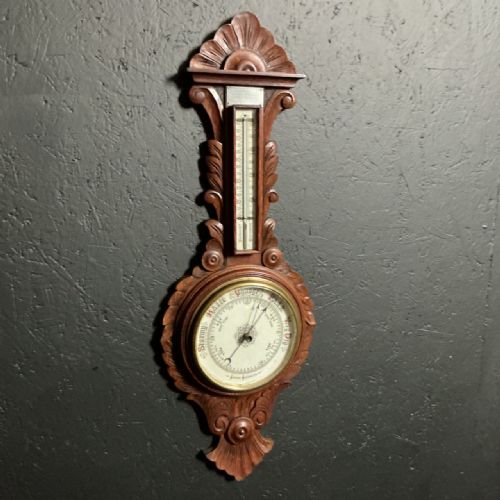
The selections span banjo barometers, wheel barometers, stick barometers and desk or wall-mounted barographs. Oak and carved wood predominate as the primary cabinetry materials across these Victorian instruments.
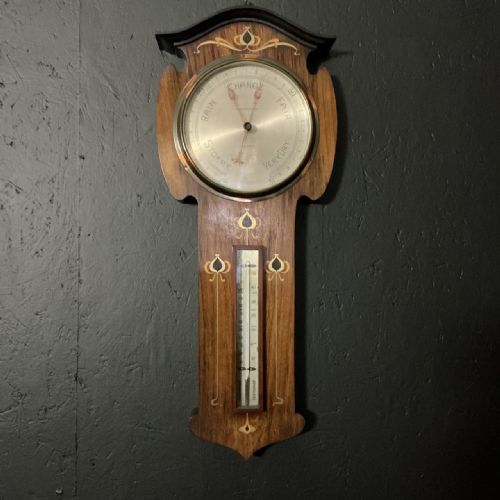
Banjo shapes and Admiral Fitzroy storm patterns appear frequently among the pieces. Makers utilised brass dials, porcelain markers and bevelled glass alongside carved natural motifs.
Materials and construction
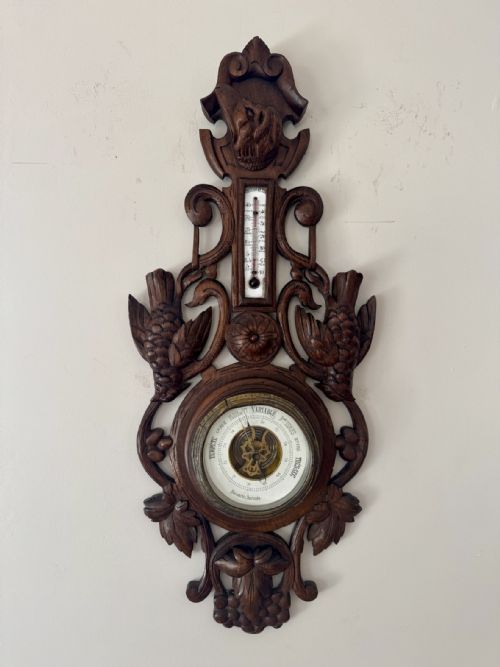
Cabinetmakers fashioned the outer housings primarily from solid oak and carved wood, occasionally incorporating mahogany or brass accents. Carved details often feature foliage, geometric patterns or birds.
Instrument faces display printed paper scales, ceramic or porcelain dials, and mercury or aneroid movements protected behind glass plates. Scientific makers integrated thermometers and barometer dials into single wall-mounted enclosures.
Victorian Oak Weather Glass Retail Price Guide 2026
Typical asking prices for victorian oak weather glass among the pieces listed under this phrase on Sellingantiques today, from the lower quarter to the upper quarter. They describe what is for sale here now, not the wider market.
Some Victorian barometers include detailed carvings of birds perched directly above the dial to watch the weather change with you.
Evaluating craftsmanship and condition
Quality rests in the crispness of the wood carving and the reputation of the instrument maker inscribed on the dial. Signed works by established scientific instrument houses demonstrate superior mechanical precision.
The clarity of the bevelled glass, the legibility of paper or porcelain scales, and the presence of original mercury columns or functioning aneroid movements elevate a piece above standard domestic examples.
Negretti & Zambra·W Watson & Sons·J Hughes London·James Pitkin London·J Hicks of London·BAINES HARROGATE
The Victorian Oak Weather Glass Glossary
- Aneroid barometer
- An instrument that measures atmospheric pressure using a flexible metal box without liquid. It expands or contracts as pressure shifts, moving a needle across a dial.
- Banjo barometer
- A wall barometer shaped like a banjo, featuring a circular dial at the top and a longer vertical trunk holding a thermometer.
- Barograph
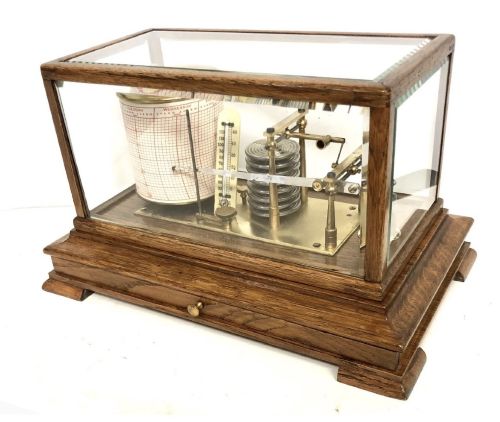
- A mechanical instrument that records barometric pressure continuously onto a paper chart over a weekly or daily period. These often sit inside glazed oak cases with drawer storage for spare charts.
- Admiral Fitzroy barometer
- A storm glass and barometer combination designed to predict weather changes based on chemical reactions in liquid solutions alongside traditional pressure readings.
- Stick barometer
- A tall, slender wall barometer where the mercury column remains fully visible against a vertical scale, housed in a narrow wooden case.
Victorian Oak Weather Glass: Frequently Asked Questions
How do I read a Victorian barometer?
Read the main dial by observing the position of the pointer relative to inscribed weather descriptions like stormy, rain, change, fair or very dry. Many instruments include a secondary manual pointer that you align with the current reading to track upward or downward pressure shifts.
Changes in pressure indicate approaching weather shifts rather than immediate conditions. Rising pressure points toward improving weather, while falling pressure suggests impending wind or rain.
Where should I hang a wall barometer?
Hang your barometer on an interior wall away from direct sunlight, radiators and draughty doorways. Extreme temperature fluctuations can affect the mechanical accuracy of aneroid movements and mercury columns.
Ensure the wall mounting is secure because oak and glass instruments carry substantial weight. A stable surface prevents accidental knocks and keeps the internal mechanisms level.
What is an Admiral Fitzroy barometer?
An Admiral Fitzroy barometer incorporates standard barometric scales alongside a chemical storm glass tube. The design originates from Admiral Robert Fitzroy's nineteenth-century meteorological work for the British government.
Users observe both the mechanical pressure needle and the appearance of the liquid solution inside the glass tube to gauge impending weather. The combination provided mariners and farmers with dual forecasting methods.
How do I tell an aneroid from a mercury barometer?
An aneroid barometer uses a sealed internal metal capsule that responds to pressure changes without using liquid. The dial resembles a clock face with a single pointer moving across circular graduations.
A mercury barometer displays an exposed vertical glass tube filled with liquid mercury that rises and falls against a marked scale. Stick barometers and Admiral Fitzroy designs frequently employ mercury columns.