




Victorian Oak Scuttle
These Victorian oak scuttle pieces are robust fireside containers designed to hold coal or logs, offering practical warmth and period character.
Victorian Oak Scuttle
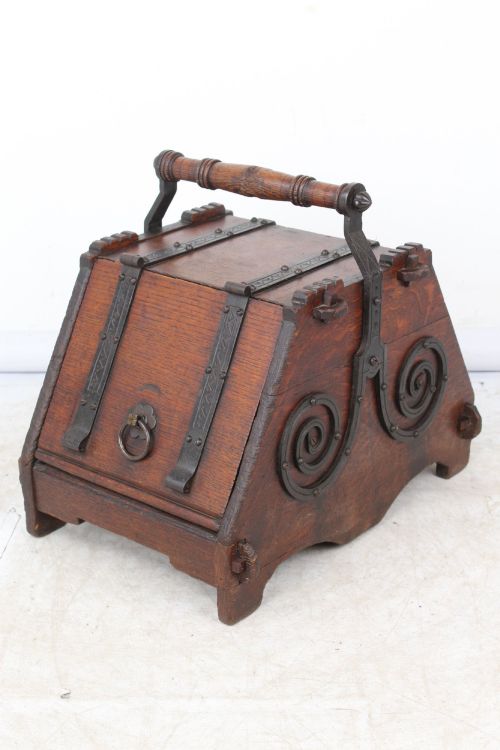
A victorian oak scuttle is a functional fireside accessory designed for holding solid fuel beside a hearth. The pieces on this page span the Victorian period and Edwardian eras, encompassing styles from plain utility to Gothic Revival.
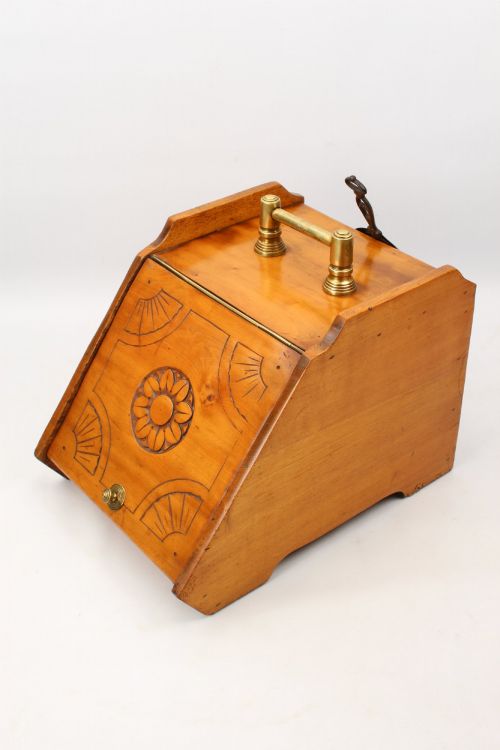
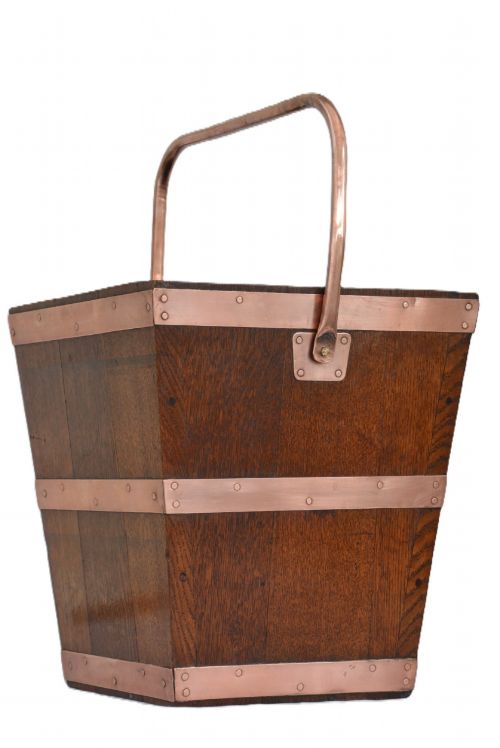
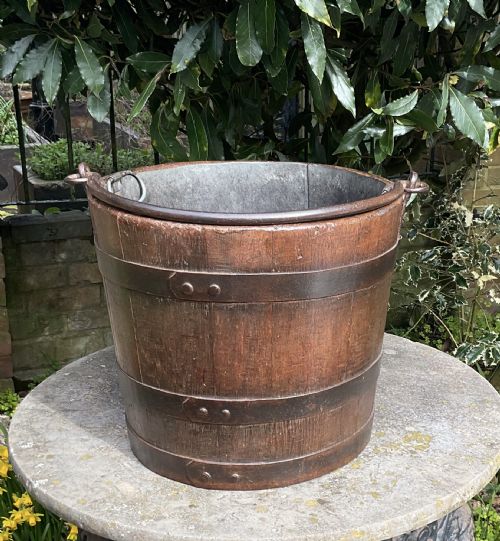
Forms vary from traditional sloped-front coal boxes and purdoniums to coopered buckets, hods, and drop-front cabinets. Many retain original metal liners and matching shovels for daily hearth use.
Materials and construction
Makers utilised solid timber, frequently pollard or standard oak, sometimes shaped using coopered stave construction bound with brass or iron hoops. Metal mounts, hinges, and handles reinforce the wooden bodies against heavy everyday use.
Surface decoration ranges from carved geometric or Gothic panels to plain polished grain. Interiors typically feature removable metal liners in zinc or copper to catch debris and moisture from the fuel.
Listings include items dated across the Victorian period, c1850, 1880, 1900, and into the Edwardian era.
Factors in quality
Superior examples display crisp hand-carving, substantial gauge brass mounts, and robust dovetail or coopered joinery. The presence of matching hardware, such as original shovels and liners, elevates a piece.
Simpler containers rely on straightforward board construction with minimal ornamentation. Condition of the interior lining and the stability of handles indicate how heavily a piece was used.
Christopher Dresser
The Victorian Oak Scuttle Glossary
- Purdonium
- A specialised coal box featuring a sloping drop-down front and an internal shovel compartment. It stores fuel neatly beside the fireplace.
- Coopered
- A method of construction where tapered wooden staves are joined side by side and bound with metal hoops, much like a barrel.
- Hod
- A deep, open-topped container with a handle, used for carrying coal from the cellar to the hearth.
- Gothic Revival
- An architectural and decorative style drawing inspiration from medieval design, featuring pointed arches, tracery, and heavy carved details.
- Liner
- A removable metal insert placed inside the wooden body to contain coal dust and protect the timber from moisture.
Victorian Oak Scuttle: Frequently Asked Questions
What is a purdonium?
A purdonium is a specific type of coal box designed during the nineteenth century with a drop-down front.
It typically houses a removable metal liner and keeps the coal shovel stored neatly inside.
Are original liners common?
Many surviving pieces retain their original metal liners, though replacements are frequently found in older containers.
These liners protected the timber from dampness and coal dust during daily use.
How do I clean an oak scuttle?
Dust the exterior wood gently and apply a suitable wax polish to maintain the finish.
Avoid using abrasive cleaners on the brass mounts or soaking the wooden panels in water.
What is coopered construction?
Coopered construction involves fitting shaped wooden staves together tightly to form a rounded bucket or bin.
Metal hoops or bands are then secured around the outside to hold the staves firmly in place.
Can these hold logs instead of coal?
Many larger buckets and bins function equally well for storing firewood by the hearth.
Their sturdy wooden and metal construction accommodates heavier logs without damage.