
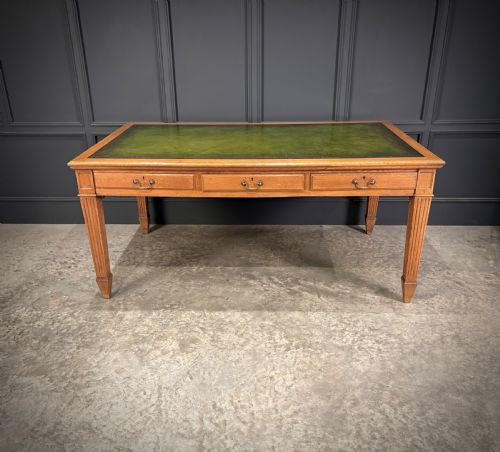


Victorian Oak Office Table
A victorian oak office table provides a sturdy workspace, combining functional drawers with timber character suited to traditional studies.
Victorian Oak Office Table
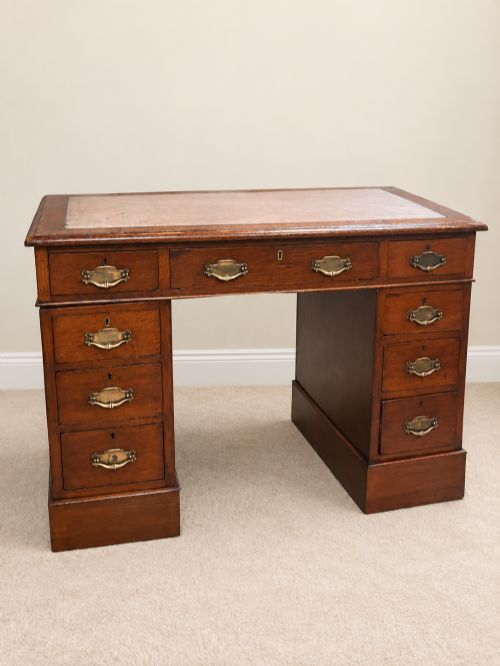
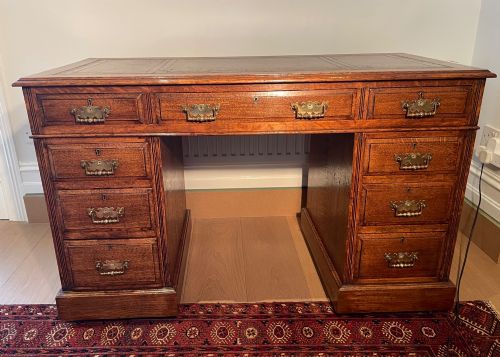
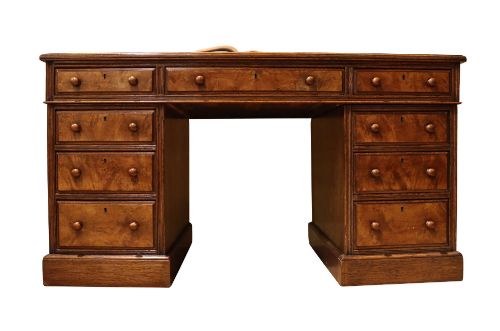
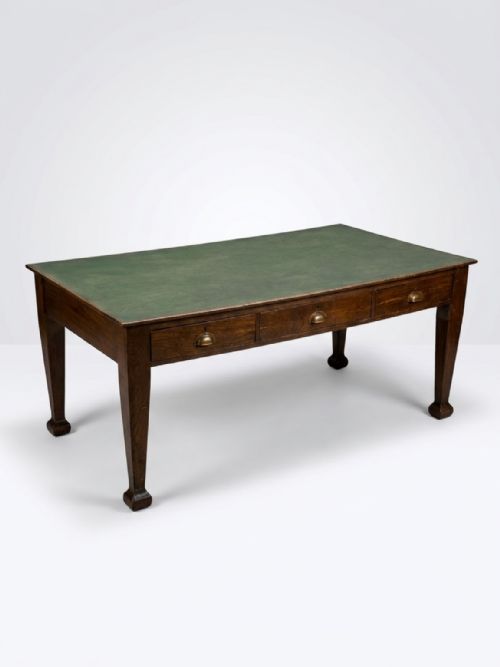
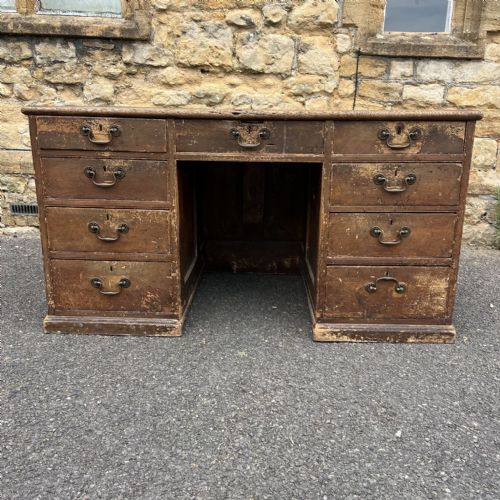
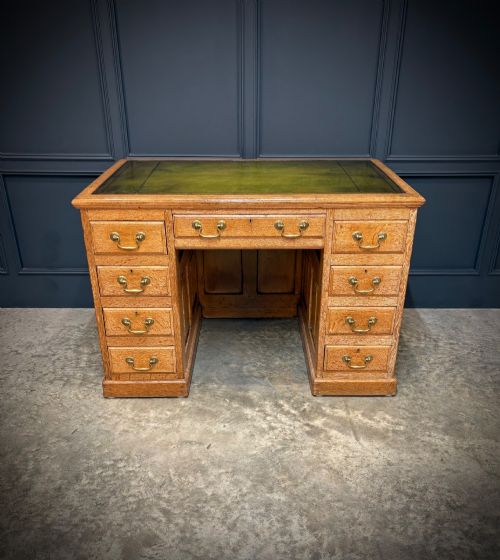
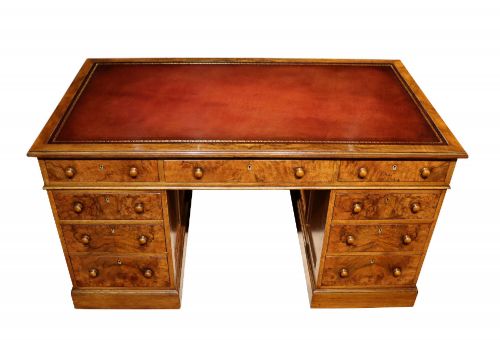
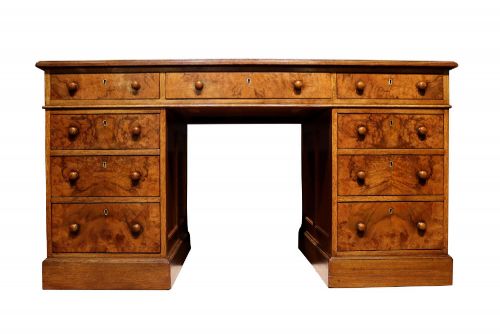
A victorian oak office table is primarily encountered as a pedestal desk, kneehole desk, or partners writing table dating from the nineteenth century. These pieces were built for serious clerical work in studies, estate offices, and institutions.
The pieces on this page span the Victorian period, including late Victorian examples, alongside related Edwardian formats. Forms range from compact writing tables with twin drawers to large partners desks designed for two users working opposite each other.
Materials and Construction
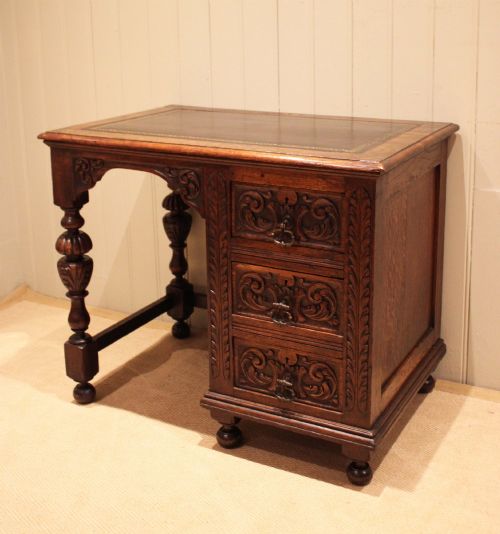
Makers constructed these tables predominantly using solid oak, frequently paired with inset leather writing surfaces and brass hardware such as drawer pulls and locks. Burr walnut or ash occasionally appears as a secondary timber or decorative accent on drawer fronts.
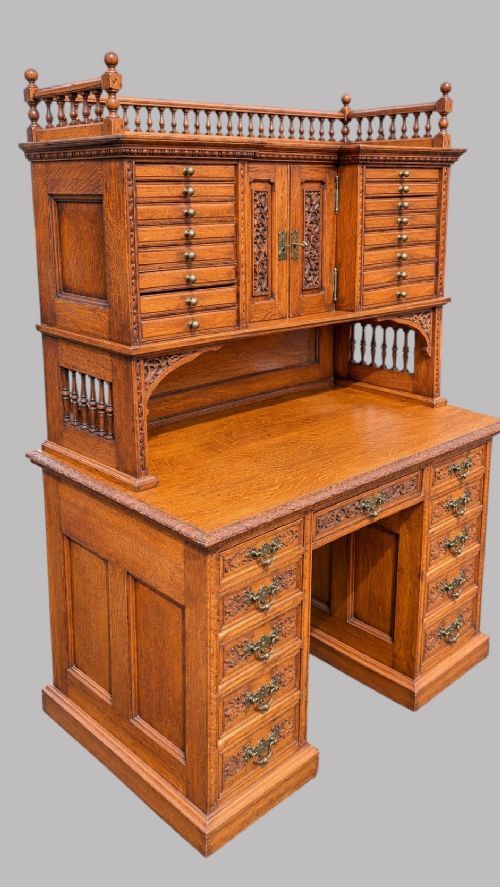
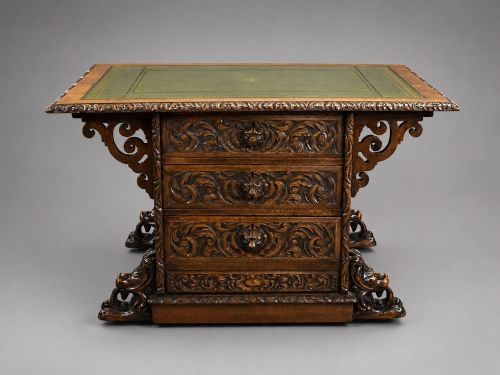
Construction methods relied on heavy framing and dovetailed drawer construction to withstand daily commercial use. Carved detailing and Gothic revival motifs appear on specific examples alongside plain panels.
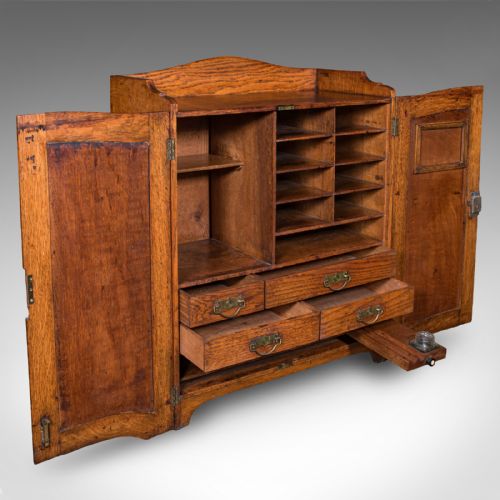
Gamekeepers and estate managers required specialised cabinetry, resulting in robust clerks cupboards designed to withstand remote country house duties.
Quality Variations
Quality in these desks is determined by the selection of timber figures, such as golden oak or burr walnut veneers, and the crispness of any hand carving. Substantial proportions and well-executed secondary timbers distinguish higher grades from simpler utility pieces.
The integrity of the original leather writing surface and the presence of makers stamps or signatures elevate the standing of a desk. Robust internal framing and matched drawer timbers separate superior workshop production from standard commercial output.
T Wilson·Gillow & Co·Deighton & Dunthorne·Merryweather & Son
The Victorian Oak Office Table Glossary
- Pedestal desk
- A heavy office desk featuring two supporting columns of drawers beneath the main writing surface. These units often separate into three manageable sections for transport.
- Partners desk
- A large double-sided writing table designed with drawers and cupboards accessible from both front and back. They were traditionally used by business partners or banking colleagues.
- Kneehole desk
- A compact writing desk with a central recess for the user's legs, flanked by smaller pedestals of drawers. This form became standard for domestic studies and estate offices.
- Dickens desk
- A specialised office desk featuring a raised superstructure of pigeonholes and small drawers above the writing plane. It provided organised storage for correspondence and ledgers.
- Burr walnut
- A highly figured timber veneer prized for its swirling grain patterns. It was frequently applied to drawer fronts to contrast against the solid oak carcase.
Victorian Oak Office Table: Frequently Asked Questions
What is a partners desk?
A partners desk is a large office table built with drawers and cupboards on both sides, allowing two people to work facing each other.
These pieces were standard in boardrooms, legal practices, and large estate offices during the Victorian era.
How do I care for the leather top?
Leather writing surfaces require gentle cleaning with a damp cloth and occasional treatment with specialist leather dressing to prevent cracking.
Avoid using harsh chemical polishes or placing hot items directly on the hide.
Can these desks be dismantled?
Many pedestal desks and partners tables are constructed in three modular sections, consisting of two drawer pedestals and a top.
This modular design allowed nineteenth-century movers to transport heavy oak furniture up stairs and through narrow doorways.
What is a Dickens desk?
A Dickens desk is a specific variant featuring a raised stationary box or pigeonhole cabinet built onto the rear of the writing surface.
This superstructure kept ledgers and correspondence organised within arm's reach of the clerk.