




Victorian Oak Hat Rack
A victorian oak hat rack organises the entrance hall with solid timber and practical metal hooks.
Victorian Oak Hat Rack
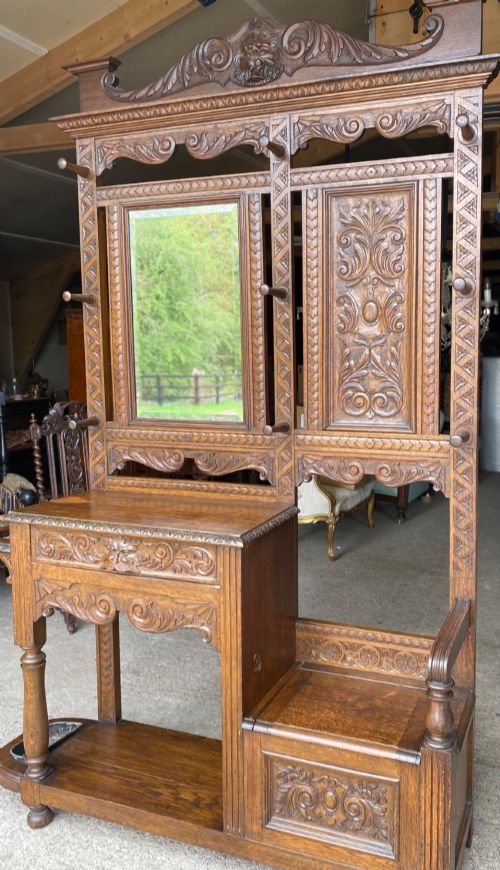
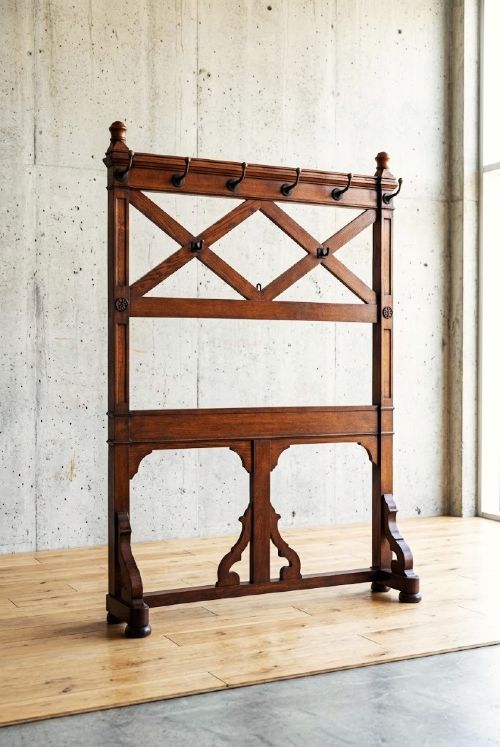
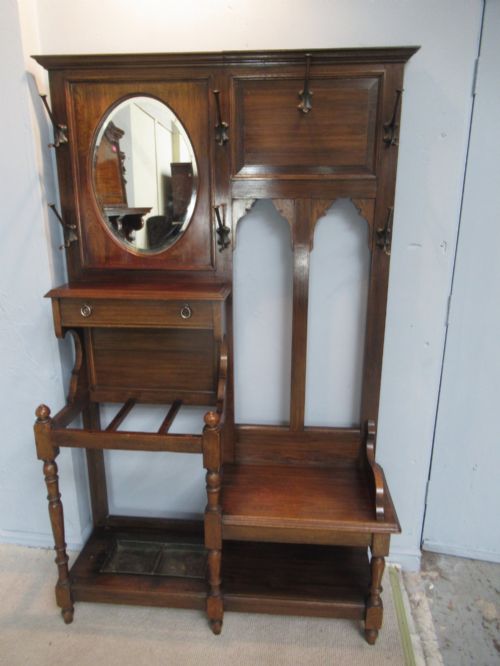
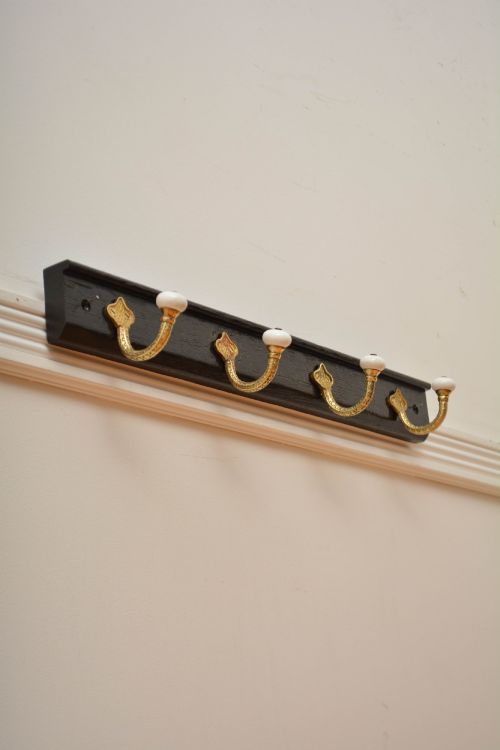
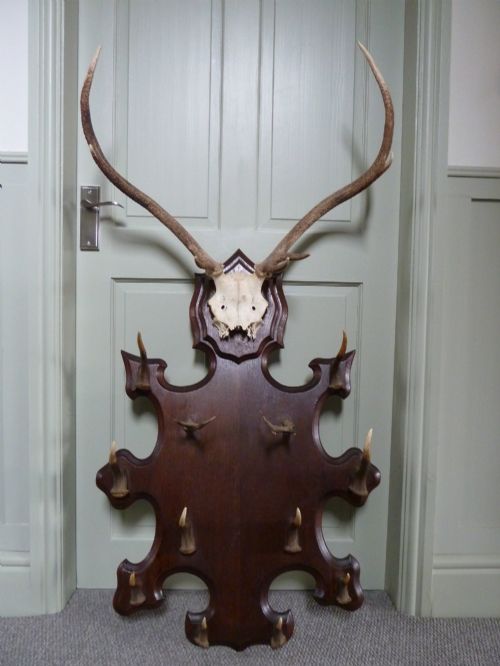
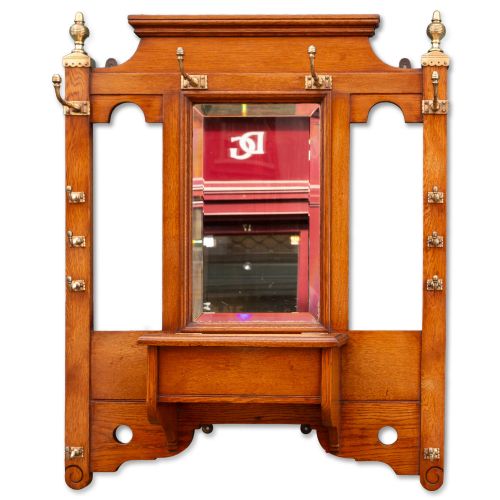
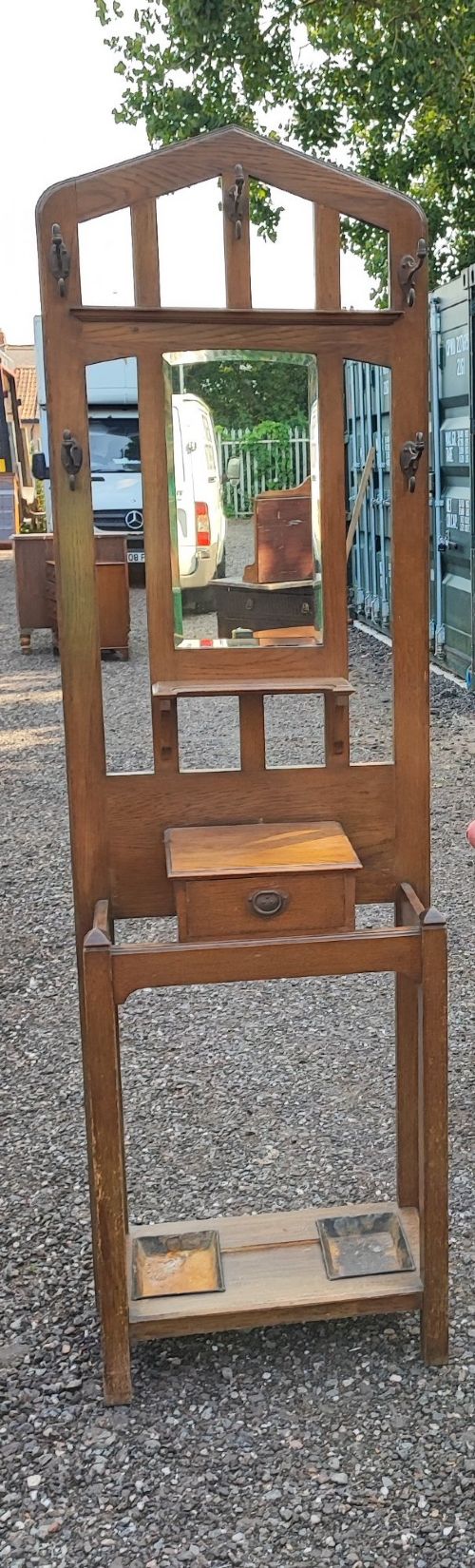
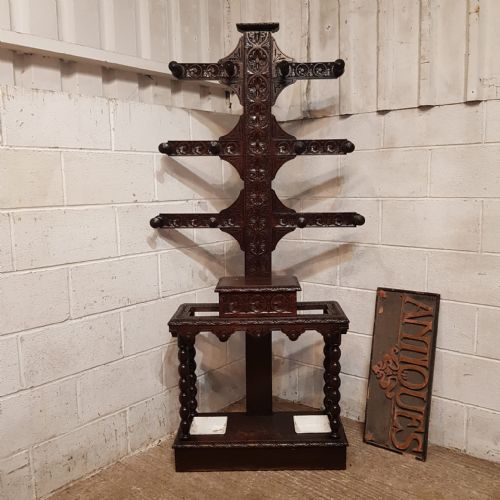
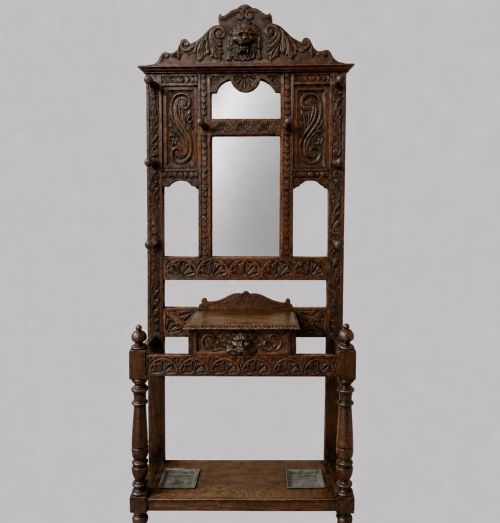
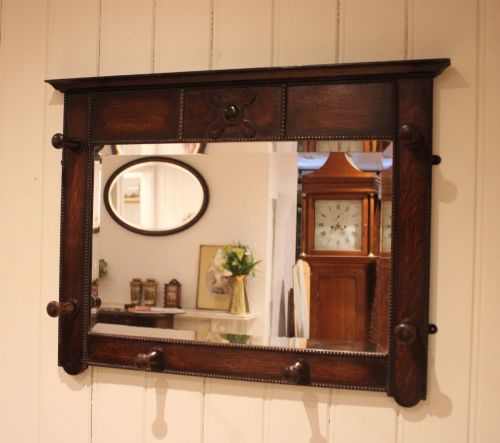
A victorian oak hat rack appears in various configurations, ranging from compact wall-mounted boards to large freestanding hall stands complete with mirrors and umbrella wells. The majority seen here date from the nineteenth century into the early twentieth century, utilising sturdy oak timber to bear the weight of heavy coats and hats.
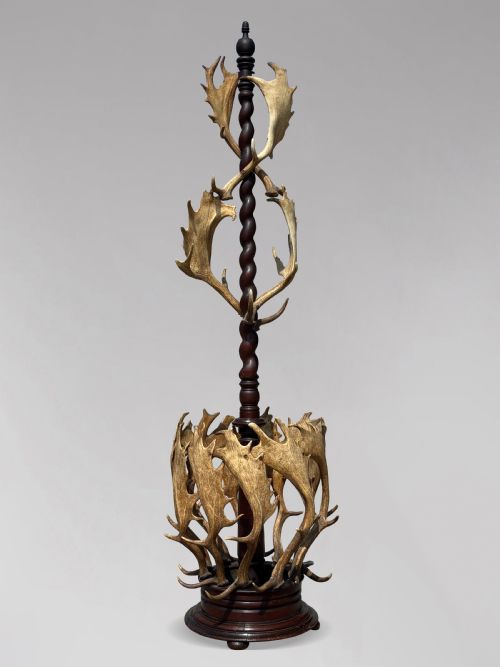
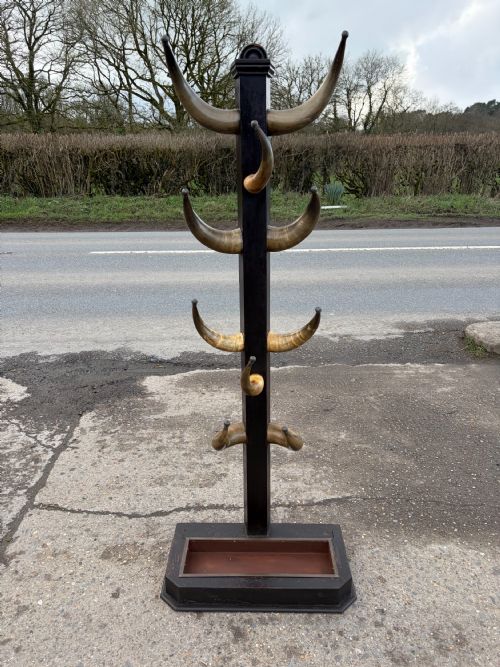
Makers produced these pieces for domestic hallways, incorporating stylistic influences such as Gothic Revival, Black Forest carving, and Flemish designs. Many examples integrate decorative elements like ceramic details, brass fittings, and animal horns into the wooden frame.
Materials and construction
Carpenters built these items primarily from solid oak, sometimes utilising ebonised finishes or golden oak tones to suit domestic interiors. Metal components such as brass, iron, and bronze form the hooks and rails, secured directly to the timber backboards.
Carved decoration often defines the panels, featuring foliage, Green Man motifs, or animal forms executed by hand. Additional materials like cow horn, glass, and ceramic inserts appear on specific regional and stylistic variants.
Designs range from compact wall mirrors with integrated hooks to large freestanding Flemish hall stands.
Evaluating craftsmanship
Quality rests in the depth and execution of the woodcarving, where crisp hand-chiseled details distinguish superior examples from simpler machine-cut production. The choice of hardware matters greatly, as heavy cast brass or integrated ceramic hooks indicate a higher grade of manufacture than thin stamped metal.
Structural integrity relies on the retention of original joints and backing boards, which must support the considerable leverage exerted by hanging garments over decades of daily use.
J. Parker of Woodstock·Fischel
The Victorian Oak Hat Rack Glossary
- Hallstand
- A large freestanding piece of furniture designed for an entrance hall, combining a hat rack, coat hooks, mirror, and umbrella stand. These items organise outerwear and provide a final check of appearance before leaving the house.
- Green Man
- A sculptural architectural ornament depicting a human face disgorged from foliage or entirely made of leaves. This motif appears frequently on carved wooden furniture from the nineteenth century.
- Gothic Revival
- An architectural and decorative style drawing inspiration from medieval forms, characterised by pointed arches, heavy mouldings, and serious proportions. Pieces in this aesthetic often display strong vertical lines.
- Bentwood
- Wood softened by steam or boiling water and then bent into curved shapes under pressure. This technique creates light yet resilient frames for hats and coats.
- Flemish style
- A decorative manner originating from Flanders, noted for exuberant scrollwork, deep relief carving, and robust proportions. It became popular in large nineteenth-century domestic furnishings.
Victorian Oak Hat Rack: Frequently Asked Questions
How do I mount a wall rack safely?
Wall-mounted racks require solid fixing into masonry or timber studs behind the plaster to support the heavy weight of coats and hats. Screws should pass directly through pre-bored holes in the oak backplate.
Ensure the selected fixings match the wall type to prevent the board pulling loose under daily strain.
What is the difference between a hallstand and a hat rack?
A hallstand stands independently on the floor and typically includes an integrated mirror, umbrella retention trays, and storage compartments alongside the coat hooks. A hat rack is generally a more compact board designed to mount directly onto a wall.
Both items served the same domestic purpose of receiving outdoor garments in the entrance hall.
How should I clean antique oak furniture?
Dust the timber regularly with a dry, soft cloth to prevent particulate buildup in the carved recesses and around the metal hooks. Apply a quality beeswax occasionally to nourish the oak grain and maintain the surface sheen.
Avoid liquid cleaners or silicone-based polishes, which can damage historic finishes and attract further grime.
Are the hooks usually original to the piece?
Many pieces retain their original brass, iron, or ceramic hooks, showing consistent wear and patination matching the timber backplate. Replacements do occur due to lost hardware over long periods of domestic use.
Look for matching screw types and undisturbed wood around the fixing points to determine originality.