





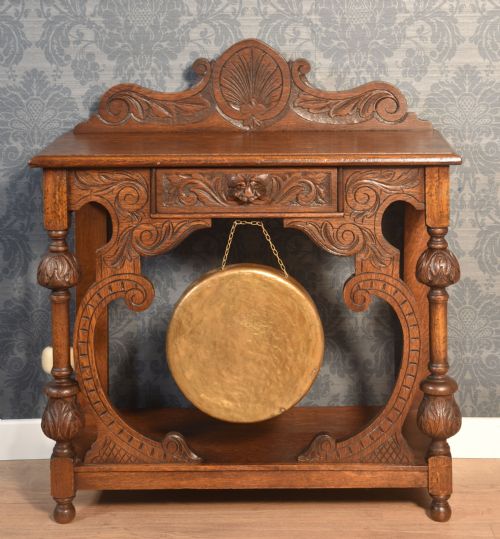


Victorian Oak Gong
These robust victorian oak gong assemblies bring rich acoustics and period presence to a hall, combining solid timber frames with resonant metal.
Victorian Oak Gong
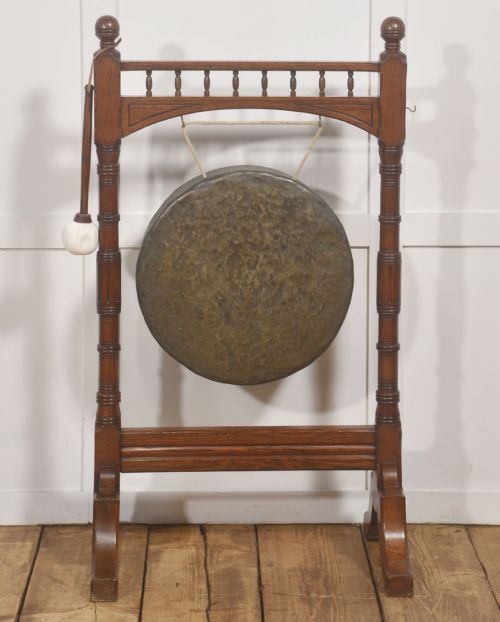
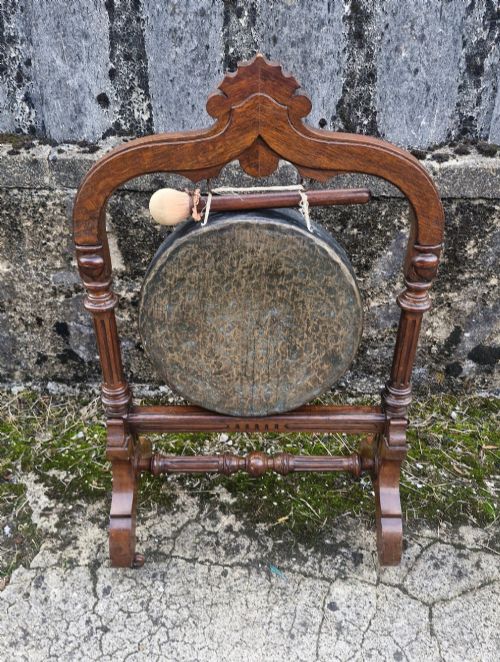
When searching for a victorian oak gong, you encounter striking instruments designed to summon households to meals or announce visitors. The pieces appearing here span the nineteenth century and early twentieth century, taking the form of wall-hanging frames, table-standing models, and combined hall furniture.
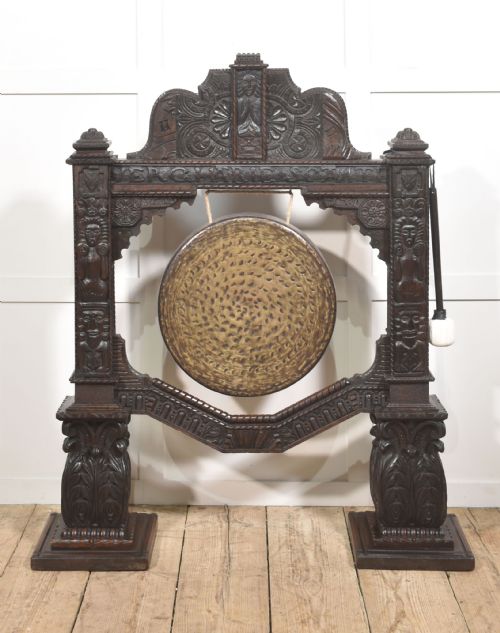
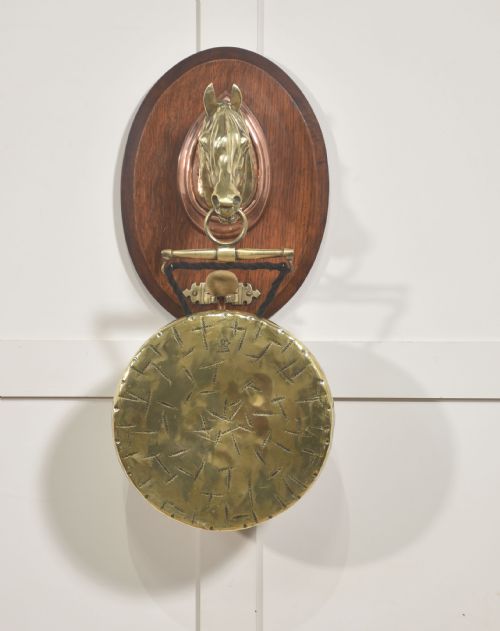
Most examples rely on a sturdy wooden structure paired with a suspended metal disc or chime. You will frequently find styles ranging from plain rustic framing to elaborate Gothic Revival carving and equestrian themes featuring brass mounts.
How they were made
The construction of these pieces relies heavily on seasoned oak shaped into wall brackets, table frames, or standing supports. Artisans joined these timbers using period woodworking joints, often incorporating carved details or structural chamfers.
Acoustic elements consist primarily of cast brass gongs suspended by rope, leather, or felt attachments. Additional decorative components utilise silver plate, cattle horn, and glass accents to enhance the visual impact of the assembly.
Victorian Oak Gong Retail Price Guide 2026
Typical asking prices for victorian oak gong among the pieces listed under this phrase on Sellingantiques today, from the lower quarter to the upper quarter. They describe what is for sale here now, not the wider market.
The listings show periods spanning from 1890 through the Victorian era up to 1910, alongside materials like horn, felt, and rope.
What varies in quality
Quality in these instruments depends upon the depth and crispness of the timber carving and the architectural ambition of the frame. Simpler upright stands contrast with monumental carved examples and specialised Gothic Revival designs.
The resonance and thickness of the brass disc dictate the acoustic performance. Superior pieces integrate complementary materials like silver plate and horn mounts with balanced proportions.
Winterhalder and Hofmeier
The Victorian Oak Gong Glossary
- Gong
- A suspended metal disc struck with a mallet to produce a deep resonant note. It forms the acoustic centre of every assembly.
- Gothic Revival
- An architectural and decorative style drawing on medieval forms, featuring pointed arches and heavy carved tracery. This aesthetic frequently frames nineteenth-century dinner gongs.
- Silver Plate
- A thin layer of silver applied to a base metal mount or horn fitting. It provides a bright contrast against the dark timber.
- Table Gong
- A compact version designed to sit upon a surface rather than hang from a wall or stand independently.
Victorian Oak Gong: Frequently Asked Questions
How were dinner gongs used?
Households struck the suspended metal disc with a mallet to signal the serving of meals. They also served as hall summonses for guests and residents.
The deep resonant tone carried through large Victorian houses, making them practical communication tools before modern bells became widespread.
Where should I place a table gong?
These pieces suit entrance halls, sideboards, or large living spaces where their timber frames complement period furniture. Ensure the hanging mechanism has adequate clearance to allow the metal disc to vibrate freely.
Keep them away from damp areas to protect the wooden frames and the suspending rope or leather straps.
What styles are common in oak gongs?
Gothic Revival designs feature heavily, displaying pointed arches and deep carved panels. Rustic interpretations and equestrian themes with brass horse mounts also appear frequently.
The aesthetic choice usually reflects the wider interior tastes of the nineteenth century, matching the heavy oak furniture of the period.
How do I identify a Victorian piece?
Look for construction markers such as traditional joinery, dense oak framing, and patination accumulated over the decades. The listed items span the nineteenth century and early twentieth century.
Stylistic cues like Gothic Revival carving and brass mounts help separate these period examples from later reproductions.