


Victorian Novelty Silver Pepper
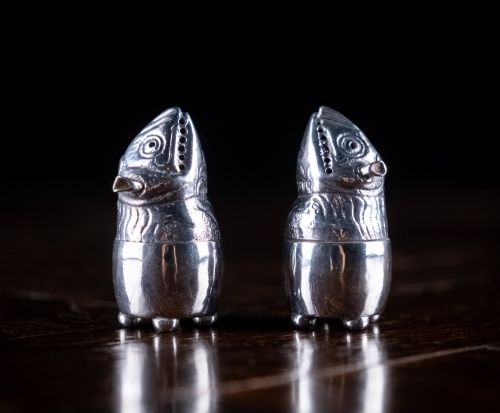
These Victorian novelty silver pepper pots turn a dining table into a menagerie of owls, dogs, chicks and whimsical figures.
Victorian Novelty Silver Pepper
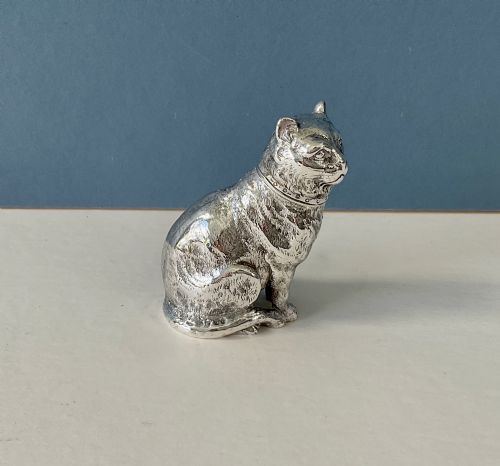
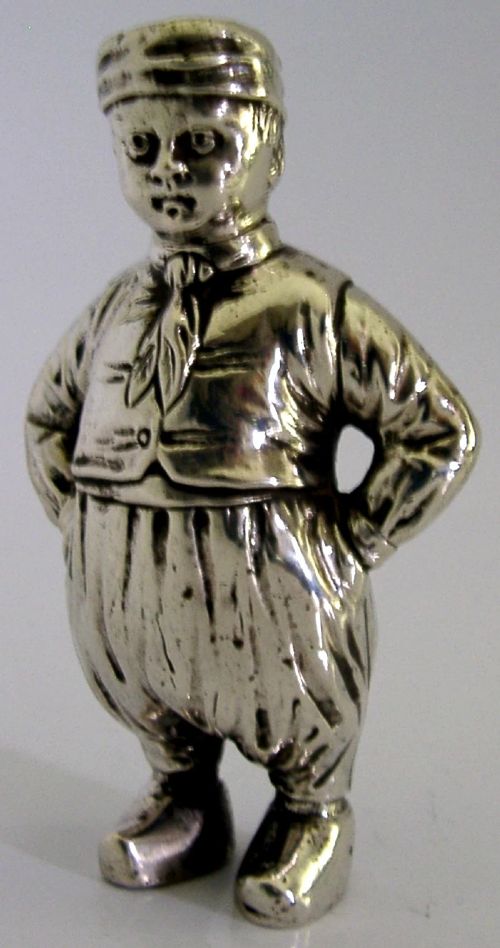
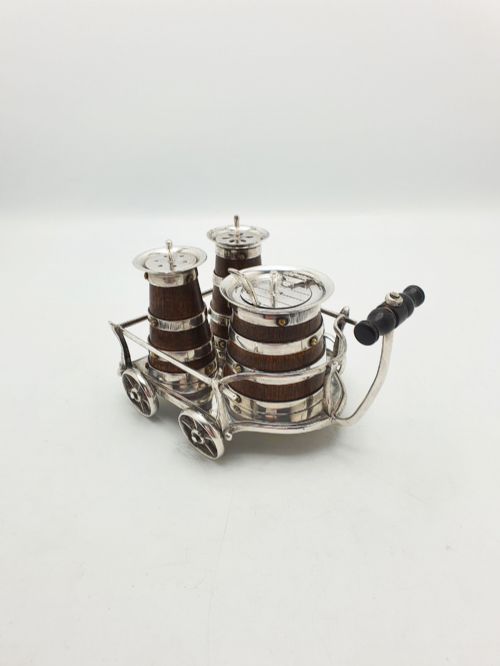
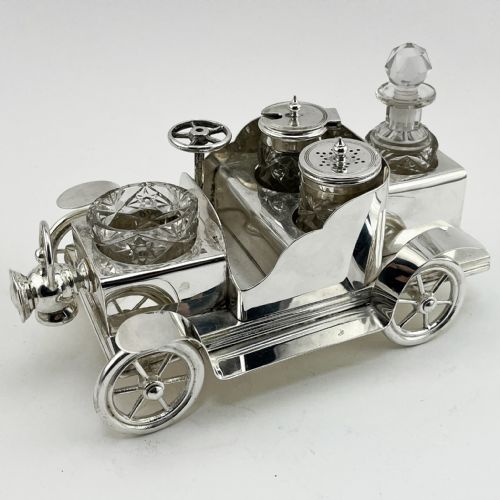
Victorian novelty silver pepper pots take the shape of animals, birds, human characters and everyday objects designed to amuse diners at the table. A buyer seeking these pieces encounters cunningly modelled owls, chicks, dogs and cats alongside more unusual forms such as oak barrels, carriages, milk churns and knight's heads.
The selections span the Victorian and Edwardian periods, stretching from the mid-nineteenth century into the early twentieth century. Most examples appear as single pepperettes or matched pairs, occasionally joining broader cruet sets and condiment assemblies.
Makers utilised realistic animal anatomies and playful caricatures to transform a simple dining accessory into a conversation piece. The designs range from fierce creatures like dragons down to domestic pets and farmyard figures.
Factors of Quality
Quality rests in the crispness of the casting and the naturalism or charm of the model. Pieces by known makers show finer detail in engraving and a heavier gauge of metal, whereas lesser examples lose definition in fur and feathers.
The retention of original hallmarks and working parts, such as snug-fitting slip-in heads or secure screw bases, dictates the desirability of a piece among collectors.
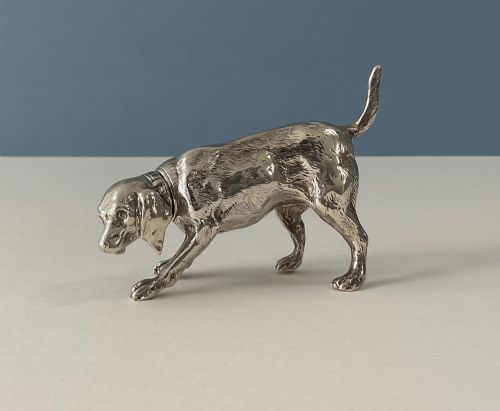
Mr Punch's faithful dog Toby stands ready as a silver pepper pot, guarding the dining table with a stiff collar.
Frederick Brasted·Sampson Mordan·Thomas Johnson·Mappin & Webb·George Unite·Haseler Brothers
The Victorian Novelty Silver Pepper Glossary
- Pepperette
- A small container designed specifically for holding and shaking ground pepper onto food. These often take miniature forms.
- Cruet Set
- A matched assembly of cruets holding condiments such as pepper, salt and mustard for the dining table.
- Pomander
- A spherical container holding aromatic substances, sometimes adapted in Victorian silver to serve dual condiment functions.
- Sterling Silver
- A silver alloy containing ninety-two point five percent silver by mass, standard for quality British tableware.
- Silver Plate
- A layer of silver applied to a base metal core, frequently utilised for larger novelty cruet assemblies.
Victorian Novelty Silver Pepper: Frequently Asked Questions
How do you fill a novelty pepper pot?
Most figural pepper pots feature a removable head, a base plug or a threaded section that unscrews to allow access to the internal chamber.
Owners fill the cavity carefully before securing the closure tightly to prevent leaks during use.
Are these silver peppers safe to use?
These antique items serve meals today just as they did in the nineteenth century, provided the interior is clean and sound.
Silver naturally resists bacteria, though modern users often keep them primarily for display or gentle occasional dining.
How do I date a silver novelty pepper?
British hallmarked pieces carry stamped lion passant symbols, date letters and town marks that pinpoint the exact year of assay.
Stylistic cues and registered design numbers also help establish the manufacturing period when hallmarks are rubbed.
Why are animals common in novelty silver?
Victorian diners delighted in whimsical tablewares that brought humour and conversation to formal meals and dinner parties.
Animals and caricatures allowed silversmiths to blend fine craftsmanship with playful domestic themes.