



Victorian Novelty Caddy
A victorian novelty caddy brings mischievous wit to the Victorian interior through ingenious disguise, transforming everyday storage into conversation pieces shaped as barrels, weights, and caps.
Victorian Novelty Caddy
A victorian novelty caddy encapsulates the Victorians' delight in playful domestic objects that concealed their actual utility behind theatrical forms. These pieces frequently take unexpected shapes, mimicking utilitarian items like lead weights or miniature chests of drawers rather than conforming to standard domestic boxes.
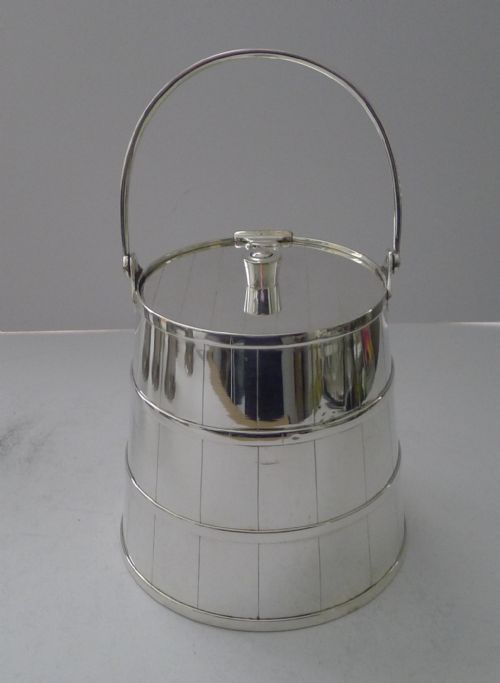
The versions most commonly met on this page combine silver plate and oak, spanning periods from the late nineteenth century into the early twentieth century. Alongside traditional tea caddies moulded as jockey caps, the selection embraces biscuit boxes shaped as drums and carriages designed for practical dining room use.
Makers drew inspiration from transport, everyday weights, and literary volumes to amuse guests during tea service or card games. Each object merges strict Victorian functionality with a distinct sense of theatricality, ensuring the container itself remained as engaging as its contents.
Materials and construction
Silversmiths and metalworkers utilised heavy silver plating over base metals to achieve durable, gleaming exteriors that could withstand regular dining table use. Sterling silver also appears on smaller personal items, whilst robust hardwoods such as oak and mahogany formed the sturdy structural cores of larger biscuit barrels.
Detailed craftsmanship involved combining turned wood with stamped or cast metal mounts, hinged mechanisms, and frosted crystal inserts. Artisans employed precision joinery and specialist casting to ensure moving parts like lids, wheels, and miniature drawers functioned smoothly.
Victorian Novelty Caddy Retail Price Guide 2026
Typical asking prices for victorian novelty caddy among the pieces listed under this phrase on Sellingantiques today, from the lower quarter to the upper quarter. They describe what is for sale here now, not the wider market.
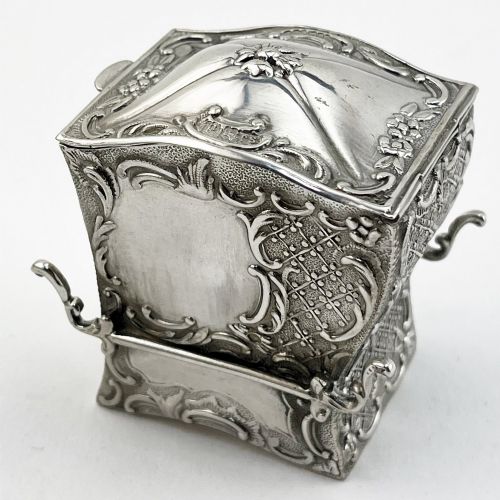
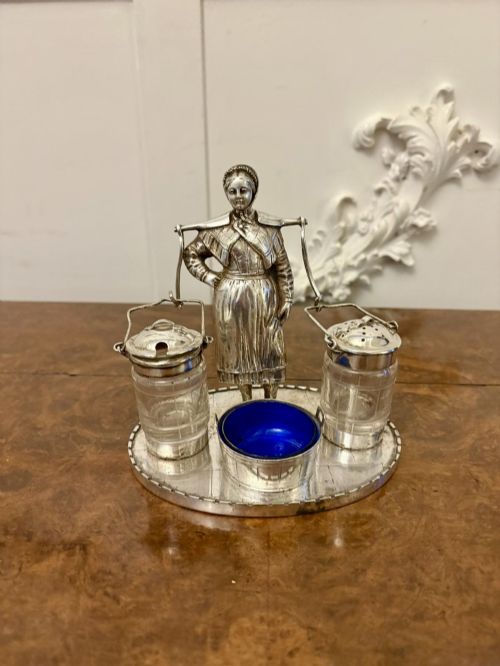
The object forms on this site range from biscuit barrels and tea caddies to sedan chair playing card cases and carriage cruet sets.
Assessing quality
Quality rests upon the cleverness of the disguise and the crispness of the casting, distinguishing mundane boxes from masterworks of domestic wit. Superior examples display intricate detailing on elements like carriage wheels, jockey cap peaks, or grain-weights, where every screw and texture mimics the real object.
The integrity of the internal fittings, such as original glass liners in biscuit barrels or untouched silver plating, dictates the standing of a piece. Finer items retain their original mechanisms and structural stability, showing harmonious proportions that prevent the novelty from overwhelming the object's core utility.
Huntley and Palmers
The Victorian Novelty Caddy Glossary
- Silver plate
- A thin layer of pure silver fused to a base metal core, usually copper or nickel brass. This technique allowed Victorian makers to produce large, decorative items at a lower cost than solid silver.
- Biscuit box
- A covered container designed specifically to keep dry baked goods crisp at the dining table. Victorian examples frequently featured mechanical roll-top lids or hinged barrel designs.
- Cruet set
- A matched collection of glass bottles or jars held in a metal frame for condiments and sauces. Novelty variants often mounted these within miniature transport forms like carriages or wagons.
- Frosted crystal
- Glass treated with acid or sandblasting to create a matte, translucent surface. It was frequently utilised for barrel dispensers to obscure contents while diffusing light softly.
- Regency
- A British design style spanning the early nineteenth century defined by classical restraint and elegance. Pieces from this era often influenced later Victorian revivals of miniature sideboards and tea containers.
Victorian Novelty Caddy: Frequently Asked Questions
What was a victorian novelty caddy used for?
These pieces served practical storage functions on dining tables, sideboards, and parlour desks. They held tea leaves, biscuits, or playing cards whilst entertaining guests.
The disguise provided an element of surprise and amusement during social gatherings, turning routine domestic hospitality into a theatrical display.
How do I clean silver plated novelty items?
Dust the piece gently with a soft, lint-free cloth to remove surface particles. Avoid harsh chemical dips that can strip the silver plating from the base metal.
Use a specialist silver polish sparingly and only on robust metal areas, taking care to keep abrasive compounds away from wood, glass, and fabric linings.
How can I tell a Victorian piece from an Edwardian one?
Victorian pieces typically display heavier ornamentation, deeper chased details, and a distinct penchant for heavy industrial or domestic forms like weights and barrels. Edwardian items often lean towards lighter, airier interpretations with refined silver work.
Examining registration numbers, hallmarks, and accompanying materials helps confirm the exact decade of manufacture.
Are these objects safe to use daily?
Most of these items remain structurally sound for gentle everyday use in modern homes. However, delicate hinges, original glass liners, and thin silver plating require careful handling to prevent wear.
It is best to treat them as functional antiques, avoiding dishwashers and harsh use to preserve their mechanical integrity and finish.