






Victorian Night Table
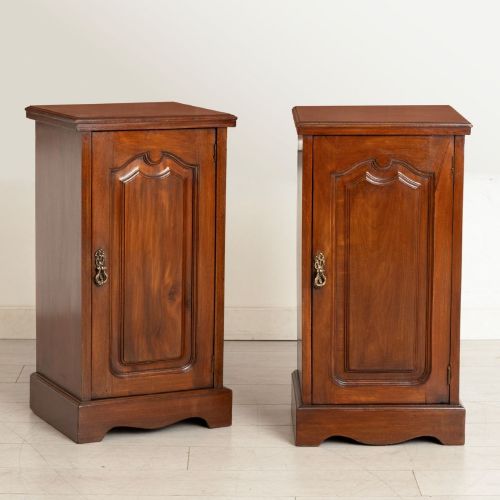
These pieces known as a victorian night table provide practical bedside storage and surface space while anchoring a bedroom scheme in nineteenth-century craftsmanship.
Victorian Night Table
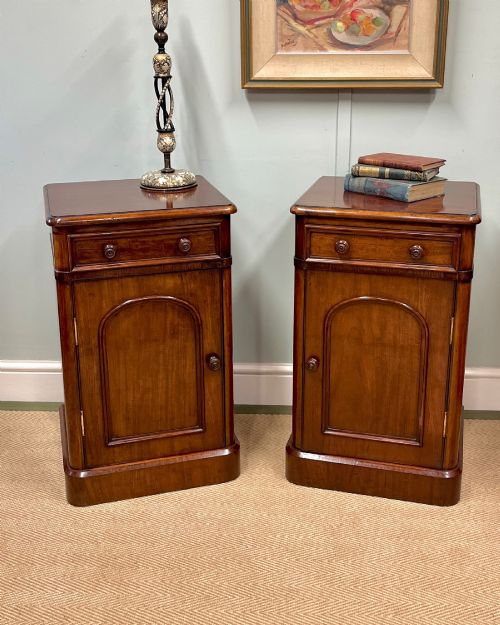
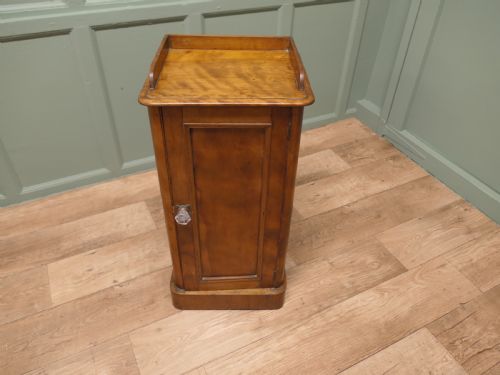
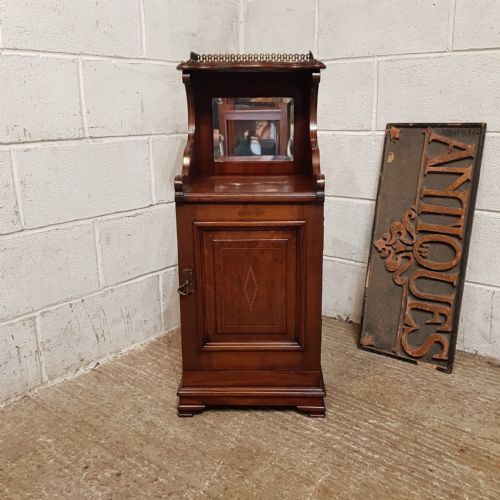
A victorian night table serves as a functional bedside companion, often housing a small enclosed cupboard or drawer for nighttime necessities. The selections here encompass nineteenth-century bedside cabinets, pot cupboards, and pedestal lockers designed to sit beside a bed.
Mahogany forms the backbone of these offerings, appearing frequently alongside rosewood, walnut, and exotic hardwoods. Makers constructed these items during periods spanning the nineteenth century up to the early twentieth century, reflecting various revivals including Georgian and French styles.
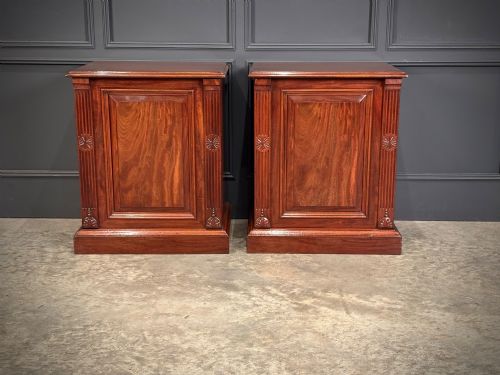
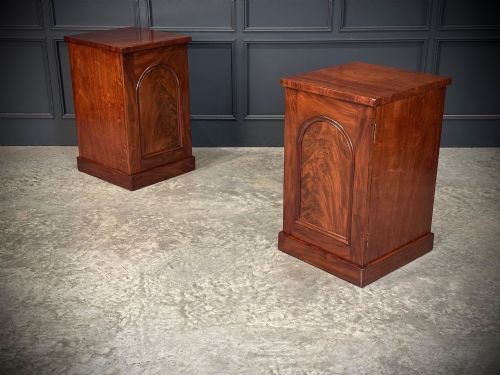
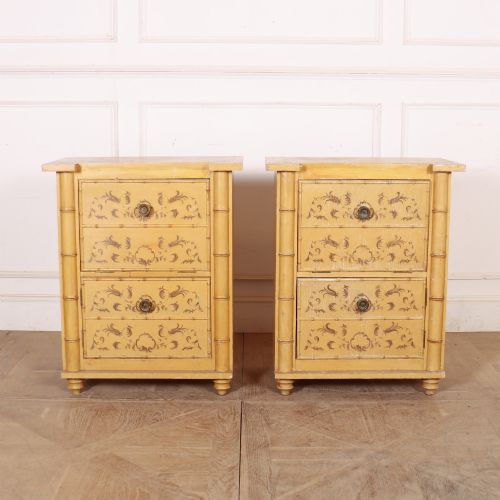
Formations range from single door cupboards to taller bedside chests and open end tables. Many pieces turn up in pairs, offering symmetrical proportions for twin or double bedroom arrangements.
Judging quality
The refinement of the timber selection dictates much of the visual success, particularly where matched flame mahogany veneers create balanced grain patterns across door panels. Superior examples exhibit crisp dovetail joints in the drawer construction and tight, flush fitting cabinet doors.
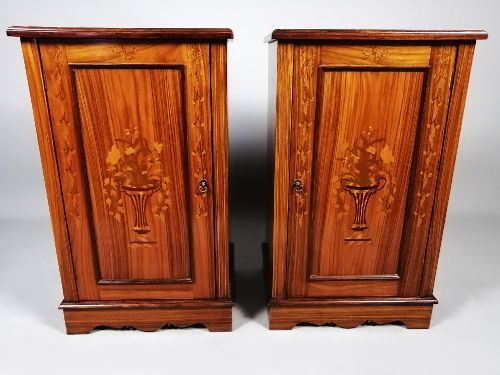
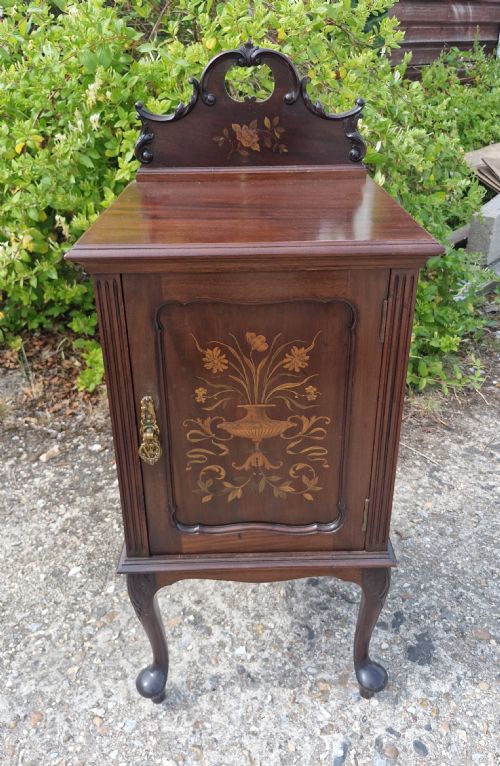
Subtlety of inlaid marquetry and the retention of original brass hardware elevate certain pieces above standard utility items. The integration of secondary exotic hardwoods points to workshops that invested greater care into internal construction and exterior finish.
Mahogany and walnut dominate the timber selections across these nineteenth-century bedside cabinets and pot cupboards.
Howard & Sons·Holland & Sons·Edwards & Roberts
The Victorian Night Table Glossary
- Pot cupboard
- A small bedside cabinet originally built to house a chamber pot behind a single panelled door. These items now function primarily as general bedside storage.
- Flame mahogany
- A veneer cut from timber where the branches join the main trunk, producing a distinctive flickering flame pattern. Cabinet makers used this to create striking visual movement on door fronts.
- Marquetry
- The art of applying decorative pieces of veneer to a structure to form intricate pictorial or geometric designs. Artisans utilised contrasting timber shades to achieve depth.
- Night locker
- An alternative term for a bedside cabinet or cupboard used during the nineteenth century. These secure units kept personal items enclosed beside the bed.
- Stringing
- A thin strip of contrasting wood inlaid into a channel on the furniture surface. This technique creates delicate borders around drawer fronts and table tops.
Victorian Night Table: Frequently Asked Questions
What is a pot cupboard?
A pot cupboard is a compact nineteenth-century bedside cabinet originally designed to conceal a chamber pot within its enclosed lower section.
Today, buyers utilise these sturdy wooden cupboards to store books, charging cables, and personal items beside the bed while maintaining a tidy surface.
Are these tables sold in pairs?
Many listings feature matching pairs of bedside cabinets, which suit bedrooms requiring symmetrical furniture arrangement on both sides of the bed.
Single pieces also appear frequently, offering an adaptable option for smaller spaces or eclectic interior schemes.
What woods were used?
Mahogany dominates the selection, appearing in both solid form and as figured flame mahogany veneer. Workshops also worked with rosewood, walnut, satin birch, and various exotic hardwoods.
Decorative variations include inlaid marquetry and painted finishes, alongside unusual treatments like faux bamboo.
How do I date these cabinets?
Dating relies on timber choices, construction methods, and stylistic cues such as aesthetic movement details or Georgian revival proportions. Nineteenth-century pieces often display hand-cut dovetailing and traditional timber seasoning.
Makers' stamps or marks when present provide definitive attribution to workshops active during the Victorian era.