



Victorian Naval Pictures
Victorian naval pictures capture the drama of maritime life through oil paintings, woolwork embroideries, and framed prints.
Victorian Naval Pictures
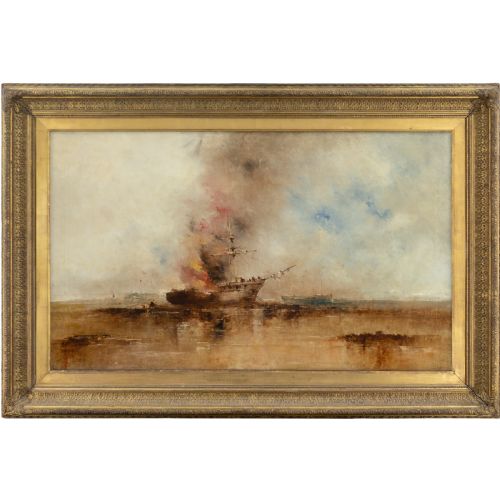
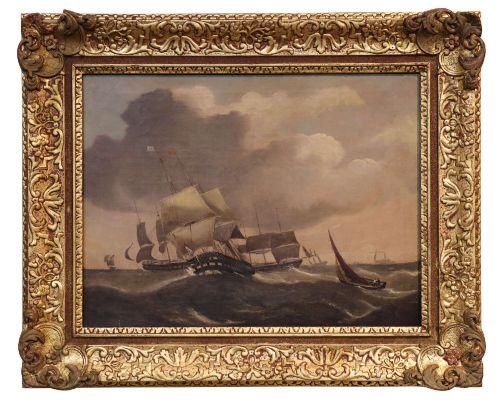
Victorian naval pictures encompass framed artwork, oil paintings, and textile wall art detailing ships and maritime scenes. When you search for victorian naval pictures, you encounter both fine art canvases and folk art works created during the nineteenth century.
The selections on this page feature oil on canvas paintings alongside sailors' woolwork embroideries, often called woolies. These pieces record specific vessels, royal yachts, and historic events such as fleet reviews.
Makers and artists range from named painters to anonymous folk artists creating tactile representations of ships. Common subjects include heavy seas, coastal views, and named vessels like the royal yacht HMY Victoria and Albert.
Materials and construction
Painters used oil on canvas, often housed within wood and giltwood frames, to capture coastal light and turbulent water. These works utilise pigments applied to stretched canvas to depict marine engagements and shipping scenes.
Victorian Naval Pictures Retail Price Guide 2026
Typical asking prices for victorian naval pictures among the pieces listed under this phrase on Sellingantiques today, from the lower quarter to the upper quarter. They describe what is for sale here now, not the wider market.
Listings feature Victorian oil on canvas paintings, woolwork embroideries, and nineteenth-century ship lithographs framed in wood and giltwood.
Judging quality in marine works
Quality in oil paintings rests upon the handling of light, the accuracy of maritime rigging, and the dynamic rendering of water in heavy seas. Finer canvases show a sophisticated command of atmospheric perspective and tonal depth.
In woolwork embroideries, excellence depends on the density of the stitching, the preservation of the original yarn colours, and the detail captured in the depiction of the sails and flags.
William McAlpine·Ebeneezer Colls·William Langley·James Hardy
The Victorian Naval Pictures Glossary
- Woolie
- A sailors' woolwork embroidery depicting ships, executed using various stitching techniques on canvas. These works represent a distinct form of maritime folk art.
- Giltwood
- Wood carved and coated with gold leaf or a gold-coloured finish, frequently used for traditional picture frames. It provides a decorative border for oil paintings.
- Marinescape
- A painting or artwork depicting a marine subject, particularly ships and the sea. These scenes focus on naval vessels or coastal shipping.
- Lithograph
- A print produced through the process of planographic printing from a stone or metal plate. Set pieces often include lithographic reproductions of warships.
Victorian Naval Pictures: Frequently Asked Questions
What are sailors' woolies?
Sailors' woolies are embroidered textile pictures created by nineteenth-century sailors using coloured wool yarns. They typically depict named ships and naval vessels under full sail.
These pieces often incorporate textured stitches to give dimension to the hulls, waves, and rigging. They serve as a primary example of maritime folk art from the period.
How do I hang oil paintings safely?
Hang oil paintings away from direct sunlight and fluctuating heat sources to protect the canvas and wood frame. Ensure the wall fixings match the weight of the giltwood or wood frame.
Keep the environment stable to prevent the canvas from slackening or the paint layers from cracking over time.
How do I identify a nineteenth-century marine painting?
Examine the materials, stretcher frames, and canvas types common to the period, along with any signatures or dates. Subject matter often references historical events like fleet reviews or specific named ships.
Style also offers clues, ranging from academic oil paintings to detailed folk art embroideries.