


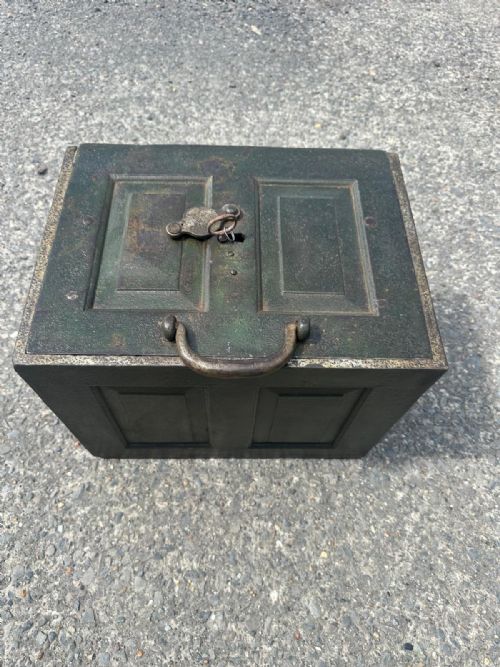


Victorian Money Box
A victorian money box is a solid domestic coin receptacle shaped as a cottage, animal, or safe, prized for period character.
Victorian Money Box
A victorian money box spans utilitarian iron safes and decorative ceramic forms made to encourage thrift.
The commonest examples met on this page include cast iron mechanical banks, Staffordshire pottery cottages, and heavy metal strongboxes.
Makers shaped these functional objects in styles ranging from English Country Folk Art to industrial 19th-century designs.
How they were made
Foundries cast iron and bronze into sturdy locking banks, safes, and novelty mechanical figures.
Potters shaped earthenware and terracotta into cottages and animal forms, finishing them with lead glaze, enamel, or paint.
Woodworkers constructed boxes in mahogany and walnut, incorporating brass mountings and studwork.
Victorian Money Box Retail Price Guide 2026
Typical asking prices for victorian money box among the pieces listed under this phrase on Sellingantiques today, from the lower quarter to the upper quarter. They describe what is for sale here now, not the wider market.
A surprising number of Victorian metal safes were disguised as stacked puzzle books to fool inquisitive guests.
What varies in quality
Quality rests on the integrity of original painted finishes and the complexity of mechanical or locking actions.
Finer items display crisp casting detail in iron and careful modelling in Staffordshire pottery rather than generic mass production.
John Harper Co.·Milners of Liverpool·Verwood Pottery
The Victorian Money Box Glossary
- Mechanical bank
- A cast iron coin container with moving parts that animate when a lever is pressed. These devices entertained users while collecting coins.
- Strongbox
- A heavy metal safe or lock box designed for secure storage. They often feature complex internal locking mechanisms.
- Staffordshire pottery
- Earthenware ceramics produced in the Staffordshire potteries, frequently modelled as cottages or animals. They typify domestic folk ornaments.
- Lead glaze
- A glossy coating applied to pottery before firing. It waterproofs the earthenware body and enhances surface colour.
Victorian Money Box: Frequently Asked Questions
How do mechanical money banks work?
Mechanical banks utilise internal springs and levers activated by placing a coin and pressing a trigger. This action sets figures in motion to deposit the money.
These pieces were produced primarily in cast iron during the later nineteenth century to encourage children to save.
Were these boxes meant for daily use?
Many sturdy iron safes and locked boxes served genuine security functions in Victorian homes and businesses. Other earthenware and novelty items functioned mainly as decorative mantelpiece ornaments.
Over time, utility shifted toward decorative display and domestic collection.
How do I distinguish pottery cottages from iron banks?
Pottery cottages employ earthenware clay with painted or lead glazed surfaces, originating from potteries like those in Staffordshire. Iron banks rely on metal casting and mechanical parts.
Material choice dictates the weight, sound, and visual character of each piece.
How should I care for painted iron pieces?
Painted cast iron requires dry indoor conditions to prevent oxidation and flaking of the original surface pigments. Gentle dusting preserves the remaining paint layer without moisture damage.
Avoid abrasive cleaners that strip historic finishes from the metal.