





Victorian Mirrored Breakfront Credenza
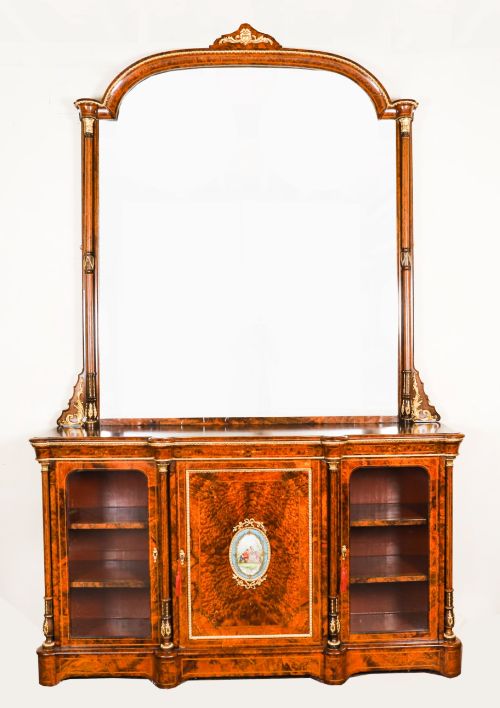
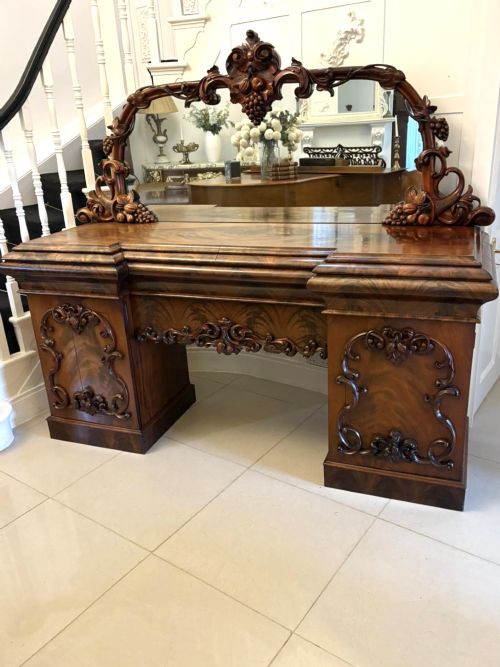
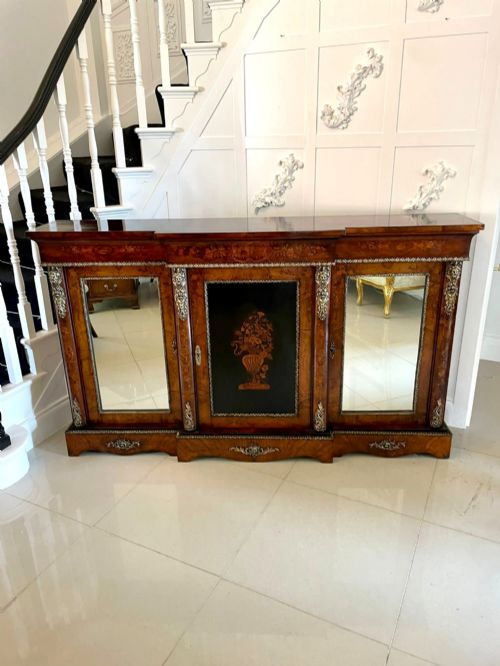
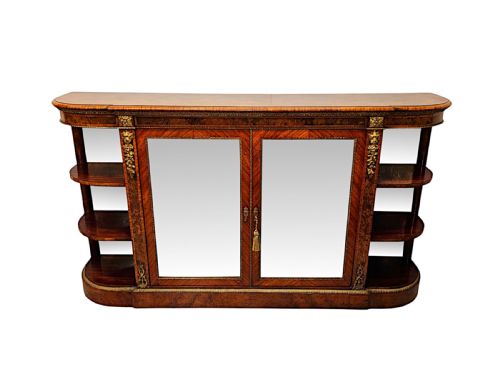
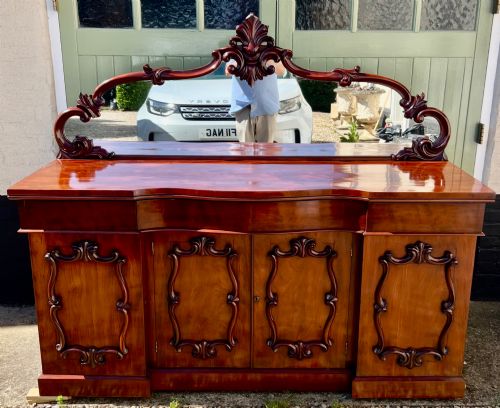
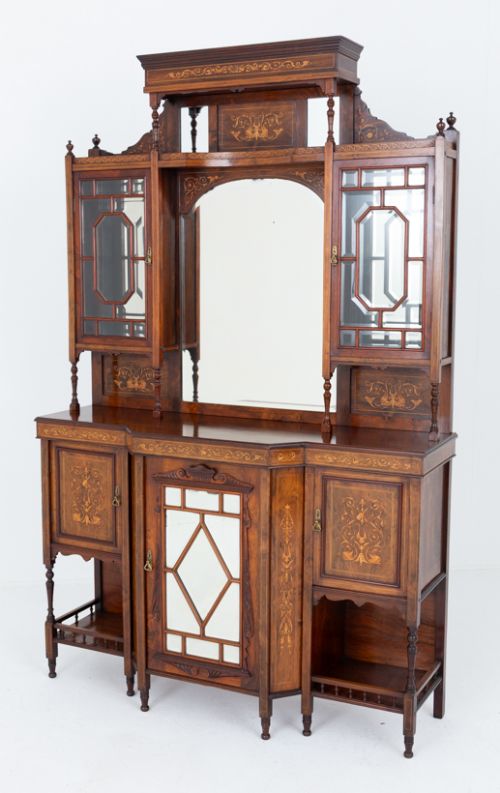
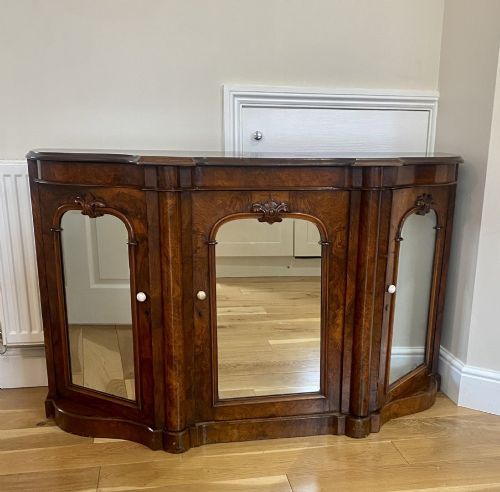
These substantial pieces are victorian mirrored breakfront credenza items that anchor a grand reception room with reflective glass and rich timber.
Victorian Mirrored Breakfront Credenza
A victorian mirrored breakfront credenza is a grand nineteenth-century cabinet designed for the principal rooms of large homes, combining generous storage with display surfaces. The form is defined by a central section that projects forward flanked by recessed wings, topped by significant vertical mirror glass.
The pieces appearing on this page date principally from the middle and late nineteenth century, spanning the eighteen-fifties to eighteen-nineties. Burr walnut, figured mahogany, and rosewood form the main timber vocabulary, often enriched with marquetry inlay and ormolu mounts.
While some examples lean towards display cabinets with glazed doors, others function as sideboards, chiffoniers, or pedestal credenzas. The mirrored back acts as a prominent architectural element across nearly all variants, designed to reflect light and interior ornament.
How they were made
Cabinetmakers selected highly figured timbers such as burr walnut, flame mahogany, and rosewood, laying thin veneers over stable secondary woods to achieve rich grain patterns. Marquetry inlay in satinwood and other contrasting timbers provided intricate floral and geometric decoration across the doors and panels.
Gilt bronze ormolu mounts were cast and chased to accentuate corners, pilasters, and friezes, while brass hardware secured doors and internal shelving. Silvered mirror glass was fitted into shaped wooden frames to form the characteristic back panels.
Victorian Mirrored Breakfront Credenza Retail Price Guide 2026
Typical asking prices for victorian mirrored breakfront credenza among the pieces listed under this phrase on Sellingantiques today, from the lower quarter to the upper quarter. They describe what is for sale here now, not the wider market.
Listings feature walnut, mahogany, and rosewood alongside glass and ormolu across Victorian periods.
What varies in quality
Quality rests in the selection of the timber veneers and the precision of the marquetry inlay, where finer examples display seamless botanical or geometric motifs without gaps in the contrasting woods. The weight and crispness of the cast ormolu mounts further distinguish higher-tier workshop output from standard commercial production.
Construction methods and proportions dictate the structural integrity, with superior pieces maintaining tight joints across the breakfront curves and employing thick, clear mirror glass. The integration of the mirror frame with the lower cabinet body shows the hand of skilled makers who balanced heavy architectural weight with refined detailing.
Collinson and Lock·Gillows·Howard and Sons
The Victorian Mirrored Breakfront Credenza Glossary
- Breakfront
- An architectural form where the central section of a cabinet projects forward ahead of the flanking side sections. This creates depth and visual rhythm across the piece.
- Ormolu
- Gilt bronze mounts applied to furniture for decorative effect. The metal is cast and then treated with gold to produce a bright metallic finish.
- Marquetry
- Decorative patterns formed by fitting together thin veneers of different coloured woods onto a solid ground. It is frequently seen on nineteenth-century cabinet doors and friezes.
- Burr walnut
- Timber taken from the warted growths on walnut trees, yielding complex swirling grain patterns. It was favoured by Victorian cabinetmakers for high-status surfaces.
- Chiffonier
- A low nineteenth-century sideboard or cabinet, typically equipped with shelving or a mirror back. The term often overlaps with credenza forms in Victorian listings.
Victorian Mirrored Breakfront Credenza: Frequently Asked Questions
How do I date a Victorian credenza?
Dating relies on observing the timber choices, mount styles, and overall construction methods recorded across the nineteenth century. Mid-Victorian examples often favour burr walnut with heavy ormolu, while late Victorian pieces frequently use rosewood and detailed marquetry.
Changes in mirror glass production and framing styles also help narrow the decade of manufacture. Examining the secondary woods inside the cabinet provides further clues to its production period.
Where were these cabinets placed originally?
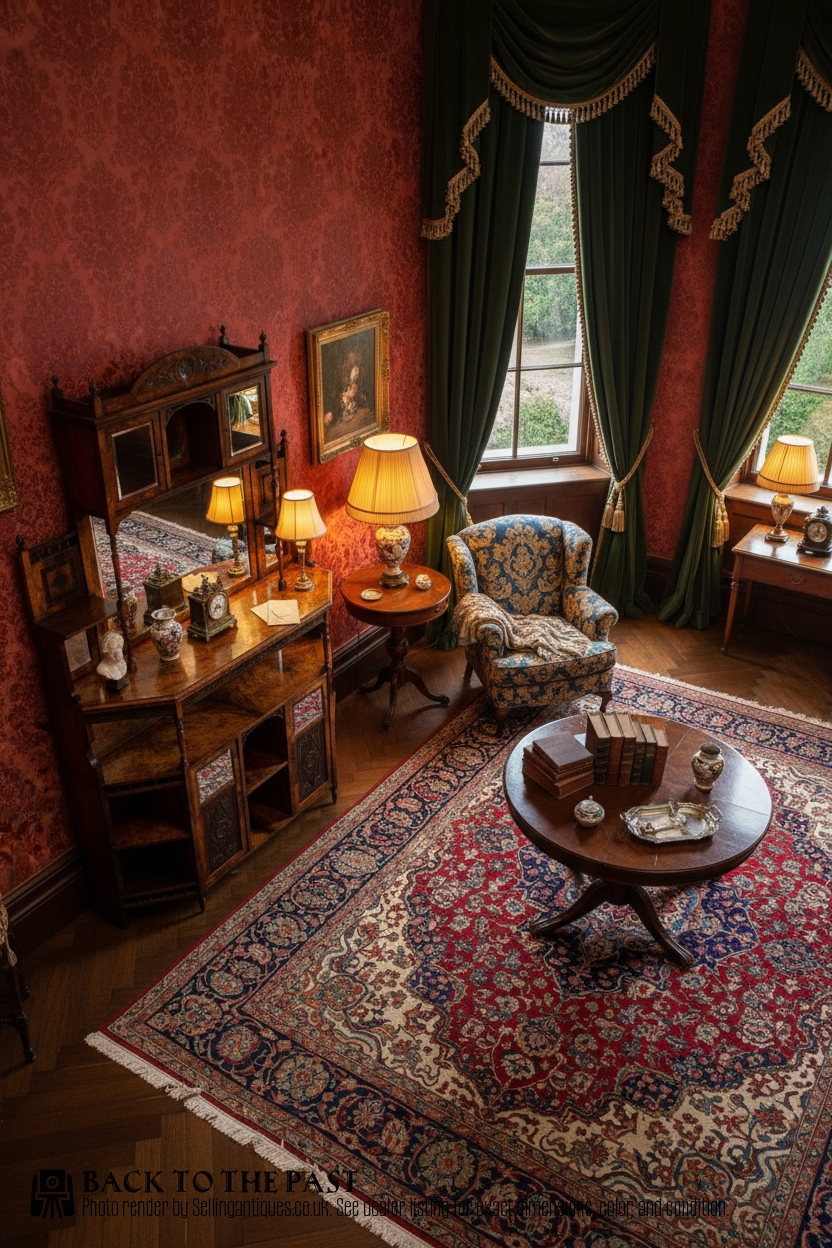
These large pieces stood against the principal walls of Victorian dining rooms, drawing rooms, or formal reception spaces. Their generous proportions and mirrored backs were intended to project status and reflect candlelight or daylight around the room.
The breakfront design allowed the cabinet to dominate a flat wall while offering varied depths for displaying porcelain, silver, or decorative objects.
How should I clean the ormolu mounts?
Ormolu mounts require gentle dusting with a soft, dry cloth to prevent the accumulation of dirt in the chased recesses. Avoid harsh chemical cleaners or abrasive polishes that can strip the original fire gilding from the bronze.
If the metal requires deeper cleaning, consult a specialist conservator who understands nineteenth-century gilt bronze surfaces.
Can I adjust the internal shelving?
Most nineteenth-century cabinets feature fixed internal wooden shelves or rudimentary support systems native to their original construction. Altering them can compromise the structural rigidity of the breakfront carcase.
It is best to work with the existing shelf heights when storing books, ceramics, or other collections inside the cabinet.