
Victorian Mirror Hall Stand
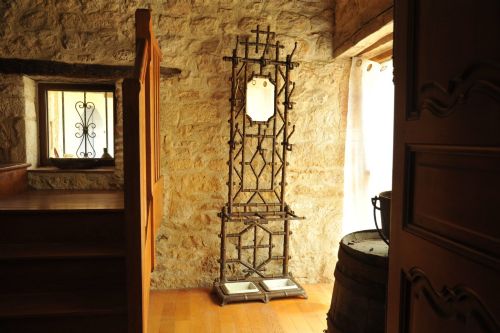
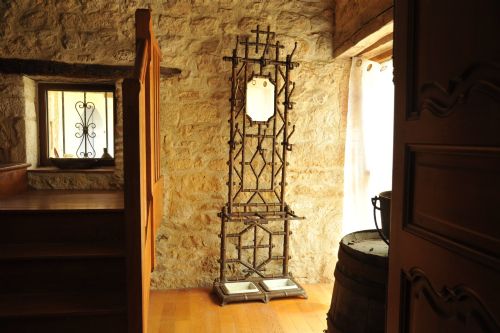
A victorian mirror hall stand meets the visitor in the entrance hall with a combination of glass, timber and hooks for daily use.
Victorian Mirror Hall Stand
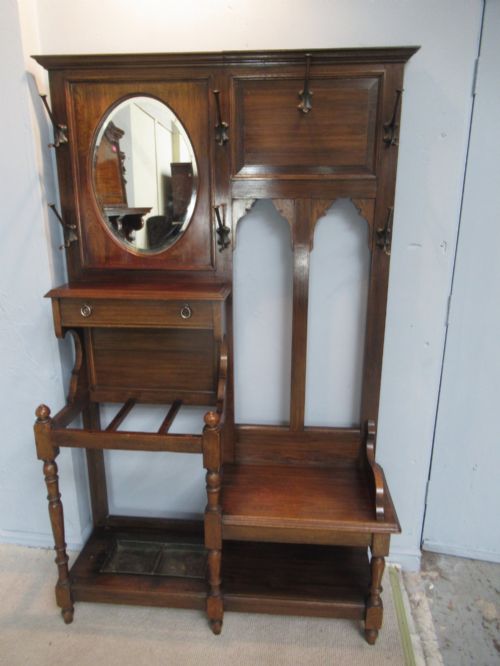
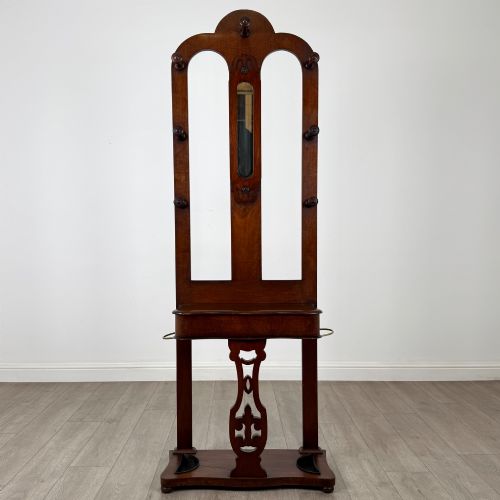
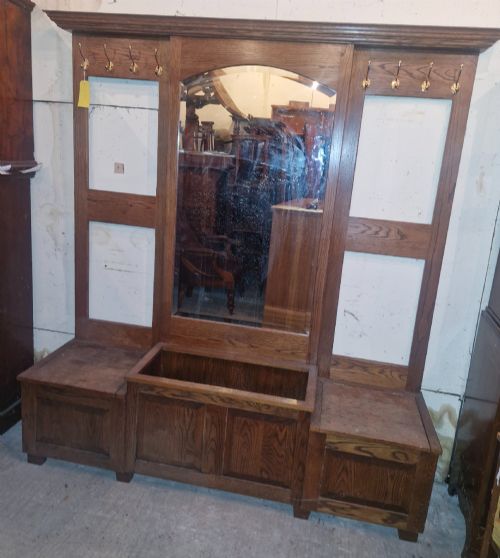
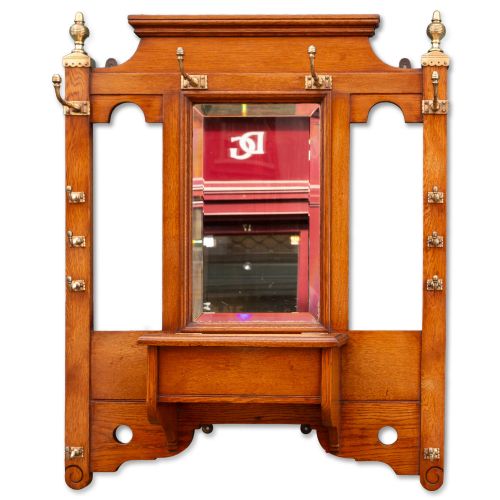
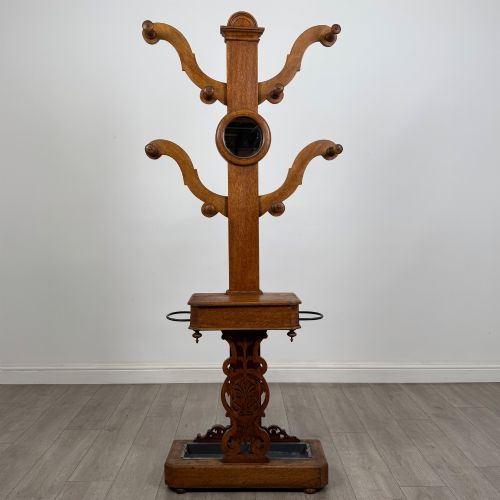
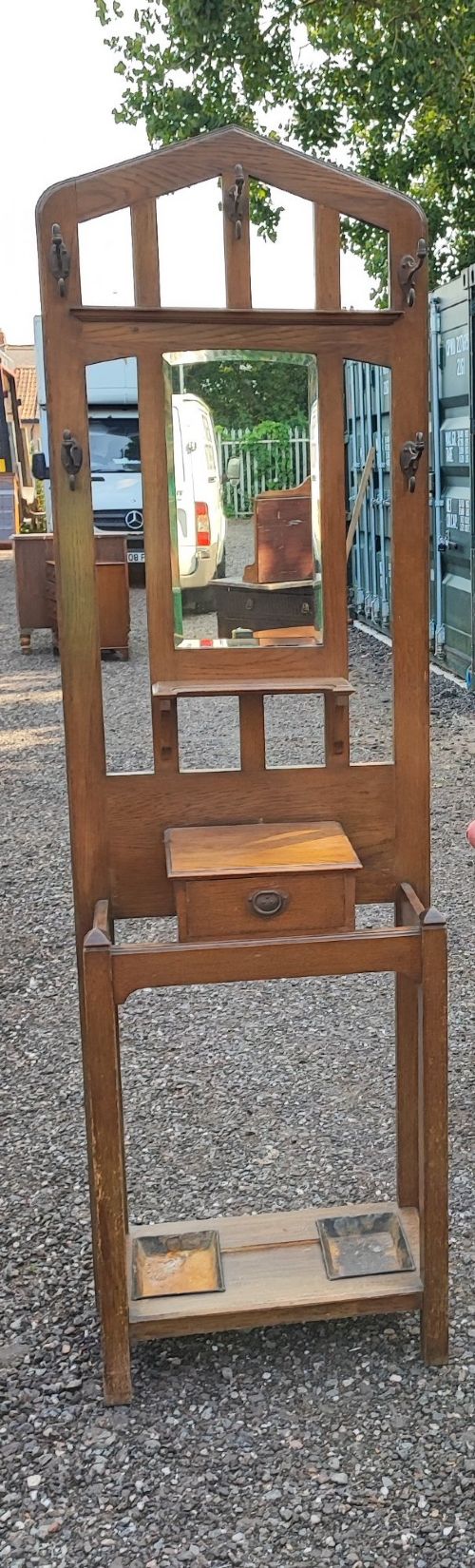
A victorian mirror hall stand serves the entrance hall by combining a central mirror with hat hooks, coat pegs and umbrella trays. These pieces date principally from the nineteenth century into the Edwardian period, appearing in timbers like mahogany, oak and walnut.
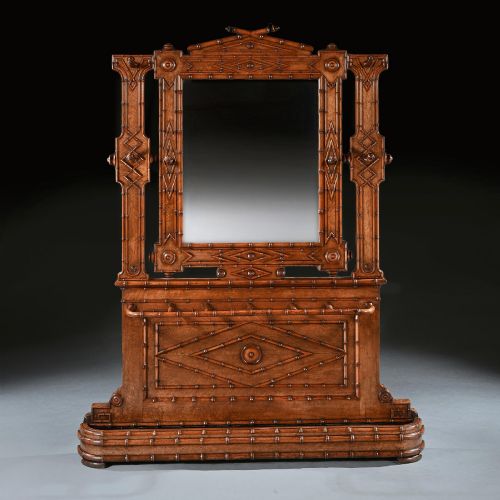
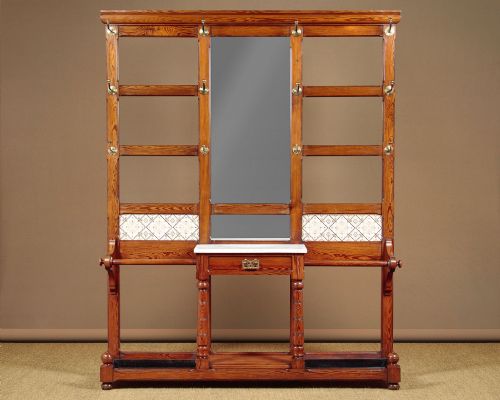
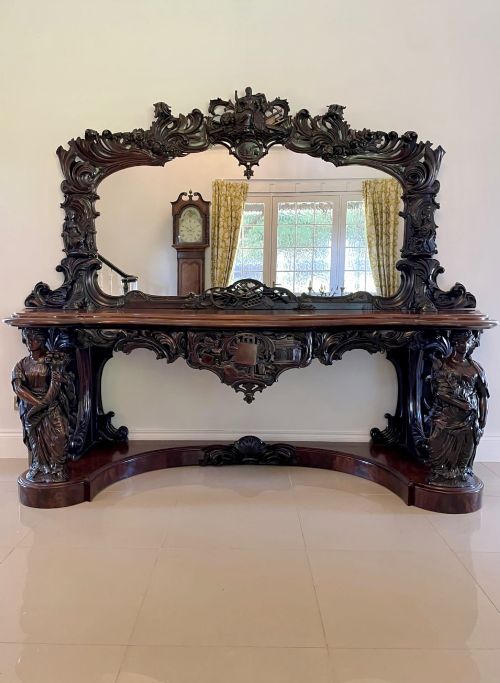
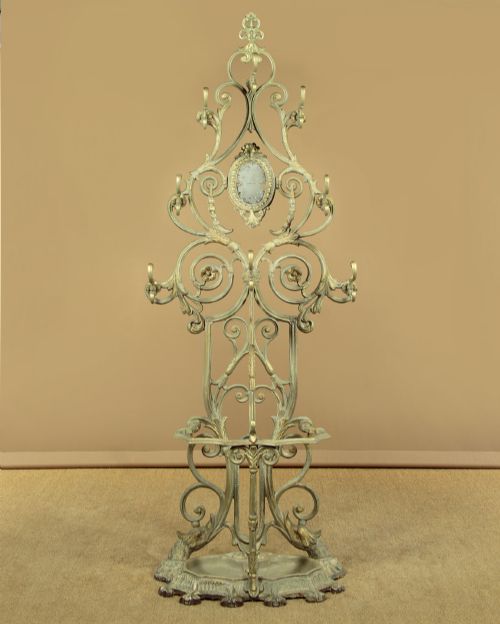
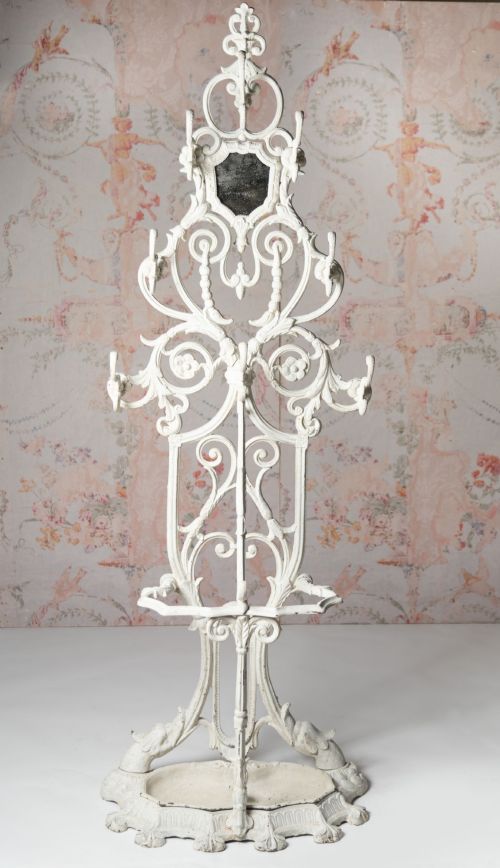
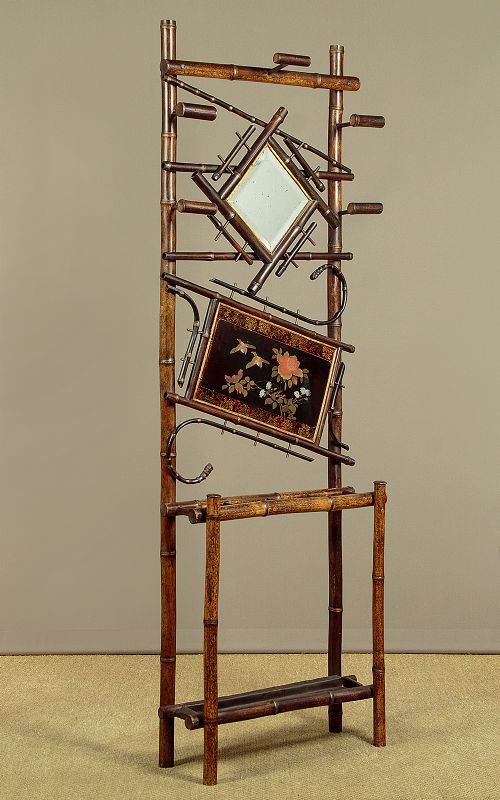
The buyer encounters various forms ranging from compact bamboo pieces to large carved oak and mahogany structures fitted with marble shelves or tile backs. Many incorporate cast iron or brass elements alongside the main wooden framework to handle wet coats and umbrellas.
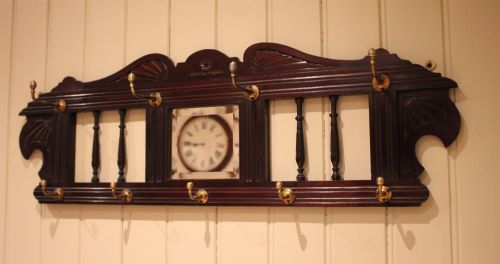
Makers produced these works in distinct stylistic phases, including the Aesthetic Movement, Arts and Crafts and Gothic Revival. Simpler wall-mounted coat racks and console tables also appear alongside the traditional freestanding hall stand.
Materials and Construction
Makers utilised solid timbers such as mahogany, oak and walnut, frequently employing carving, fretwork and barley twist turnings to ornament the framework. Bamboo and faux bamboo also served as primary materials, particularly in Aesthetic Movement pieces.
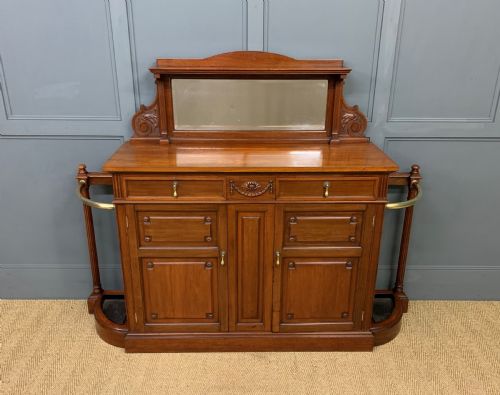
Functional hardware formed an integral part of the construction, with brass coat hooks, bevelled glass mirror plates and cast iron drip pans secured to the wooden bodies. Marble shelves and ceramic tiles provided durable surfaces capable of withstanding moisture and heavy daily use.
Listings feature oak, mahogany, walnut, bamboo, cast iron, brass and marble across Victorian and Edwardian periods.
Design and Execution
The standard of carving and joinery separates standard production items from exhibition pieces, with deeper relief work and figural carvings such as Green Man motifs indicating superior workshop output. The selection of figured timbers like birdseye maple or well-grained mahogany similarly distinguishes finer examples.
Proportion and integration define the better pieces, where the bevelled mirror plate, brass hooks and marble or wooden base form a balanced whole rather than an assembly of separate components.
Shoolbred & Co.·Coalbrookdale
The Victorian Mirror Hall Stand Glossary
- Bevelled mirror
- A glass mirror plate with an angled, polished edge that catches the light. This finish indicates a higher grade of manufacture.
- Faux bamboo
- Timber carved or painted to imitate natural bamboo stalks. This technique gained popularity during the Aesthetic Movement.
- Drip pan
- A metal or ceramic tray placed at the base of the stand to catch water from umbrellas and walking sticks. These protect the timber floor below.
- Console table
- A wall-mounted or freestanding table that often supports a mirror above. Some versions combine with coat racks to form hall furniture.
- Barley twist
- A turned wooden column resembling the spiral shape of barley sugar. This decorative element appears frequently on oak frames.
Victorian Mirror Hall Stand: Frequently Asked Questions
What is a victorian mirror hall stand?
A victorian mirror hall stand is a piece of entrance furniture designed to hold coats, hats and umbrellas while providing a central looking glass.
These pieces combine storage compartments, metal hooks and sometimes marble shelves into a single tall unit meant for the hallway.
How do I distinguish oak from mahogany pieces?
Oak exhibits a visible grain pattern with distinct medullary rays, often showing a golden or dark brown tone depending on the finish.
Mahogany provides a smoother, denser surface with a reddish-brown colour that deepens with age.
Were these stands used in small houses?
While grand hall stands required substantial entrance space, smaller versions made from bamboo or narrow oak were produced for urban hallways.
Wall-mounted coat racks offered similar utility where floor space was limited.